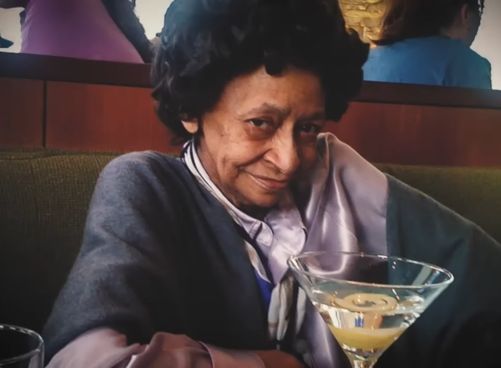
The Black Woman Who Recorded 30 Years of Television: Marion Stokes’ Archive Is More Important Than Ever
Why Marion Stokes’ 30-Year TV Archive Matters More Than Ever
As part of International Women’s Month, it’s important to spotlight pioneers whose contributions reshaped how history is preserved. One such figure is Marion Stokes, a Black media activist and archivist who spent more than three decades recording American television news around the clock.
Her incredible story is told in the documentary Recorder: The Marion Stokes Project, originally released in 2019. The film explores how Stokes created one of the most important independent media archives ever assembled — preserving over 30 years of television broadcasts exactly as they aired.
Today, her work is considered one of the most valuable historical records of modern media.
The Woman Who Recorded History
Marion Stokes began her unusual mission in 1979. Convinced that television news was one of the most powerful forces shaping public perception, she decided to preserve it.
Using multiple televisions and VCRs running simultaneously, Stokes recorded broadcast news 24 hours a day.
She continued this process for more than 33 years, stopping only when she passed away in 2012.
By that time, she had accumulated:
-
Over 70,000 VHS tapes
-
Recordings from multiple television networks
-
A continuous timeline of American news coverage
Her recordings captured some of the most important moments in modern history, including:
-
The Iran hostage crisis
-
The fall of the Berlin Wall
-
The Rodney King verdict and Los Angeles uprising
-
The September 11 attacks
-
The evolution of 24-hour cable news
Every broadcast was preserved exactly as audiences saw it.
A Massive Archive Preserved for the Future
After Stokes passed away, the scale of her project stunned archivists.
The tapes filled entire rooms and warehouses, weighing tens of thousands of pounds.
Her son, Michael Metelits, eventually partnered with the Internet Archive — the nonprofit digital library behind the Wayback Machine — to digitize the collection.
The goal was simple but monumental: turn thousands of analog tapes into a searchable digital record of television history.
Today, historians, journalists, and researchers are beginning to explore the archive to analyze how news narratives evolved over time.
Why Marion Stokes’ Work Matters Even More Today
View this post on Instagram
In recent years, online conversations have emerged about how older television shows and broadcasts sometimes appear different from how audiences remember them.
Fans have pointed to examples where scenes seem altered, dialogue is removed, or episodes are slightly modified on modern streaming platforms.
Some people refer to these discrepancies as the “Mandela Effect,” where groups of people remember something differently from how it currently appears.
View this post on Instagram
In reality, media changes can occur for many reasons, including:
-
Music licensing changes
-
Syndication runtime edits
-
Updated graphics or remastered footage
-
Content removed for modern audiences
This is where Marion Stokes’ archive becomes incredibly valuable.
Because she recorded television in real time, her tapes capture broadcasts exactly as they aired — including commercials, live breaking news interruptions, and original edits that may no longer exist in modern versions.
Her recordings function as a true time capsule of media history.
A Visionary Ahead of Her Time
Long before digital archives, streaming services, or cloud storage existed, Marion Stokes understood something critical:
Media shapes history — and if it isn’t preserved, it can disappear or change over time.
By documenting decades of television broadcasts, she created a record that future generations can study to understand how news, culture, and public narratives evolved.
For International Women’s Month, her story stands as a powerful reminder that some of the most important cultural preservation efforts come from individuals working quietly behind the scenes.
Marion Stokes didn’t just record television.
She recorded history itself.
Share this content:










Post Comment