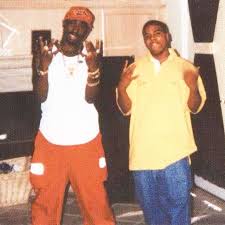
Kadafi Documentary Challenges Napoleon’s Version of Events
Kadafi Documentary Challenges Napoleon’s Version of Events
A new documentary is reigniting one of hip-hop’s most debated tragedies—this time presenting a direct challenge to the long-accepted narrative surrounding Yaki Kadafi’s death.
Titled Killing Fields: The Vindication of Yaki Kadafi, the film argues that what has been described for decades as an accidental shooting may have been something far more deliberate.
A Direct Response to Napoleon’s Claims
The documentary directly disputes the account shared over the years by Napoleon (Mutah Beale) of the Outlawz, who has consistently maintained that the shooting was accidental.
According to the film, that version of events is incomplete—and possibly misleading.
“What will be presented… are the facts and the evidence. Not opinions, not rumor… only the facts.”
The project frames Napoleon not as the person responsible for the killing, but as someone who has repeated and reinforced a narrative based largely on second-hand information.
The Central Claim: Premeditated, Not Accidental
At the heart of the documentary is a bold assertion:
The killing of Kadafi was premeditated, not accidental.
The film points to:
- Alleged threats made days before the shooting
- Witness statements describing tension between parties
- A reconstructed timeline leading up to the incident
According to the documentary:
Evidence suggests the events “didn’t actually play out the way Mutah has told the public.”
Forensic and Case Evidence Revisited
The documentary leans heavily on:
- Autopsy findings
- Toxicology reports
- Police statements and witness accounts
One claim directly challenges a commonly repeated narrative:
“There were no drugs in Yaki’s system… definitely not on the day of his murder.”
This contradicts past suggestions that substances may have played a role in the incident.
Questions Around the Confession and Timeline
While it is widely known that the shooter eventually confessed, the documentary argues the circumstances are more complex.
It highlights:
- A four-day manhunt before surrender
- Pressure from both law enforcement and the streets
- Claims that the surrender was not purely voluntary
The film also notes that the case was resolved through a plea deal rather than a full trial, meaning key evidence was never publicly examined in court.
Yaasmyn Fula Speaks Out
Central to the documentary is Yaasmyn Fula, Kadafi’s mother, who opens her archives and challenges the narrative she says has persisted for decades.
Her position is clear:
The issue is not only the killing—but what she describes as a “second harm” through misinformation.
“Facts can expand, but facts don’t change.”
A Broader Cultural Reflection
Beyond the case itself, the documentary explores deeper themes:
- Accountability within hip-hop culture
- The impact of unresolved trauma on families
- The role of public narratives in shaping history
It raises a difficult question:
How does a story become accepted as truth—even if key details were never fully examined?
The Debate Is Far From Over
With Napoleon recently speaking out and the documentary presenting a competing version of events, the conversation around Kadafi’s death has entered a new phase.
On one side:
- A long-standing narrative of an accidental shooting
On the other:
- A detailed argument for premeditation backed by newly presented evidence
Final Word
Nearly three decades later, the death of Yaki Kadafi remains one of hip-hop’s most complex and emotional cases.
Now, with new claims, old questions are being asked again—and this time, the public is being invited to examine the evidence for themselves.
Share this content:






Post Comment