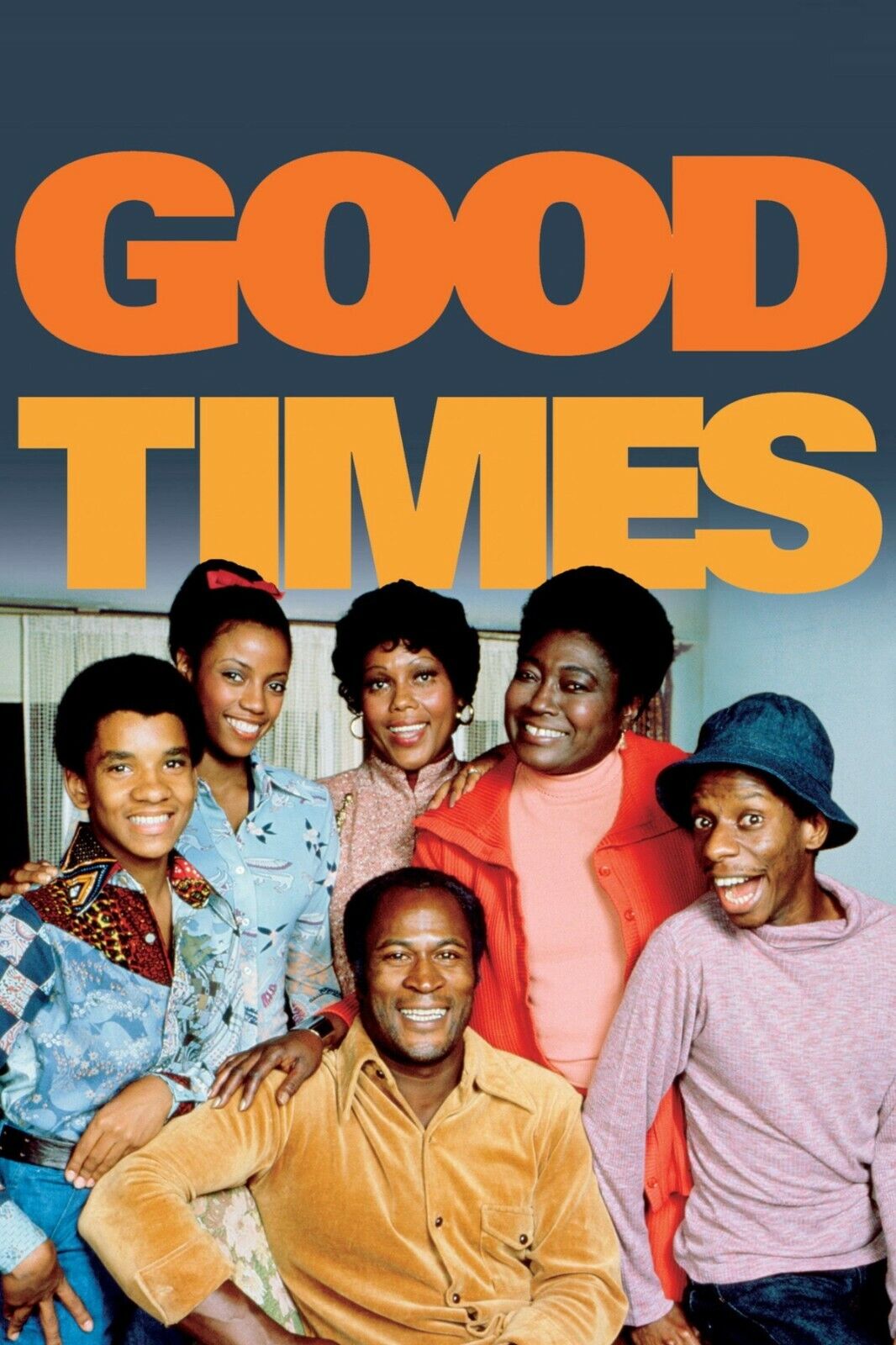
Good Times Was Playing When Kanan Was Born—And May Have Predicted His Future
Spoiler warning: This article discusses the final scene of Power Book III: Raising Kanan.
The final scene of Power Book III: Raising Kanan brings the story back to where Kanan Stark’s life began: a hospital room in 1975, where a young Raquel “Raq” Thomas holds her newborn son.
The moment is already loaded with meaning. After five seasons tracing how Kanan became the hardened figure first introduced in Power, the prequel closes not with another act of violence, but with a baby who has no idea what awaits him.
Then the television in the room adds another layer.
Playing on the screen is Good Times—specifically the Season 2 finale, “The Lunch Money Ripoff.” The selection appears far too connected to Kanan’s story to dismiss as ordinary background decoration.
The Good Times episode provides a 1975 time marker
“The Lunch Money Ripoff” originally aired on CBS on March 18, 1975. During the 1974–75 television season, Good Times occupied CBS’s Tuesday 8:00 p.m. time slot and became one of the highest-rated programs on television.
The Raising Kanan finale identifies the hospital scene only as taking place in 1975. Showing this particular episode therefore helps anchor the scene inside that year’s television culture.
It does not establish Kanan’s exact birthday. The hospital television could be showing the original March broadcast or a later rerun. But the episode still works as a hidden calendar: it places Kanan’s birth in the same cultural moment when the Evans family was confronting a problem that would later define his childhood.
Michael Evans and young Kanan faced the same problem
In “The Lunch Money Ripoff,” Michael Evans is being bullied and forced to surrender his lunch money. When his family discovers what has been happening, the episode becomes a debate about how a child should respond to fear, humiliation and violence.
James initially believes Michael must be prepared to defend himself. J.J. tries to teach his younger brother how to fight, producing one of the episode’s funniest exchanges when he advises Michael to use his legs—not to kick, but to run.
Michael ultimately attempts something different. He invites the bully, Eddie, into the Evans home, where the family learns more about the troubled child behind the intimidation. The episode does not pretend that compassion instantly solves everything, but it asks whether understanding and responsible adult intervention can interrupt a cycle of violence.
That question sits quietly beside Kanan from the moment he is born.
Raising Kanan began with another child being robbed
The connection becomes stronger when the finale is placed beside the beginning of the series.
In the Raising Kanan premiere, a younger Kanan is attacked by neighborhood bullies and robbed of his money. He runs home hurt and humiliated. Raq does not invite the boys over or search for the circumstances behind their behavior. She fills one of Kanan’s socks with batteries, takes him back to the park and orders him to fight.
That scene establishes Raq’s philosophy of survival before Kanan ever enters the drug trade. Love, in her world, means making sure her son is never viewed as weak again—even if the lesson requires violence.
Both stories begin with nearly the same childhood crisis: a boy is bullied and his money is taken. The difference is what the adults teach him next.
The Evans family struggles toward compassion and accountability. Raq teaches retaliation and reputation.
Same problem. Two lessons. Two different futures.
The television may be the finale’s hidden thesis
There has been no public confirmation that the production selected “The Lunch Money Ripoff” specifically to summarize Kanan’s upbringing. It could still be a carefully chosen period detail.
Yet the parallels are unusually precise. The final image places newborn Kanan beside a story about bullying, stolen money, parenting and the choice between compassion and violence. The series’ first episode then shows Kanan living through that same conflict under Raq’s guidance.
The hospital television may therefore function in two ways: as a timestamp for 1975 and as thematic foreshadowing for the first lesson that helped shape Kanan Stark.
This is not a literal crossover in which the Evans family shares fictional continuity with the characters of Power. Instead, Good Times exists as television inside Kanan’s world—and its message becomes part of the world surrounding him at birth.
That makes the ending more tragic. Long before Kanan had a reputation, an empire or enemies, another Black family was already debating the choice that would help determine his future.
Black To The Future
Good Times and Raising Kanan were created generations apart, but placing them together shows how Black television continues to revisit the same questions: How do families prepare children for a hostile world? When does protection become harm? Can compassion break a cycle that violence only strengthens?
The past did not disappear. It became the blueprint.
That is the connection at the heart of Black To The Future, a WWETV Studios series where the archive helps explain the future of the culture.
Share this content:











Post Comment