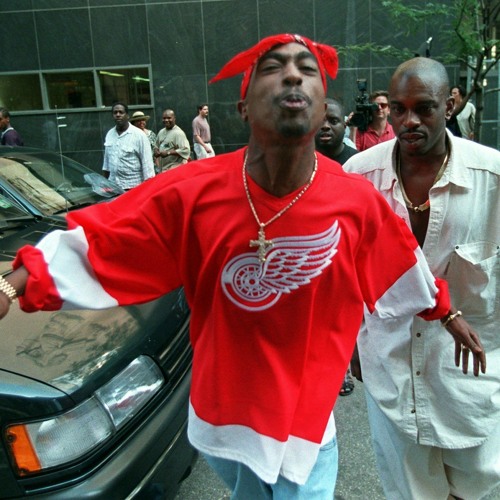
Tupac Shakur’s Stepbrother Files New Wrongful Death Lawsuit Against Keefe D
Tupac Shakur’s Stepbrother Files New Wrongful Death Lawsuit As Keefe D Trial Nears
Nearly 30 years after Tupac Shakur was fatally shot in Las Vegas, his family is making a new legal push for answers.
Maurice “Mopreme” Shakur, Tupac’s stepbrother and former Thug Life collaborator, has filed a wrongful death lawsuit in Los Angeles Superior Court against Duane “Keffe D” Davis and unnamed defendants. Davis is the only person ever criminally charged in connection with Tupac’s 1996 murder, but the new civil complaint argues that the story may not end with the men inside the white Cadillac.
A New Civil Case Nearly Three Decades Later
Tupac Shakur was shot on September 7, 1996, while riding in a BMW driven by Death Row Records co-founder Marion “Suge” Knight near the Las Vegas Strip. He died six days later at the age of 25, leaving behind one of the most haunting unsolved cases in hip-hop history.
For decades, the dominant theory centered on a confrontation that took place earlier that night at the MGM Grand, where Tupac and members of the Death Row entourage were involved in a fight with Orlando “Baby Lane” Anderson. Anderson, the nephew of Duane Davis, denied involvement before he was killed in an unrelated Compton shooting in 1998.
Now, Mopreme Shakur’s lawsuit claims new developments have opened the door to a wider investigation. The complaint names Davis and “John Does 1 through 100,” described as individuals who may have helped plan, finance, direct, or carry out the alleged conspiracy to kill Tupac.
Why The “John Doe” Defendants Matter
The most important part of this lawsuit may be the unnamed defendants. In civil cases, listing John Does allows plaintiffs to pursue discovery and potentially add names later if evidence identifies additional parties.
That makes this more than a symbolic family lawsuit. It is a legal attempt to use the civil court process to force more information into the open. According to the complaint, recent grand jury transcripts from Davis’ criminal proceedings and interviews featured in Netflix’s Sean Combs: The Reckoning have raised new questions about whether Tupac’s murder involved more people than previously acknowledged.
The lawsuit reportedly argues that these newer sources make the case different from the 1997 wrongful death lawsuit filed by Tupac’s mother, Afeni Shakur, against Orlando Anderson. That earlier case was dismissed in 1999 after Anderson’s death.
Keefe D’s Criminal Trial Is Still Ahead
Duane “Keffe D” Davis was arrested in September 2023 after Las Vegas authorities revived the investigation. Prosecutors have described him as the “shot caller” behind the group involved in the shooting, though he is not accused of being the triggerman. Davis has publicly acknowledged in past interviews and in his 2019 memoir Compton Street Legend that he was in the Cadillac and provided the gun used in the shooting, according to prosecutors and Associated Press reporting.
Davis has pleaded not guilty. His defense has challenged the case, including efforts to suppress evidence from a police search, but a judge denied a motion to suppress evidence in February 2026. The criminal trial has been delayed multiple times and is currently scheduled to begin on August 10, 2026.
The Sean Combs Allegations Must Be Handled Carefully
Part of the new attention around the case comes from Netflix’s Sean Combs: The Reckoning, which revisited allegations and claims connected to the long-running East Coast-West Coast feud. However, Sean “Diddy” Combs has repeatedly denied any involvement in Tupac’s death and has never been charged with any crime connected to the murder.
That distinction is important. The civil lawsuit may seek to explore allegations, documents, interviews, and possible connections, but allegations are not convictions. Any names raised through documentaries, interviews, or court filings remain claims unless proven in court.
Why This Case Still Matters To Hip-Hop
Tupac’s murder was never just a crime story. It became one of the defining wounds in hip-hop culture. His death, followed months later by the murder of The Notorious B.I.G., permanently changed the direction of rap music, media coverage, artist security, and how the industry viewed regional conflict.
For years, fans, journalists, law enforcement figures, and former industry insiders have debated whether Tupac’s killing was simply the result of a street-level retaliation or part of something larger. Mopreme Shakur’s new lawsuit shows that Tupac’s family is still pushing for a broader legal accounting.
With Davis’ criminal trial approaching and the new civil lawsuit now filed, 2026 could become one of the most significant years in the long legal aftermath of Tupac Shakur’s death.
Tupac’s Family Files New Wrongful Death Lawsuit In Rapper’s 1996 Murderhttps://t.co/mU6SomXWNV pic.twitter.com/jvV3U7SyBu
— Forbes (@Forbes) April 29, 2026
For the culture, the question is no longer only who pulled the trigger. The question is whether the courts will finally reveal who else, if anyone, helped set the tragedy in motion.
Share this content:









Post Comment