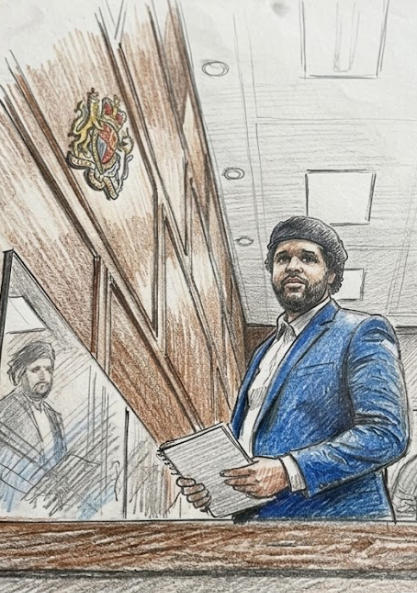
Lawrence Heights Stabbing Trial: “Lost Evidence” and Self-Defense Claims Shake Case
Buried Evidence Surfaces: Shifting Sands and the Crisis of Accountability in the “Random” Lawrence Heights Stabbing Trial
TORONTO — For months, the narrative surrounding the March 7, 2022, stabbing in Toronto’s west end was as tidy as a police press release: a “random attack,” a predator in the shadows of Lawrence Heights, and a city on edge. It was a story designed to bolster public safety optics, but as the wheels of justice ground forward, that narrative didn’t just fray—it detonated.
What emerged from the chambers of the Superior Court of Justice wasn’t a simple case of street violence, but a sprawling saga of “lost” evidence, allegations of investigative tunnel vision, and a defendant who claims the system didn’t just fail him—it actively suppressed the truth.
The “Random” Myth and the Lawrence Heights Reality
The Crown’s initial theory was anchored in the terrifying randomness of the event. However, when disclosure finally reached the defense, the “random” tag began to look more like a convenient fiction. The defense team—a formidable collective including Megan Savard, Laura Metcalfe, and Davin Portz—stumbled upon a trail of contradictory findings that suggested a far more complex interaction.
According to evidence unearthed by the defense, Elijah Vernon (known in the music world as Elijah Sommerz) was actually the victim of the crime—the target of a botched robbery in the city’s West End. In a pivotal moment of the trial, Vernon testified that as he approached the sidewalk, a second man was seen “creeping” behind him. Vernon told the court he was confronted with a firearm, sparking a primal fear for his life. He maintained he acted in self-defense, a claim bolstered by medical evidence tendered in court showing that Vernon himself was stabbed in the hand during the struggle.
The Post-Offense Conduct Debate: Fear vs. The Mall
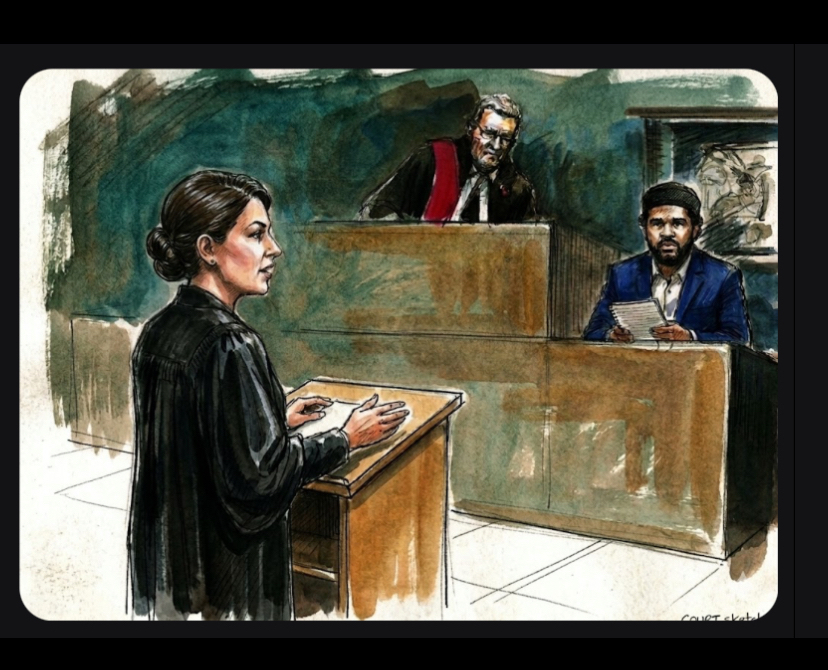
The courtroom became a theater of psychological warfare during closing arguments. Crown prosecutor Christina Jabbour took aim at Vernon’s “fear” defense, pointing to his post-offense conduct as a sign of a cool, calculated mind rather than a terrified victim.
Jabbour argued that Vernon’s actions were fundamentally inconsistent with someone who had just escaped a life-threatening robbery involving a firearm. She highlighted surveillance footage from the Lawrence Allen Centre—a mall located a mere 10 minutes away from the scene of the bloodied sidewalk. Jabbour pointedly noted that just 20 minutes after the incident, Vernon was seen browsing and shopping as if “nothing happened.” Her argument was sharp: if a man was truly scared of someone with a gun, he wouldn’t be down the street at the mall.
The “Worst Lost Evidence Case in Canadian History”?
The legal community is now buzzing with a phrase that should haunt any prosecutor: “The worst lost evidence case in Canadian history.”
During the trial proceedings, a damning pattern of conduct was laid bare. It wasn’t just that evidence was missing; it was that exculpatory material—the kind of “naked truth” that can exonerate a man—was allegedly withheld by Toronto Police Service investigators during the first trial. When the second trial commenced in 2024, the defense alleged a “negligent, bad faith conduct” and “tunnel vision” so severe it threatened to derail the constitutional right to a fair trial.
The Verdict and the Self-Defense Standoff
Despite the defense’s “cemented building blocks” for an acquittal based on the argument of self-defense, the outcome was a split in the legal fabric. While Vernon maintained his innocence and testified in his own defense—a move that signaled his desperation to be heard—Justice Campbell was not moved to a full acquittal.
In a decision that many legal analysts find jarring given the evidentiary failures, Vernon was convicted of aggravated assault. Justice Campbell declined to grant a stay of proceedings, despite the acknowledged issues regarding lost evidence and the cross-contamination of disclosure materials. For Vernon, the conviction is a “wrongful” label; for the system, it is a verdict that leaves the stench of unresolved questions in the air.
High-Profile, High-Maintenance: Life Inside the “South” and Beyond
Perhaps the most surreal chapter of the Vernon saga is his life behind bars. Known as an entrepreneur and rapper with an “overly privileged” aura, Vernon’s incarceration has not resembled the typical experience.
At the Toronto South Detention Centre (TSDC), Vernon’s social status reportedly saw him placed in administrative segregation, yet he allegedly maintained a high-end lifestyle. Reports suggest his classification as a “high-profile” inmate earned him perks rarely seen in provincial custody, including specialized dietary accommodations and his own laptop computer.
His journey through the correctional system has been a whirlwind of transfers: from the TSDC to the Toronto East, then back to the South, and finally to Hamilton’s Wentworth Detention Centre (HWDC)—the notorious Barton Street jail. This facility is no stranger to “high-maintenance” residents, housing the likes of serial killer Dellen Millard and high-profile organized crime figures. Vernon’s presence there confirms his status among Canada’s most “prolific” incarcerated figures.
The Shadow of the Gavel
As of early 2026, Vernon remains a polarizing figure in the intersection of Toronto’s hip-hop scene and its legal system. While he sits in a cell in Hamilton, his legal team continues to point toward the wreckage of the prosecution’s disclosure.
The case of the Mississauga rapper isn’t just about a stabbing in Lawrence Heights anymore. It is a referendum on whether the Toronto Police Service can be held accountable when the “objective evidence” they are sworn to protect suddenly vanishes. For now, the “random” narrative is dead, but for Elijah Vernon, the quest for a remedy continues under the long, dark shadow of the gavel.
Share this content:











Post Comment