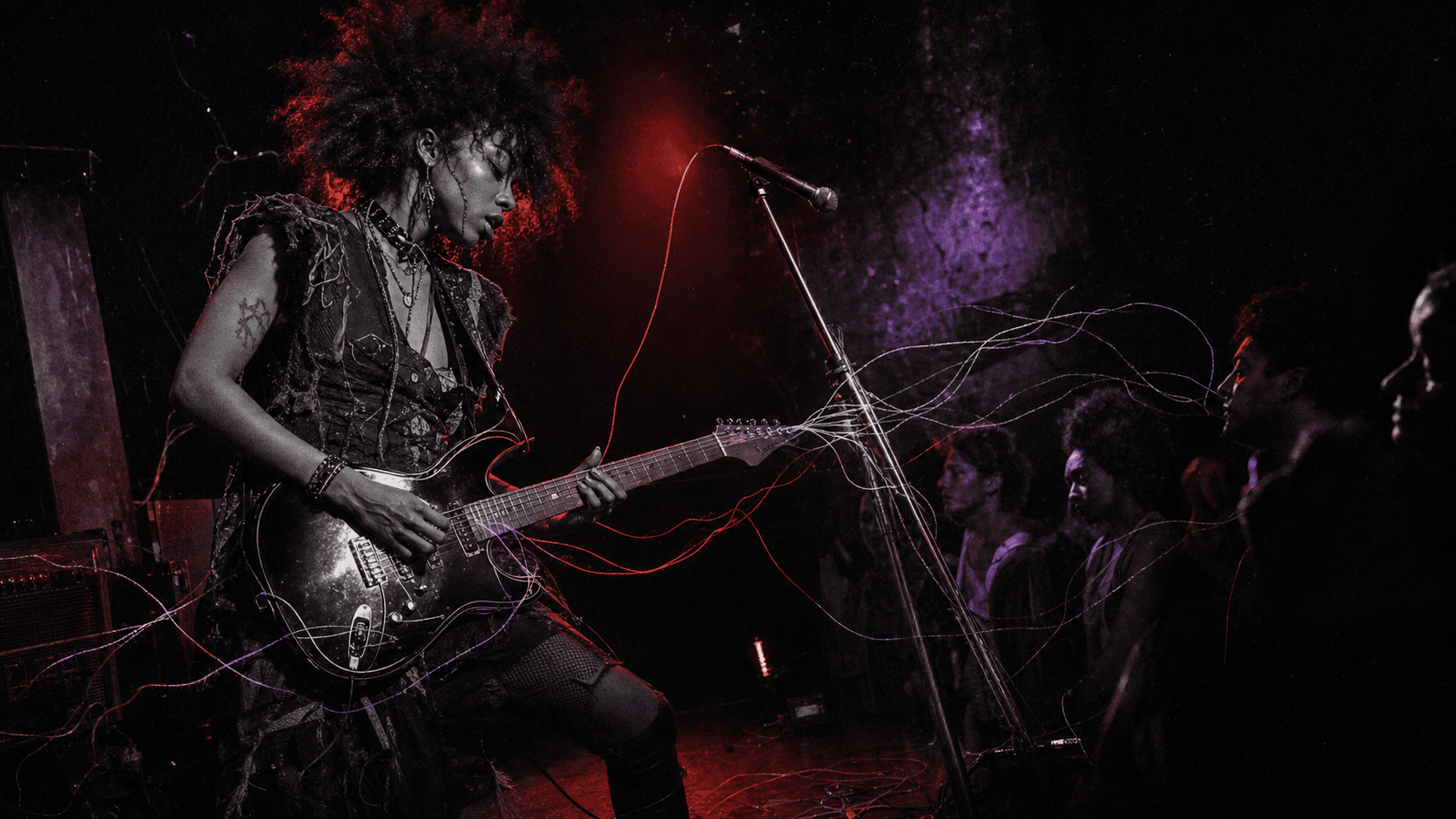
WILLOW’s The Thread Belongs to a Black Alternative-Rock Lineage
WILLOW released The Thread on July 24, 2026, continuing a career built around refusing to stay inside one genre.
The 10-song, 36-minute project is her second album of the year and reunites her with producer Chris Greatti, who also worked on <COPINGMECHANISM> and empathogen. Early descriptions frame the record through devotion, spiritual inquiry, guitar music and structural experimentation.
That makes the familiar Smith-family headline the least interesting way to approach it.
WILLOW’s significance is not that a famous child unexpectedly picked up a guitar. It is that a Black woman with mainstream visibility keeps moving through alternative rock, punk, jazz and experimental pop in an industry that often forgets Black musicians helped create the foundations of those forms.
Apple Music lists The Thread as a July 24 release and highlights “She’s My Religion,” the title track, “Talk on the Hill,” “Crush on Eternity” and “The Present Moment” in its first editorial notes.
The Thread Is About Spiritual Search
WILLOW has described the album as a set of devotionals and questions directed toward the spiritual world and her own inner life.
That premise gives the record a different center from a conventional guitar-album rollout. The songs are not simply evidence that she can move between heavy and soft production. The shifts become part of the search.
“She’s My Religion” brings acoustic guitar, choral breath and percussion into the opening statement. The title track expands from lighter verses into a larger rock chorus before creating space for WILLOW’s voice. “Crush on Eternity” moves between crashing alternative rock and stacked vocals.
Those descriptions suggest an album interested in tension: body and spirit, intimacy and scale, discipline and surrender.
Black Artists Are Not Guests in Rock
Coverage of Black alternative musicians still regularly treats their presence as a surprise.
That framing ignores the Black roots of rock and roll and the continued work of artists who expanded guitar music across decades. Sister Rosetta Tharpe’s electric performance helped establish the form before the industry settled on its later mythology. Jimi Hendrix transformed its technical and sonic possibilities. Betty Davis brought funk, sexual autonomy and distortion into a confrontational new language.
Later artists and bands—including Living Colour, Fishbone, 24-7 Spyz, Tracy Chapman, Meshell Ndegeocello, Skunk Anansie, TV on the Radio, Brittany Howard and Nova Twins—made “Black alternative” a broad field rather than one sound.
WILLOW enters that history as a 21st-century artist shaped by punk-pop, metal, R&B, jazz and internet-era genre fluidity. She does not need to sound like any predecessor to belong in the lineage.
The connection is permission: Black musicians have always had the right to experiment loudly.
Genre Evolution Has Been the Career
WILLOW’s early public identity was attached to childhood pop success. Her later catalog repeatedly moved away from the easiest version of that story.
ARDIPITHECUS introduced a more inward and self-directed writer. lately I feel EVERYTHING placed pop-punk guitars at the front. <COPINGMECHANISM> pushed harder into rock. empathogen brought jazz harmony, complex rhythm and vocal exploration into focus.
The movement can look restless if albums are judged only as branding eras. Heard together, it becomes a method. WILLOW uses genre as a set of tools for whatever emotional or spiritual question is urgent at the time.
The Thread appears to continue that process rather than resolving it.
Why Reception Matters Before a Final Review
Release-day information establishes the album’s concept, collaborators, length and initial sound. It does not yet establish which songs will endure or how the sequence changes through repeated listening.
That distinction matters for an artist whose arrangements often reveal themselves through detail. A final WWETV review should return after the first wave of reaction and ask:
- Which track best connects the devotional concept to the music?
- Does the title’s “thread” operate across the full sequence?
- Where do Greatti’s arrangements create productive surprise?
- How does the album sit beside empathogen and WILLOW’s more rock-oriented work?
- Which performances expand the conversation around Black women in alternative music?
Monitoring is not hesitation about the artist’s importance. It is an acknowledgment that criticism should do more than translate release notes.
The Wider 2026 Black Music Conversation
WILLOW and Tyla released major projects into the same Friday cycle, but their work points in different directions.
WWETV’s Tyla APop analysis examines African pop as a force defining the global mainstream. The Thread* makes a related argument from another angle: Black artists do not owe the market a single recognizable genre identity.
One project brings South African rhythmic language into pop’s center. The other uses alternative rock and spiritual inquiry to resist the idea of a fixed center at all.
Together, they show why Black music coverage must be wider than a handful of industry categories.
Early Takeaway
The Thread should be judged as music, not as evidence in a celebrity-family narrative.
Its early shape places WILLOW inside an expansive Black alternative tradition while preserving the particular questions that have driven her recent work: How can the voice stretch? How can a groove destabilize? How can spiritual inquiry become physical sound?
The project deserves time for those questions to settle.
For now, the clearest conclusion is that WILLOW’s genre evolution is no longer a detour from her career.
It is the career.
Share this content:








Post Comment