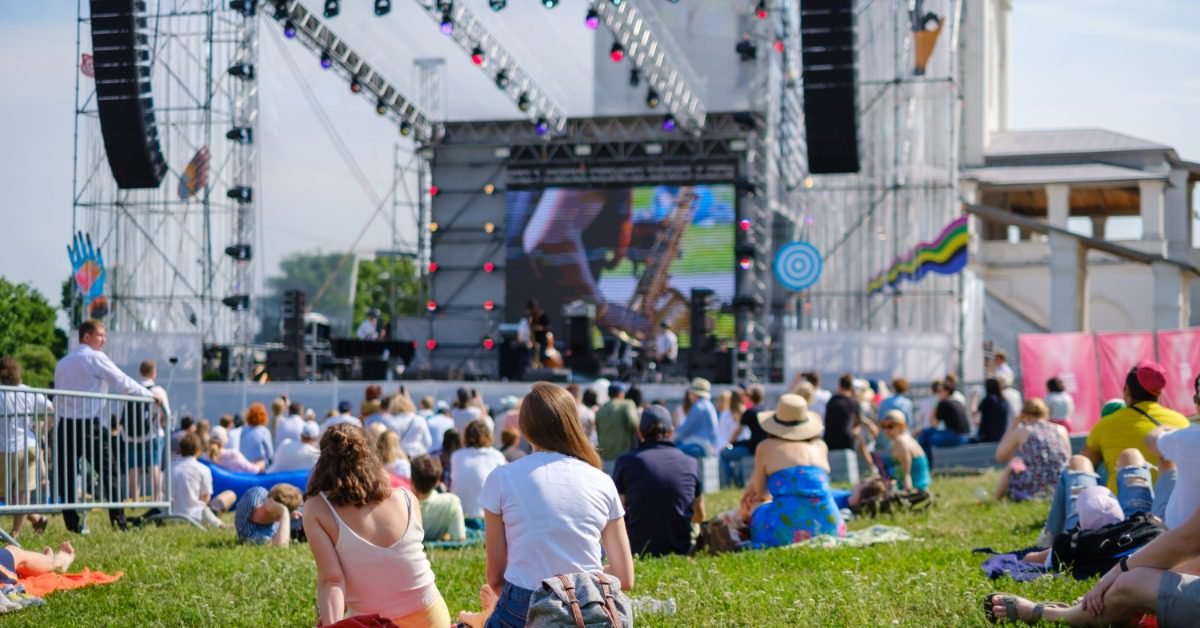
Outdoor Music Event Planning: The Equipment You Need
At an outdoor venue, bass resonates throughout the space and performers feed off the audience’s energy. If the audio is a little pitchy or muffled, the crowd pulls their attention away from the band.
Before the musicians hop on stage, there needs to be a balanced audio setup. It’s important to have a variety of equipment on hand to make sure that the outdoor music event runs smoothly.
Speakers Shape the Audience Experience
Sound outdoors behaves differently than inside because there aren’t walls and ceilings reflecting audio back toward the crowd. Music spreads outward, so a speaker system has to provide enough coverage for the audience area without blasting the people standing closest to the stage. A small local festival, for example, has very different audio demands than a major hip-hop showcase event with hundreds of guests spread across an open field.
Powered speakers work well for many small and midsize events. The amplifier sits inside the speaker cabinet, reducing the amount of separate equipment involved. Large crowds usually call for multiple speakers positioned strategically throughout the venue. Subwoofers become especially valuable for bass-heavy genres such as hip-hop, reggae, dancehall, R&B, and electronic music because they reproduce the low frequencies that give kicks and basslines their physical impact.
A Mixer Controls the Sound
Once several audio sources enter the picture, someone has to control how they blend together. A mixer receives signals from microphones, DJ equipment, instruments, playback devices, and other sources before sending the finished mix to the speaker system.
Channel controls allow the audio operator to adjust volume levels, equalization, and effects for each source. That control becomes especially useful when an event shifts between live performances, DJ sets, announcements, and hosted segments. Without a mixer, differences in signal levels leave one performer’s voice barely above a whisper and the other painfully loud.
Microphones Match the Performance Format
Not every outdoor music event uses microphones the same way. A rapper moving around the stage has very different requirements from a singer standing behind a keyboard, and an event host introduces another type of audio source entirely.
Wireless handheld microphones give vocalists and hosts room to move without dragging cables across the performance area. Wired microphones remain useful for stationary positions and situations where mobility isn’t a priority. Live bands may require several microphones for vocals, drums, guitar amplifiers, or acoustic instruments, so the microphone count quickly grows once multiple performers share the bill.
Wind presents another consideration outdoors. Foam windscreens help reduce unwanted noise caused by air moving across a microphone capsule, particularly during spoken announcements or soft vocal performances.
Monitors Help Performers Hear the Mix
The crowd isn’t the only group listening to the sound system. Artists also have to hear themselves, the beat, and other performers clearly enough to stay on time.
Stage monitors send a separate audio mix toward the performers. Traditional wedge monitors sit on the stage floor and angle sound upward, giving singers, DJs, and musicians a reference without relying on the main speakers facing the crowd. In-ear monitor systems provide audio directly through earpieces and reduce the amount of stage sound.
A weak monitoring setup can quickly affect a performance. If a vocalist struggles to hear the track, pitch and timing become tough to judge, especially once the audience becomes a little boisterous.
Power Keeps the Production Running
Parks, parking lots, beaches, and festival grounds don’t always provide convenient access to electrical outlets. Even when power exists nearby, the available circuits may not handle the combined demand from speakers, lighting, DJ equipment, displays, and production gear.
Power distribution equipment routes electricity safely to the systems that rely on it. Outdoor-rated extension cables and cable protection become particularly useful when power has to travel across areas where crew members or guests walk.
Generators provide another option when standard electrical service isn’t available. Organizers have to account for the total power draw of the production equipment, along with fuel capacity and generator placement. Excessive generator noise near the performance space can interfere with quieter moments, so placement has a direct effect on the audience experience.
Planning the electrical requirements early helps organizers make the most of renting AV equipment. Every piece of gear will work together as a cohesive unit.
Lighting Extends the Event After Sunset
A daytime event may rely heavily on natural light, but the visual environment changes quickly once evening arrives. Stage lighting lets the audience see the performers and gives organizers control over the mood surrounding the performance.
LED fixtures are common for music events because they produce vivid color effects without drawing the same amount of power as many traditional lighting systems. Wash lights spread illumination across broad areas of the stage, and moving fixtures introduce motion during high-energy performances. Spotlights provide focused illumination when a host, singer, or featured performer becomes the center of attention.
Lighting placement deserves careful thought at an outdoor venue. Fixtures must illuminate the performance area without shining directly into the audience’s eyes, and stands require stable positioning on the ground available at the site.
Video Equipment Expands Visual Impact
Large crowds don’t always have a close view of the stage. Video equipment gives organizers another way to connect the performance with guests standing far from the action.
LED video walls work particularly well outdoors because their brightness allows images to remain visible under many daylight conditions. They can display live camera feeds, artist graphics, sponsor content, event schedules, or visual effects coordinated with a performance. Projectors offer another option, although outdoor light levels have a significant effect on image visibility.
Video becomes especially useful for festivals with multiple performers. Between sets, the screen can continue displaying event information or visual content, giving the stage area a sense of activity even when artists are changing over.
Weather Protection Safeguards the Setup
Outdoor productions have to contend with conditions that indoor concerts largely avoid. Rain, wind, direct sunlight, dust, and extreme temperatures can affect electronic equipment and the structures surrounding it.
Tents or covered production areas provide shade and protection for mixing consoles, playback gear, and other electronics. Equipment designed for outdoor environments may offer added resistance to moisture, but organizers still have to follow manufacturer requirements and electrical safety practices.
Wind deserves particular attention because it affects far more than microphones. Speaker stands, lighting fixtures, banners, screens, and temporary structures all face additional forces when gusts increase. Event organizers and production professionals should monitor conditions and adjust the setup when weather creates a safety concern.
Let the Music Shine With a Dependable Setup
Planning an outdoor music event relies on the equipment so that every musical act dazzles beneath the spotlights. When audio and video work together, the technology fades into the background, leaving the music and the crowd to command the attention.
Share this content:










Post Comment