
Dominic Santana on Becoming Suge Knight: Inside the Research, the Set, and Afeni Shakur’s Story
When Dominic Santana signed on to play Suge Knight in *All Eyez on Me*, he knew the role demanded more than a costume and a swagger. In a recent sit-down with WWETV, Santana walked through exactly how he built the character from the ground up — and why the film’s approach to Tupac Shakur’s life set it apart from everything that came before it.
Building Suge From the Archive Up
Santana said the transformation started with obsessive research. “I did a lot of reading old articles, staring at pictures of Suge Knight — different pictures, from different time periods,” he told WWETV. He didn’t stop at photos. Santana tracked down obscure behind-the-scenes footage of Knight and Tupac together, studying how the two moved and spoke off-camera, outside of what the media typically showed.
Vernacular mattered too. Santana said he paid close attention to the way Knight talked — his word choices, his rhythm — until it became second nature.
He also had an advantage most actors playing real-life figures don’t: direct access to people who lived it. Several individuals who were around Death Row Records during that era — people who knew Suge Knight and Tupac personally — consulted on the film. “There were people there that could tell you, ‘No, that’s not how he is,’ or ‘do more like this or that,'” Santana said. “It’s always good to have someone close to the character or the actual person to give you pointers.”
No Drama on Set — A Rare Set Culture
Santana described the production as unusually harmonious for a film set. Aside from ordinary hurdles like weather and scheduling, he said there was no on-set drama — a rarity in his experience. He credited the bond that formed under a shared purpose: nearly everyone involved carried a personal love for Tupac’s legacy, and that showed up in how the cast and crew treated the material. “Everybody’s mindset was like, ‘We got to do this right,'” he said.
Not Another Surface-Level Tupac Story
Santana pushed back on early skepticism about the film, which some assumed would simply retread familiar ground. Instead, he compared the project’s tone to *Ray*, the Ray Charles biopic — a film built around the music without being *about* the music. “It was focused on Ray the person and what all came together to make him,” Santana said. “That’s how this was.”
He also pointed to the talent working behind the camera — an Oscar-winning editor and other industry veterans — as evidence the film was built with the same care typically reserved for prestige projects, not just star power in front of the lens.
Reframing Afeni Shakur
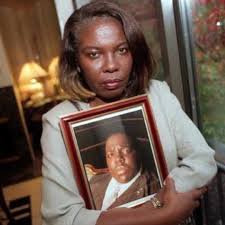
Some of Santana’s most striking comments centered on Tupac’s mother, Afeni Shakur. He said audiences who only know Tupac through his music tend to reduce Afeni to a single narrative — addiction — without understanding who she was before that chapter, or the context surrounding it.
Santana traced her story back to the crack epidemic’s arrival, noting that the drug was initially perceived very differently than it is today. “It was kind of touted like smoking weed or something,” he said. “A lot of people were getting into it, not realizing down the road this is really going to jack me up.” Afeni, he said, was one of many people who got caught in that wave before anyone understood its consequences.
Before that period, Santana said, Afeni was a “bright, intelligent activist, strong, powerful woman” — a Black Panther alongside Tupac’s stepfather Mutulu Shakur and his aunt Assata Shakur. That upbringing, Santana argued, is the real root of Tupac’s convictions. “That’s how you find out why Pac was so adamant about rising the people and being black is beautiful.”
Full interview available on WWETV.
Share this content:







Post Comment