5 Real-World Places That Shaped the TMNT Legacy
Mention the Teenage Mutant Ninja Turtles and one image usually comes to mind: four masked brothers climbing out of a New York City sewer with pizza on their minds and trouble nearby. The franchise connects so strongly with New York that the city almost feels like another character. Yet several other real-world locations tied to TMNT history tell a story that stretches far beyond Manhattan.
Before Leonardo, Raphael, Donatello, and Michelangelo became cartoon stars and movie icons, their journey passed through several American cities. Some locations sparked the original idea, and others helped transform an independent comic into a global entertainment franchise. Together, those locations show how geography became part of the franchise’s history.
Dover, New Hampshire: Where the Turtles Began
The most important TMNT location does not sit beneath a New York street. It stands at 28 Union Street in Dover, New Hampshire, where comic artists Kevin Eastman and Peter Laird lived and worked in 1983. Their version of Mirage Studios occupied part of the rented house rather than a polished publishing office.
During a late-night drawing session, Eastman sketched a masked turtle holding nunchucks. Laird joined the joke, and the pair kept developing the strange concept until it became the Teenage Mutant Ninja Turtles. They soon turned that playful drawing into the foundation for their first comic.
Dover now celebrates that creative breakthrough in a visible way. In November 2023, the city unveiled a state historical marker at the intersection of Union Street and Central Avenue, followed by a decorative manhole cover at 28 Union St., the former site of Eastman and Laird’s home. Eastman attended the ceremony and created artwork for the cover.
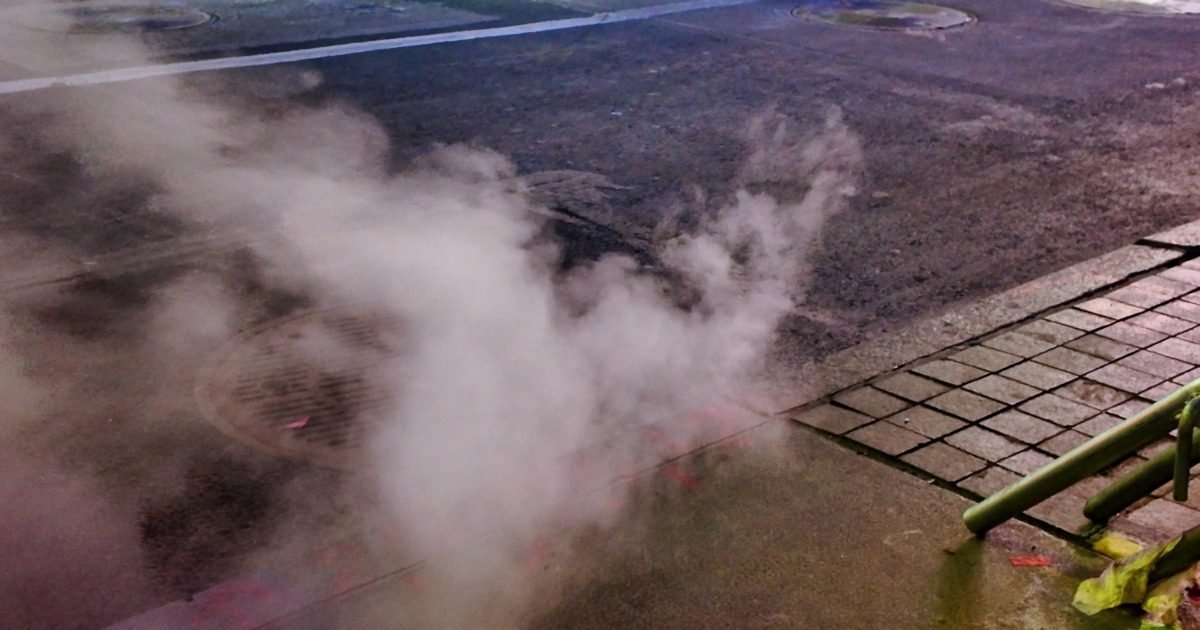
The tribute fits TMNT perfectly because sewer imagery has always formed part of the franchise’s identity. The installation turns a piece of ordinary street infrastructure into a permanent tribute to the characters that began there.
Portsmouth, New Hampshire: Where Fans First Met TMNT
Dover gave Eastman and Laird the idea, but nearby Portsmouth gave the Turtles their first public audience. The creators pooled their resources, found a printer in Somersworth, and self-published the first black-and-white issue. They entered the comics business without backing from a major publisher.
Eastman and Laird introduced Teenage Mutant Ninja Turtles at a Portsmouth comic convention on May 5, 1984. The unusual title helped the book stand out immediately, and readers responded to its mix of martial arts action and comic-book satire. The creators quickly discovered that their small independent project had room to grow.
That Portsmouth debut remains important because TMNT started far from the machinery of Hollywood. No television network or major studio launched the franchise. Two comic creators brought their strange idea directly to fans and let the audience build momentum around it.
Northampton, Massachusetts: Where Mirage Expanded
TMNT success soon pushed Mirage Studios beyond its original New Hampshire roots. Eastman and Laird later worked from Sharon, Connecticut, before moving the company to Northampton, Massachusetts. Northampton became a major creative base as the franchise expanded.
From there, TMNT grew through additional comics and licensing opportunities while television and merchandising introduced the characters to much larger audiences. Mirage no longer resembled the improvised operation that Eastman and Laird had run from their Dover home. The company now supported a property that reached fans across multiple forms of entertainment.
Northampton also influenced the fictional world of TMNT. Stories sometimes sent the Turtles away from New York to rural Massachusetts, where they could recover after intense battles. That quieter setting created a strong contrast with the crowded streets and underground tunnels that defined their usual adventures.
York City: The Place That Gave TMNT Its Attitude
Dover may have created the Turtles, but New York gave them their unmistakable personality. Among the real-world places that shaped the TMNT legacy, New York remains the location most closely associated with the heroes themselves. The city offered the perfect environment for a story about mutant ninjas who lived beneath the streets and emerged at night.
The original comics leaned into a darker version of New York than many younger fans would later see in animation. Crime, shadowy alleys, and nighttime battles helped create a gritty atmosphere that matched the independent comic’s tone. Later cartoons softened the mood, but they never abandoned the city’s influence.
New York also gave TMNT a street-level identity that carried naturally into television and film. The city setting kept the heroes close to ordinary urban life even as their adventures became increasingly larger than life. The franchise embraced slang and street fashion while drawing energy from city life as it moved into television and movies. That combination made the Turtles feel less like distant superheroes and more like characters who belonged to the streets beneath everyday life.
The 1990 live-action film strengthened that connection. Although the production filmed much of the movie elsewhere, the filmmakers still used New York footage to anchor the story in the city. Those scenes helped sell the illusion that the Turtles truly lived below one of the world’s most recognizable urban landscapes.
Wilmington, North Carolina: Where the 1990 Movie Built New York
The first live-action TMNT movie created much of its New York world in Wilmington, North Carolina. Production crews used the city to construct sets that recreated alleys, rooftops, and underground spaces without facing the full cost of filming everything in Manhattan. Wilmington gave the filmmakers more control over large action sequences and practical effects.
The production also relied heavily on Jim Henson’s Creature Shop to bring the Heroes in a Half-Shell to life. Performers wore complex suits while animatronic systems controlled facial expressions and other movements. That approach gave the characters a physical presence that helped audiences accept the movie’s outrageous premise.
The film became a major commercial success and helped establish TMNT as a viable movie franchise. For many fans, the 1990 adaptation still represents one of the most memorable versions of the characters. Wilmington played a major role in creating the environments that made that version work.
The location also highlights an interesting part of movie history. A place does not always need to appear as itself to shape an iconic fictional world. Wilmington stood in for New York and helped create the dark, grimy atmosphere that audiences still associate with the film.
Why These Places Still Matter
TMNT has changed constantly since 1984. New comics, animated series, movies, and games have introduced the Turtles to different generations. Yet the franchise still carries visible connections to the locations that shaped its early development.
Fans can trace the story from the former site of the Dover house where Eastman and Laird developed the concept to Portsmouth, where readers first encountered the comic. Northampton shows how Mirage grew with the franchise, while New York provided the urban personality that audiences immediately recognize. Wilmington demonstrates how filmmakers transformed that identity into a convincing live-action world.
These locations give TMNT something that many fictional universes lack: a real geographic history that fans can still explore. The characters may live in imaginary sewer tunnels, but the creative journey behind them unfolded in actual homes, convention spaces, city streets, and film studios. More than four decades later, those places continue to tell the story of how four mutant turtles became entertainment icons.
Share this content:







Post Comment