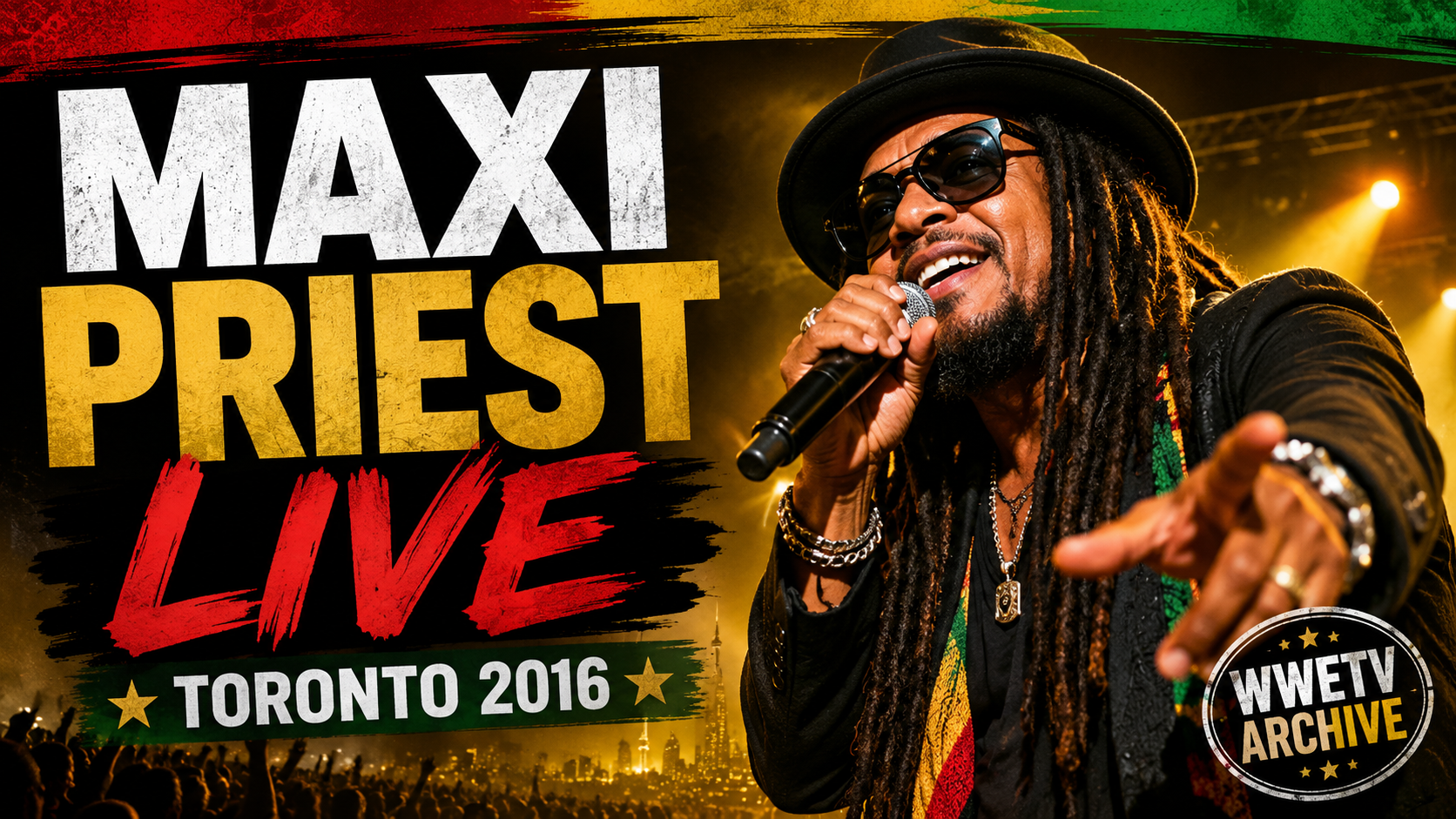
Maxi Priest Brings Lovers Rock Legacy To WWETV’s Sounds of June
Maxi Priest’s Toronto Reggae Festival Performance Returns For WWETV’s Sounds of June
WorldWide Entertainment TV is bringing a reggae archive moment back into focus for its June programming with Sounds of June, a BRIC TV episode highlighting live music, Caribbean rhythm, and Black entertainment history.
One of the standout moments comes from WWETV’s own archive: Maxi Priest performing at the Woodbine Reggae Festival in Toronto. The footage was originally captured during the 2016 festival at Woodbine Mall’s outdoor grounds in Rexdale, where the event promoted a lineup featuring Maxi Priest on Day 1 of the two-day celebration.
For WWETV, the performance is more than festival footage. It is a reminder of how Toronto’s Caribbean audience, reggae history, and live community events helped shape the city’s entertainment identity long before every cultural moment was measured by social media clips.
Why Maxi Priest Fits The Sounds of June Story
Maxi Priest has always represented a bridge.
Born in London to Jamaican parents, Priest became known for blending reggae with R&B, soul, pop, lovers rock, and dancehall. That fusion helped him become one of the most internationally recognized reggae voices of his generation. His music did not abandon reggae roots, but it made the sound travel through different rooms — from Caribbean communities to pop radio, from sound systems to global stages.
His 1990 hit “Close to You” reached number one on the U.S. Billboard Hot 100, making him one of the rare British reggae artists to cross fully into the American mainstream.
That is why his Toronto performance works so well inside WWETV’s Sounds of June episode. Maxi Priest is not only a nostalgia name. He is a symbol of how reggae fusion carried Caribbean music into wider Black entertainment history.
From Rexdale To BRIC TV
The Woodbine Reggae Festival footage also matters because of where it happened.
Rexdale and the surrounding northwest Toronto area have long been tied to immigrant communities, Caribbean culture, music events, and working-class city identity. When WWETV captured Maxi Priest at Woodbine, it documented a moment where international reggae legacy met Toronto’s local Caribbean audience.
Now, that archive is being repurposed for BRIC TV through Sounds of June.
That connection is important. BRIC’s Brooklyn Free Speech platform describes itself as a community media network that supports emerging media makers and locally rooted programming. WWETV using its Toronto reggae archive for BRIC programming shows how independent media can move culture across cities — from Toronto to Brooklyn, from YouTube to television, from festival coverage to historical programming.
The Power Of A Live Reggae Archive
In 2016, this footage may have looked like event coverage.
In 2026, it looks like cultural memory.
That is the value of WWETV’s archive. A performance that once captured one day at a festival now helps tell a bigger story about reggae’s global reach, Toronto’s Caribbean presence, and the importance of preserving live music moments before they disappear into old hard drives and forgotten uploads.
Maxi Priest’s career also gives the episode credibility beyond nostalgia. He has earned three Grammy nominations, including Best Reggae Album nominations for Fe Real, Man With The Fun, and It All Comes Back To Love.
That makes the Woodbine performance a fitting anchor for Sounds of June. It connects stage performance, reggae history, Black Music Month energy, and WWETV’s long-running mission to document entertainment culture from the ground up.
Why This Moment Still Matters
Streaming platforms can show the numbers. Social media can show the trend. But archive footage shows the room.
You see the crowd.
You hear the band.
You feel the festival space.
You understand that reggae was not only a sound moving through speakers — it was a community gathering point.
That is what WWETV’s Maxi Priest footage brings back.
Sounds of June is not simply revisiting an old performance. It is placing that performance in the right context: reggae as Black music history, Toronto as a Caribbean cultural hub, and independent media as the archive that keeps these moments alive.
For WorldWide Entertainment TV, this is exactly why the vault matters.
The footage is not just content.
It is proof that the culture was there.
Share this content:













Post Comment