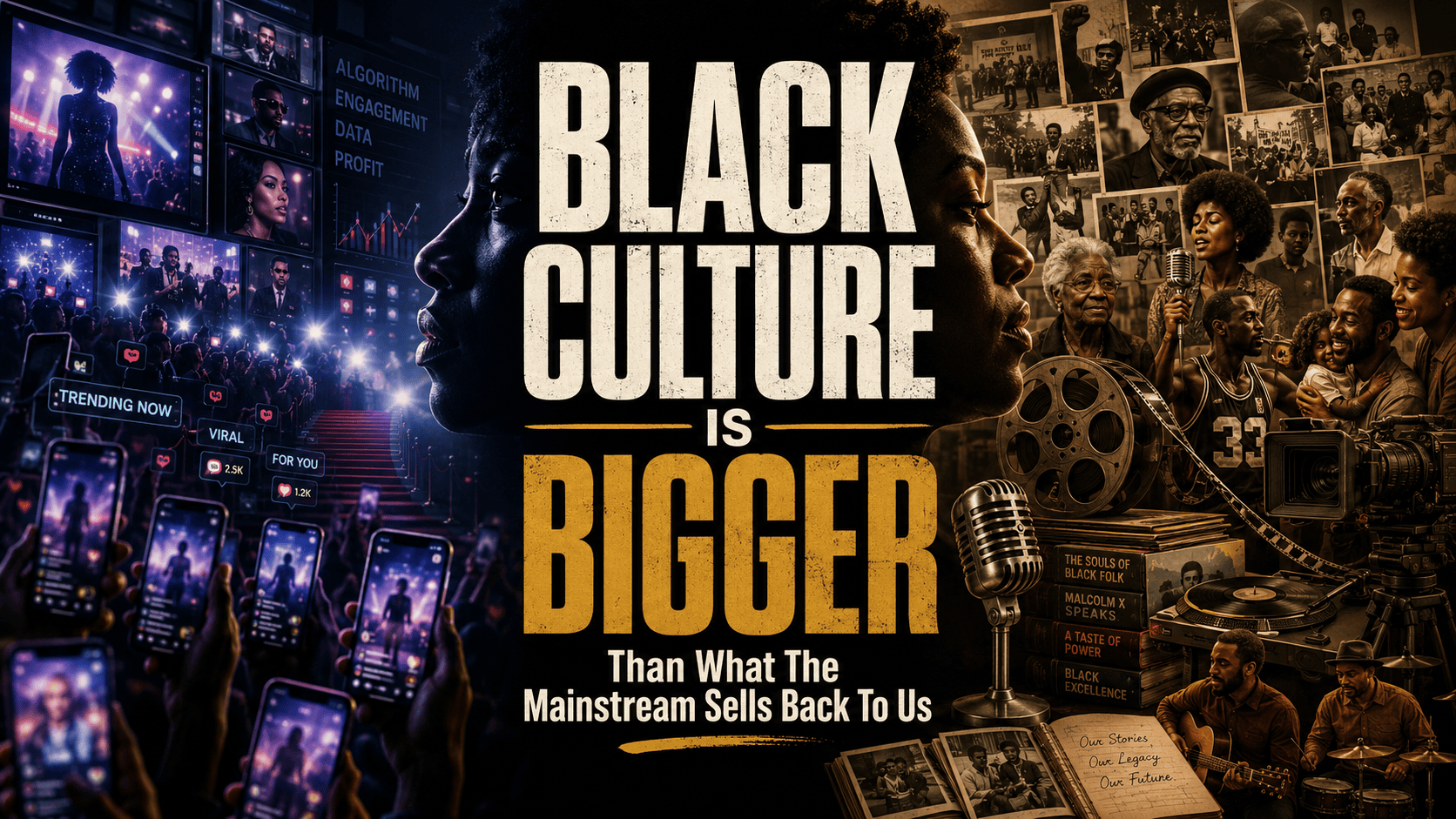
Black Culture Is Bigger Than What The Mainstream Sells Back To Us
Black Culture Is Bigger Than What the Mainstream Sells Back to Us
As entertainment ownership consolidates into fewer companies, WWETV’s mission is to document the receipts, memory, and legacy behind the culture — not just the version that performs best on an algorithm.
There is a conversation happening right now — online, in barbershops, in comment sections, in churches, in studios, and inside families — about who actually gets to define “Black culture.”
Is it the community living it?
Is it the artists creating it?
Is it the elders who remember what came before it?
Is it the independent media platforms documenting what the mainstream ignores?
Or is it the handful of media companies that package it, market it, and decide what gets amplified?
That question is no longer just cultural. It is also a business reality.
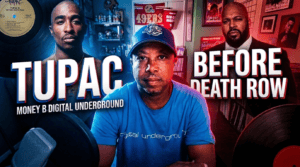
A recent online commentary called for a “narrative change” around Black culture, arguing that too much of what gets marketed as culture is rooted in dysfunction, celebrity worship, immorality, and spectacle. The video’s tone is intense, and not everyone will agree with every point made, but the larger question it raises is important: when Black culture is constantly filtered through mainstream platforms, award shows, viral clips, and corporate entertainment systems, what version of the culture is the world being taught to see?
The Consolidation Is Real
BET has long been treated as one of the flagship showcases of Black entertainment in America. Paramount currently describes BET Media Group as a major media ecosystem dedicated to “entertaining, engaging, and empowering the Black community and championing Black culture,” with brands that include BET, BET+, BET Gospel, BET HER, BET International, BET Jams, BET Soul, BET Studios, and VH1.
But BET also exists inside a much larger corporate structure.
In August 2025, Skydance Media and Paramount Global completed their merger, creating Paramount, a Skydance Corporation, with David Ellison serving as chairman and CEO. In 2026, reports also stated that Paramount bought out Tyler Perry Studios’ stake in BET+ and planned to fold BET+ into Paramount+, moving the standalone Black-focused streamer’s programming into the parent company’s larger streaming platform.
That does not automatically mean there is a conspiracy against the culture. But it does raise a fair and necessary question: when the platforms that define “Black entertainment” for a mass audience are owned, measured, and distributed through massive corporate systems, how much of what gets elevated is actually coming from the culture — and how much is being selected for the culture because it performs?
The media landscape is consolidating even further. Paramount announced a deal to acquire Warner Bros. Discovery in a transaction valued at approximately $110 billion, with the company saying the deal is expected to close in Q3 2026, subject to customary closing conditions, regulatory clearances, and shareholder approval. Reuters has reported that the deal remains under scrutiny, including concerns from Oregon, California, New York, the European Commission, and the United Kingdom over competition, media plurality, children’s programming, streaming, and consumer choice.
Again, none of that is hidden. It is corporate news. But it matters because culture does not exist outside business. Culture gets funded. Culture gets distributed. Culture gets promoted. Culture gets buried. Culture gets clipped, packaged, monetized, and repeated until people start believing the loudest version is the only version.
What Gets Lost When the Algorithm Decides
Award shows, scandals, shock clips, celebrity downfall stories, sexualized performances, public embarrassment, and viral outrage are easy to package. They move fast. They trigger debate. They create reaction. They keep people watching.
Archives move slower.
Oral history moves slower.
Elder testimony moves slower.
Independent interviews move slower.
Regional culture moves slower.
Faith communities, family stories, migration history, Caribbean and African diaspora influence, Canadian Black culture, underground artists, pioneers, athletes, documentarians, and forgotten contributors do not always fit the viral formula.
But those stories are culture too.
In fact, they may be the deeper culture.
The algorithm does not naturally protect legacy. The algorithm rewards response. That means the most clickable version of Black culture can become the most visible version, even when it is not the most complete version.
That is where independent media has a responsibility.
The WWETV Position
WWETV is not trying to out-compete BET, WorldStar, gossip platforms, or viral clip accounts on volume, shock value, or scandal speed. The lane is different by design.
WWETV’s position is simple:
Culture is not only what trends. Culture is what gets remembered.
That is why WWETV’s ecosystem matters.
WWETV Media anchors the receipts — the documented, dated, sourced history that gives a story credibility.
WWETV Studios carries the memory — the nostalgia, legacy, and archive work that keeps context alive after the news cycle moves on.
WWETV Network hosts the debate — the “Culture Court” space where the community can argue out what a moment means instead of only reacting to it.
Together, those lanes create a different answer to the question this cultural moment keeps asking.
The mainstream version of Black culture will keep being shaped by boardrooms, ownership structures, advertiser incentives, streaming competition, and algorithms. The independent version has to be built by platforms willing to do the slower work: interviews, archives, receipts, historical context, regional voices, and cultural memory.
Black Culture Is Not One Thing
Black culture is not only hip-hop, even though hip-hop changed the world.
It is not only BET Awards performances, even though award shows have played a major role in visibility.
It is not only WorldStar clips, even though viral media has become part of the digital streets.
It is not only celebrity drama, relationship debates, street politics, or social media outrage.
Black culture is also gospel music, reggae, soca, jazz, R&B, soul, dancehall, spoken word, fashion, comedy, sports, activism, film, neighborhood history, independent radio, community television, barbershop debates, Caribbean carnivals, African traditions, Canadian Black stories, American civil rights memory, immigrant family sacrifice, and the artists who never became household names but still shaped the sound.
Black culture is the record and the remix.
The protest and the party.
The archive and the algorithm.
The issue is not that every piece of entertainment must be clean, safe, or respectable. Culture has always had edge. Hip-hop itself was born from conditions that polite society ignored. The problem begins when the most destructive, marketable, or humiliating images become the default public definition — especially when those images are elevated more aggressively than the builders, teachers, pioneers, elders, and independent creators doing the work of preservation.
Betterment Requires Documentation
If the culture needs betterment, it cannot only come from criticism. It also has to come from building.
That means documenting the pioneers before they are gone.
That means interviewing artists while they can still explain the context behind their work.
That means preserving footage before platforms remove it.
That means connecting young audiences to the people who opened doors before social media existed.
That means challenging artists, executives, media personalities, and audiences to ask a harder question: are we only feeding the machine, or are we strengthening the culture?
WWETV’s role is not to pretend the negative does not exist. Real culture coverage has to deal with the full picture. But there is a difference between documenting a problem and profiting from the destruction without context.
There is a difference between covering a scandal and building an archive.
There is a difference between chasing attention and creating memory.
There is a difference between using culture and serving culture.
The Work Ahead
The future of Black culture cannot be left only to the biggest platforms, the fastest clips, or the richest companies. Those platforms will always have reach. They will always have money. They will always have access.
But independent media can still have something just as important: trust.
Trust comes from showing the receipts.
Trust comes from remembering the elders.
Trust comes from giving artists space to speak beyond promotion.
Trust comes from asking uncomfortable questions without reducing the culture to shame.
Trust comes from refusing to let algorithms decide which parts of the culture deserve to survive.
That is the betterment WWETV can help create.
Not by claiming to own the culture.
Not by pretending to be above the culture.
But by documenting it with care, context, memory, and accountability.
Because Black culture is bigger than what the mainstream sells back to us.
And if the mainstream is going to keep packaging the culture for profit, independent platforms have to keep protecting the record.
Share this content:





Post Comment