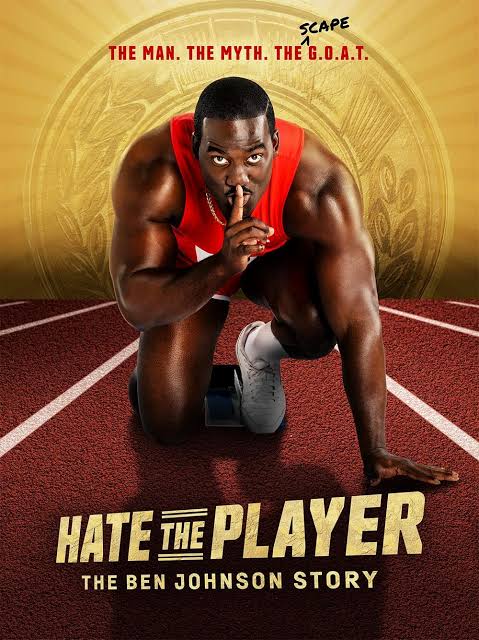
Was Ben Johnson Made The Fall Guy? Culture Court Revisits A Sports Legacy
Was Ben Johnson Made The Fall Guy? Culture Court Revisits A Complicated Sports Legacy
When people hear the name Ben Johnson, most of them immediately think of one moment: Seoul, 1988.
The race.
The gold medal.
The disqualification.
The scandal.
But WWETV Network’s Culture Court is asking a deeper question: was Ben Johnson judged only for what happened in 1988, or was he turned into the face of an entire era of sports controversy?
Before the world reduced him to one race, Johnson was one of the most explosive sprinters the world had ever seen. Born in Jamaica and later based in Canada, he became a symbol of speed, ambition, and possibility for many who saw his rise as bigger than sports alone. For Toronto’s Caribbean community, and especially for those connected to the city’s Little Jamaica history, Johnson’s story was never just about a stopwatch.
It was also about identity.
It was about a Jamaican-born Canadian athlete becoming one of the most talked-about men in the world. It was about a Black sprinter carrying expectations from his family, his community, and his country. It was about how quickly media praise can turn into public condemnation when a hero becomes a headline.
That is where the Culture Court conversation begins.
The Race That Changed His Life
At the 1988 Summer Olympics in Seoul, Ben Johnson crossed the finish line in the men’s 100 meters ahead of Carl Lewis in a stunning world-record time. For a brief moment, he stood at the top of global sprinting. Then, after a positive drug test, Johnson was disqualified, stripped of the gold medal, and removed from the record books.
The result became one of the most infamous moments in Olympic history.
But the public conversation around Johnson rarely stayed limited to rules, testing, or competition. It became bigger than the race itself. He was not only punished as an athlete. He became a symbol.
To some, he represented betrayal.
To others, he represented hypocrisy.
To many in the Caribbean and Canadian communities, his story became more complicated than the headlines allowed.
That is why the question still matters decades later.
Was Ben Johnson simply a rule-breaker who received the consequences of his actions? Or did the media and sports world turn him into the easiest person to blame for a much larger problem?
The Man Versus The Image
One of the reasons Ben Johnson’s legacy remains so debated is because the public image became bigger than the person.
Before 1988, Johnson had already built a serious track résumé. He was a two-time Olympic bronze medalist in 1984 and had become one of Carl Lewis’ most intense rivals. His explosive start and power made him one of the most feared sprinters of his generation.
But after Seoul, much of that history was overshadowed.
The “Ben Johnson scandal” became the shorthand. The human being behind the name became secondary. His Jamaican roots, his Canadian journey, his Toronto connection, his training sacrifices, and his place in Black Canadian sports history were pushed behind one permanent label.
Culture Court is not here to erase the facts of 1988. The disqualification happened. The gold medal was taken away. The controversy is part of the historical record.
But a fair cultural conversation should be able to hold more than one truth at the same time.
Yes, the scandal mattered.
Yes, the rules mattered.
But so did the environment around elite sprinting.
So did the pressure.
So did the media machine.
So did the way one athlete became the face of an entire era.
Why This Story Still Hits Different In Toronto
For Toronto, Ben Johnson’s story has always carried extra weight.
He was not just an athlete on television. He was connected to a city that was still shaping its identity on the global stage. For Caribbean Canadians, his rise represented visibility. For Little Jamaica and the broader Black Canadian community, he was part of a larger story about migration, ambition, struggle, and recognition.
That is what gets lost when his name is treated only as a scandal.
Johnson’s story sits at the intersection of sports history and cultural memory. It raises questions about how Canada celebrates Black excellence, how quickly public love can disappear, and how immigrant success stories are remembered when the ending becomes complicated.
When he won, he was claimed as a Canadian champion.
When he fell, the conversation around identity became much colder.
That shift is part of why the story still sparks debate.
Was Ben Johnson A Scapegoat?
This is the heart of the Culture Court case.
Was Ben Johnson treated fairly as an individual athlete who violated the rules? Or was he made the face of a wider sports problem that extended far beyond one man?
That question does not require ignoring what happened in Seoul. Instead, it asks whether the punishment, public shame, and decades-long media framing gave the public a complete picture.
Sports history has shown that performance-enhancing drug scandals were not limited to one athlete, one country, or one race. Yet Johnson’s name remains one of the most instantly recognizable examples. His image became permanently attached to the era.
That is why some people see him as a cautionary tale, while others see him as a scapegoat.
The truth may sit somewhere in the middle.
Ben Johnson’s story is not simple. That is exactly why it deserves more than a simple headline.
Culture Court Is Open
WWETV Network’s Culture Court is not asking people to rewrite the record books. It is asking viewers to revisit the story with a wider lens.
Who gets remembered as a legend?
Who gets remembered as a disgrace?
Who controls that story after the cameras move on?
And can a person ever recover their full identity once the media reduces them to one moment?
Ben Johnson was one of the fastest men the world had ever seen. He was also one of the most heavily judged athletes in modern sports history.
Decades later, his name still sparks arguments about fairness, race, media, nationalism, pressure, and legacy.
So the verdict now goes to the people.
Was Ben Johnson treated fairly?
Or was he made the fall guy for an entire era?
Culture Court is open.
Share this content:









Post Comment