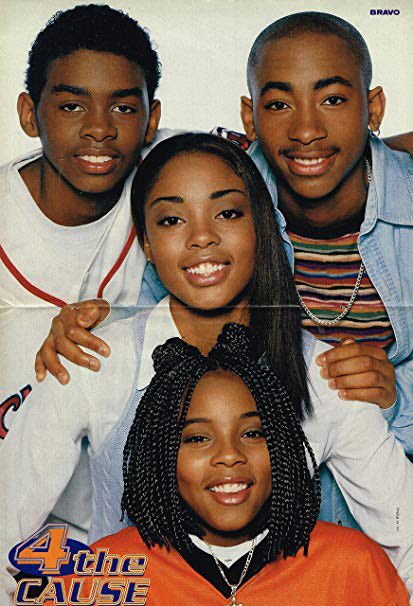
Sparkle’s Niece Breaks Silence in New R. Kelly Interview
Reshona Landfair, Sparkle’s Niece in the R. Kelly Case, Breaks Her Silence in First Major TV Interview
Nearly a quarter-century after one of the most infamous controversies in modern music history, Sparkle’s niece — the woman once referred to in court documents as “Jane Doe” — is publicly telling her story for the first time. In a new interview released on CBS Mornings and tied to the release of her memoir, Reshona Landfair opens up about her relationship with R. Kelly, how she was groomed, and the long journey toward healing and accountability.
From “Jane Doe” to Speaking Her Truth
In the CBS interview accompanying her memoir Who’s Watching Shorty? Reclaiming Myself from the Shame of R. Kelly’s Abuse, Landfair details how she first met R. Kelly as a teenager and the decades of complicated emotional and legal battles that followed. She recalls:
-
Being introduced to Kelly by her aunt as a hopeful young artist, with expectations that he would help her music career.
-
Feeling groomed and emotionally manipulated from around the age of 13, a pattern that continued into her mid-teens.
-
The devastating moment when an explicit tape she filmed with Kelly at 14 was leaked nationally — a moment she says left her feeling “empty” and “very hollow inside.”
Landfair said that her participation in earlier legal proceedings — including the 2002 and 2008 cases involving charges against Kelly — was clouded by the psychological trauma and manipulation she experienced. She now expresses profound regret for having testified inaccurately at times, attributing those decisions to the complex grooming and control Kelly exerted over her life.
Healing and Empowerment Through Storytelling
Landfair’s memoir and television interview reflect a deeply personal and transformative journey. She says that the release of the 2019 documentary Surviving R. Kelly marked a turning point, helping her realize both the broader pattern of abuse and her own responsibility to speak her truth. Today, she describes her life as one shaped by resilience:
“There’s no job I can apply for where this isn’t the forefront of my life … But once I realized I didn’t have peace or privacy by hiding, I had to take ownership.”
In addition to her writing, Landfair is the founder of Project Refine, a mentoring organization she says is dedicated to empowering girls and women affected by trauma. She is also a mother, and part of her healing narrative centers on creating safety and purpose for her child.
Where Sparkle Stands Now
In response to her niece’s decision to finally speak publicly, Sparkle issued a statement emphasizing support for her healing journey, while firmly denying that she ever facilitated or enabled abuse. She highlighted her own long record of opposition to R. Kelly’s conduct, including her testimony in court and participation in earlier public campaigns against him.
Sparkle reiterated:
“Any suggestion that I groomed, facilitated, or enabled harm to my niece is untrue and deeply painful, especially given my documented actions.”
Her statement acknowledges the complexity of the family’s past, expressing both relief that Landfair can finally speak openly and a hope for continued healing and accountability within the family.
The Wider Legal and Cultural Legacy
(#AD) — After years hidden as “Jane Doe” in R. Kelly’s sex-trafficking trial, Reshonona Landfair steps forward in her first TV interview on CBS Mornings.
She opens up about the grooming that started as a teen, years of abuse, manipulation, being silenced, and watching her… pic.twitter.com/bQR9zUghTX
— Tasha K (@UNWINEWITHTASHA) February 3, 2026
R. Kelly has been serving lengthy federal prison sentences for racketeering, sex trafficking, and related crimes. In separate trials held in 2021 and 2022, he was convicted on multiple counts involving exploitation of minors and other victims. The convictions came after decades of allegations, public investigations, and cultural reckoning centered on abuse in the music industry — from both survivors like Landfair and advocates like Sparkle.
While Kelly’s legal fate is sealed with long sentences, Landfair’s decision to speak publicly adds fresh depth to the narrative of survivor resilience and industry accountability. It also highlights the ongoing challenges victims face — from legal systems to family dynamics — in achieving recognition and justice.
Key Takeaways
-
Reshona Landfair, once known only as “Jane Doe,” has publicly reclaimed her identity and shared her lived experience of abuse and manipulation tied to R. Kelly.
-
Her memoir and televised interview reflect decades of trauma, healing, and empowerment.
-
Sparkle supports her niece’s healing while strongly disputing any role in enabling harm.
-
The story contributes to the broader historical and cultural reflection on R. Kelly’s crimes and the long fight for survivor voices to be heard.
TIMELINE: MAJOR LEGAL EVENTS IN THE R. KELLY CASE
1996–1998 — Early Allegations and Relationship
-
R. Kelly begins a relationship with Aaliyah, which later draws scrutiny due to her age at the time.
-
Around this period, Kelly is accused of inappropriate relationships with multiple underage girls, including Sparkle’s niece (later identified publicly as Reshona Landfair).
2002 — Indictment on Child Pornography Charges
-
Kelly is indicted in Chicago on 21 counts of child pornography following the circulation of an explicit videotape allegedly involving a minor.
-
The case becomes one of the most publicized celebrity sex crime cases of the early 2000s.
2008 — Acquittal in Illinois Trial
-
After a lengthy trial, Kelly is acquitted of all charges.
-
The outcome is widely criticized and later cited as an example of how power, fame, and victim intimidation affected accountability.
2019 — Surviving R. Kelly Documentary
-
Lifetime airs Surviving R. Kelly, reigniting public outrage.
-
Survivors, including Sparkle and other women, detail long-term patterns of grooming, coercion, and abuse.
-
The documentary directly leads to renewed criminal investigations.
2019 — Federal Arrest
-
Kelly is arrested on federal charges in Chicago and New York, including:
-
Sex trafficking
-
Racketeering
-
Transportation of minors for illegal sexual activity
-
September 2021 — New York Conviction
-
Kelly is convicted in federal court in New York on racketeering and sex-trafficking charges.
-
Prosecutors establish a long-running criminal enterprise designed to recruit, control, and exploit victims.
June 2022 — Sentencing
-
Kelly is sentenced to 30 years in federal prison for the New York convictions.
-
The sentence is widely viewed as a historic moment for survivor accountability in the music industry.
2022–2023 — Additional Convictions
-
Kelly is convicted in Chicago federal court on child pornography and enticement charges.
-
He receives an additional sentence (to run concurrently), solidifying that he will likely spend the rest of his life in prison.
2024–2026 — Appeals and Public Reckoning
-
Kelly continues to pursue appeals, all of which have so far been denied or stalled.
-
Survivors increasingly reclaim their identities publicly, including Sparkle’s niece, who gives a new interview and releases a memoir, adding further personal context to the historical record.
WHY THIS NEW INTERVIEW MATTERS
-
It adds first-person context to events previously known only through court filings and media reports.
-
It highlights how grooming and trauma affected testimony in earlier trials.
-
It reinforces how systemic failures delayed justice for decades.
Why R. Kelly Was Acquitted in 2008 but Convicted in Federal Court Years Later
The contrast between R. Kelly’s 2008 acquittal and his later federal convictions often causes confusion. The outcomes were driven by different evidence standards, legal strategies, and jurisdictions.
1) The 2008 Illinois Trial (State Case)
-
Focused narrowly on child pornography charges tied to a specific videotape.
-
Prosecutors had to prove the identity and age of the person in the video beyond a reasonable doubt.
-
The alleged victim did not testify, and the defense created enough doubt for acquittal.
-
The case did not examine a broader pattern of behavior.
2) The 2021–2022 Federal Cases (New York & Illinois)
-
Prosecutors used racketeering (RICO) statutes, which allow the court to assess patterns of criminal conduct over time, not just a single incident.
-
Multiple survivors testified, supported by:
-
corroborating witnesses
-
financial and travel records
-
communications evidence
-
-
The federal cases established an organized system of recruitment, control, and exploitation, which juries found compelling.
3) Why the Outcomes Were Different
-
Scope: Federal cases examined decades of behavior; the 2008 case did not.
-
Evidence: Survivors testified directly in federal court.
-
Law: RICO laws are designed to prosecute long-running criminal enterprises.
Bottom Line:
The 2008 acquittal did not mean the conduct didn’t occur — it meant the specific charges at that time could not be proven under state law. The later federal convictions reflected new testimony, stronger evidence, and a broader legal framework.
Share this content:





Post Comment