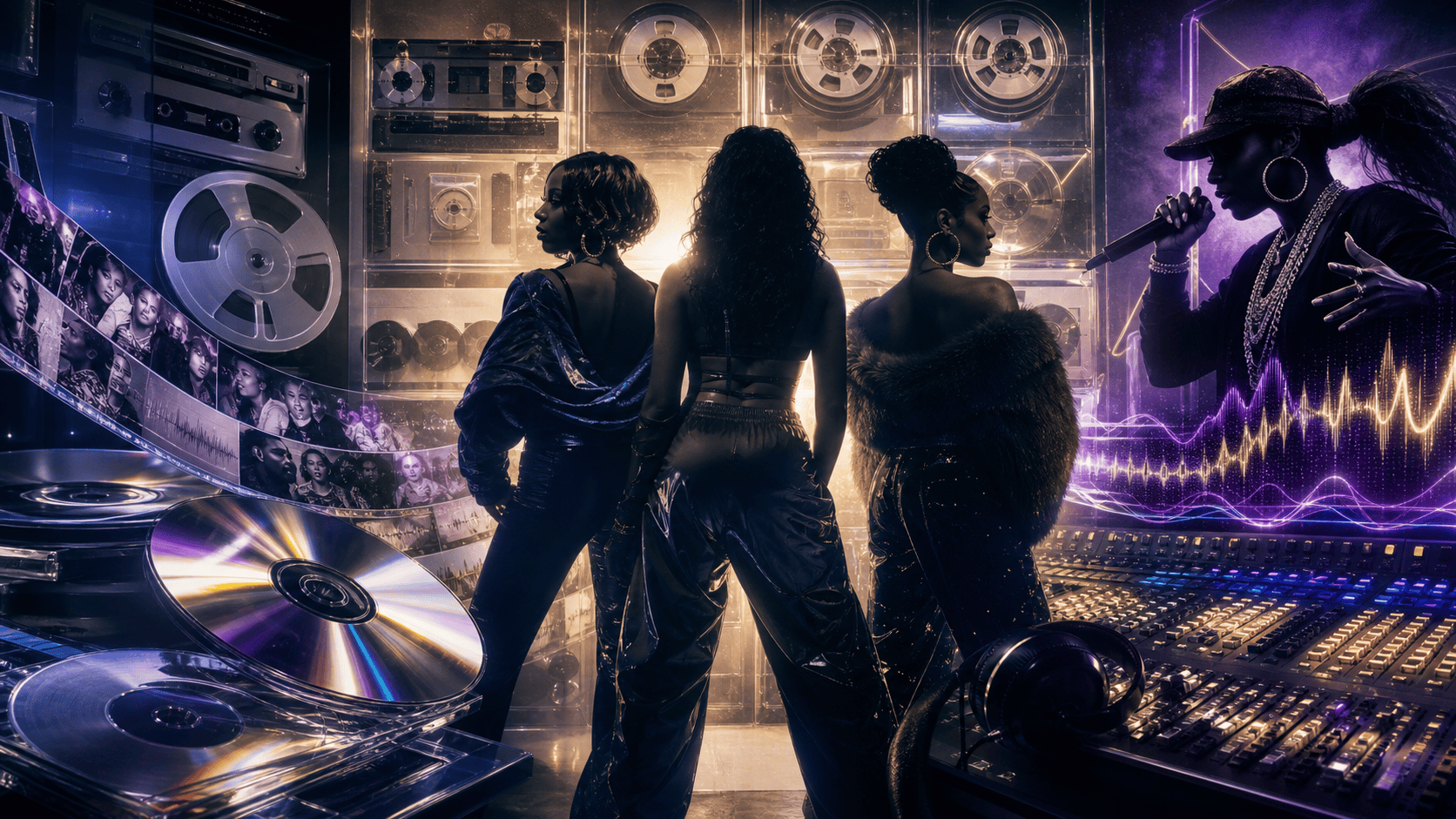
Destiny’s Child Unreleased Remixes With Missy Elliott Are Reportedly Coming
Destiny’s Child may be opening its archive.
Mathew Knowles says a collection of previously unreleased Destiny’s Child remixes is being prepared for release, with Beyoncé, Kelly Rowland and Michelle Williams on the recordings and Missy Elliott among the guest rappers.
Speaking to SiriusXM’s Page Six Radio on July 22, Knowles said the music could arrive within the next 30 days. He described dance mixes, “urban” mixes and other versions that audiences have not heard. He did not confirm a title, track list, exact release date or whether the songs will be packaged as an album.
Those details matter. This is not confirmation of a Destiny’s Child reunion, tour or newly recorded studio project. It is a catalog story—and potentially an important one.
Rolling Stone reported the announcement as the group’s landmark 1999 album The Writing’s on the Wall returned to the anniversary conversation.
What Mathew Knowles Actually Announced
Knowles said the archive contains multiple remixes that have never been released. According to his description, the material includes the trio’s vocals, guest rappers, dance versions and R&B/hip-hop-oriented mixes.
Missy Elliott is the only guest name he revealed publicly. That connection immediately gives the announcement more historical weight.
Still, several questions remain open:
- Which original songs were remixed?
- When were the versions recorded?
- Are they finished masters or archival works still being prepared?
- Will they arrive as singles, an EP, a compilation or anniversary bonus material?
- Who controls and approves the releases?
Until those answers arrive through an official release plan, the most accurate description is “unreleased remixes expected within 30 days,” not “a new Destiny’s Child album.”
Why Missy Elliott Is More Than a Feature
Missy Elliott’s name is not a random nostalgia attachment.
Destiny’s Child emerged during a period when R&B and hip-hop were becoming inseparable on radio. Remix culture allowed singers to move between pop, club and rap audiences without abandoning the original record. A new verse, reconstructed beat or alternate arrangement could change a song’s meaning and extend its life.
Missy was one of the architects of that era. As a rapper, songwriter, producer and visual innovator, she helped collapse the artificial line between R&B futurism and hip-hop experimentation.
Her documented history with Destiny’s Child includes the group’s “Bootylicious” remix, which already demonstrated how naturally their worlds fit together. If the coming material includes a different, unheard collaboration, it could add a missing piece to the story of turn-of-the-millennium Black pop.
WWETV recently noted how Missy Elliott and the Virginia creative network helped reshape global music. An archival Destiny’s Child remix would reconnect that innovation to the girl-group tradition.
Destiny’s Child Was Always in Conversation With Hip-Hop
The group’s catalog is often remembered through vocal precision, matching visual concepts and blockbuster singles. But hip-hop was embedded in its development.
Songs such as “No, No, No,” “Say My Name,” “Jumpin’, Jumpin’,” “Survivor” and “Lose My Breath” worked because the performances were rhythmic as well as melodic. The group could deliver harmonies, clipped cadences, call-and-response hooks and attitude that translated across R&B, pop and rap formats.
Remixes made that relationship explicit. Guest verses placed the group beside rappers, while club versions showed how strongly the vocals could survive a completely different rhythmic frame.
Opening the archive can therefore reveal more than alternate versions of familiar hits. It can show the routes through which Black music moved before streaming playlists flattened genre boundaries into invisible recommendation systems.
Catalog Activation Is Not Reunion Speculation
Every Destiny’s Child headline invites the same question: Are Beyoncé, Kelly and Michelle reuniting?
That is not the story Knowles announced.
Catalog activation means finding new value and new context in music that already exists. Anniversary editions, remastered videos, archival performances, deluxe vinyl packages and unheard remixes can return a legacy act to the conversation without requiring the members to record or tour together.
For Destiny’s Child, that approach makes strategic sense. Beyoncé, Rowland and Williams have distinct careers and schedules. The group’s songs, however, continue to circulate through social video, samples, dance challenges, television moments and generational discovery.
A strong archival campaign could meet younger listeners where they are while giving longtime fans something genuinely new to hear.
The key is curation. Dumping a folder of minor alternates onto streaming services would create a short burst of attention. Providing dates, credits, session history and context could turn the release into a meaningful piece of R&B preservation.
The Group’s Full History Should Remain Visible
The phrase “Destiny’s Child” covers more than one lineup.
The trio of Beyoncé, Kelly Rowland and Michelle Williams defined the group’s final and most globally recognized phase. Earlier chapters also included LeToya Luckett, LaTavia Roberson and Farrah Franklin, with Luckett and Roberson central to the breakthrough era of The Writing’s on the Wall.
If the remixes span multiple albums or years, the credits should make those lineups clear. Archival releases are strongest when they illuminate history rather than simplify it.
That is especially important for Black girl groups, whose innovation is frequently compressed into a handful of hits and images. Studio documentation can show who sang, wrote, produced, arranged and appeared on each version.
Why Unreleased Remixes Can Reach a New Generation
Younger listeners do not discover catalogs in chronological order. A sped-up edit, dance clip, guest verse or reissued video can become the first door into an artist’s history.
That can frustrate purists, but it also creates an opportunity. A 2026 remix campaign can lead a new listener backward—from an unheard Missy Elliott verse to Survivor, from Survivor to The Writing’s on the Wall, and from there into the larger history of R&B girl groups.
Destiny’s Child belongs in a lineage that includes the Supremes, Labelle, En Vogue, TLC and SWV while also creating a model later groups had to answer. Their combination of vocal arrangement, choreography, fashion, competition and independence language became a template.
Unreleased material can reopen that lineage if the rollout treats the archive as culture rather than leftover content.
What to Watch Next
The first meaningful signal will be an official announcement from a label, distributor or the group’s verified channels. That should clarify whether the release is a single remix or a larger package.
Credits will be equally important. Fans will want to know the original sessions, producers, featured artists and whether the material has been newly edited.
Finally, watch how the campaign frames the music. If it leans entirely on reunion bait, the history will be reduced to speculation. If it supplies context, visual restoration and accurate personnel, it can become one of 2026’s most useful R&B catalog releases.
For now, the headline is exciting but specific: Mathew Knowles says unheard Destiny’s Child remixes are on the way, and Missy Elliott appears on at least one.
That is already enough to command attention.
Share this content:









Post Comment