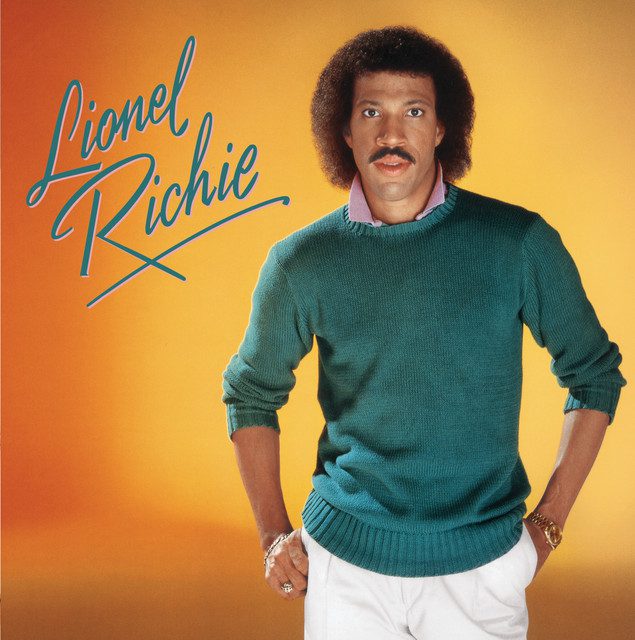
Lionel Richie’s Commodores Claim Reignites Chris Brown and Usher Debate
Lionel Richie Says the Commodores Did It First—But His Chris Brown and Usher Joke Reopens a Bigger Debate
A viral concert joke put Lionel Richie in the middle of the Chris Brown and Usher conversation. WWETV’s archival footage shows the deeper history behind his claim—and why the delivery remains controversial.
Lionel Richie has entered one of R&B’s loudest debates of the week after comparing his generation of performers with Chris Brown and Usher.
During an August 11 performance in Phoenix with Earth, Wind & Fire, Richie pointed to the large-scale tours mounted by the Commodores and their contemporaries decades ago. Then came the line that turned a history lesson into a viral controversy: “We didn’t go to jail.”
The remark was widely understood as a reference to Brown’s legal history. Brown later responded on Instagram with laughing emojis and called Richie “paw paw.” Usher, however, does not share Brown’s criminal history, making Richie’s decision to name both men part of what fueled the backlash. People reported the exchange and Richie’s subsequent clarification.
Richie went on to describe Brown and Usher as “fine Christian men,” but by then the punchline had already taken over the conversation.
The archival interview behind Richie’s argument
The controversy becomes more interesting when Richie’s joke is separated from his broader historical point.
In a 1984 interview revisited by WWETV Media, Richie recalled the Commodores’ early relationship with the Jackson 5. He said the Commodores served as the opening act on the Jackson 5’s first professional tour in 1970 and explained that the two groups were effectively developed together.
“We basically grew up together,” Richie said in the interview, describing how the young performers learned to conduct themselves on the road, present themselves to an audience and win over crowds through live performance.
That memory is the foundation of WWETV’s latest Saturday Morning Soul Train video, which pairs Richie’s own words with classic Commodores performance footage. The archive gives viewers something the viral concert clip alone cannot: context for why Richie sees the Commodores’ generation as a blueprint for the stadium-level R&B spectacle audiences celebrate today.
A touring blueprint, not a free pass
Richie’s point about lineage is worth hearing. Long before social media metrics, viral clips and modern stadium production, groups such as the Commodores and the Jackson 5 built their reputations through disciplined touring, choreography, musicianship and repeated live performance.
Usher has made a similar case for the present-day tour, describing the partnership with Brown as bigger than two individual stars and as an argument for R&B’s place in stadiums. In an interview with the Associated Press, Usher said Brown’s controversies did not affect his decision to tour with him, emphasizing Brown’s work as a performer and the loyalty of his audience. Read the Associated Press report via The Washington Post.
But acknowledging a musical lineage does not settle the moral argument surrounding Brown. He pleaded guilty in 2009 to felony assault against Rihanna, and his later legal troubles have continued to shape how audiences discuss his career. Richie’s joke pulled that history back into the spotlight while also placing Usher inside a comparison that did not apply equally to both artists.
That is why the reaction cannot be reduced to older artists versus younger artists. Two different questions are being debated at once:
- Did the Commodores and their peers help establish the live-performance model that stars such as Usher and Brown now carry into stadiums?
- Did Richie undermine that valid historical point by turning Brown’s record—and Rihanna’s trauma—into a punchline?
Both questions can have complicated answers.
Soul Train makes the history visible
The value of the Soul Train archive is that it allows audiences to see the tradition instead of merely hearing artists argue about it. The synchronized movement, live-band energy, wardrobe, presentation and command of the stage all formed part of a performance language passed between generations.
Richie’s 1984 comments show that he understood this process as training. The Commodores did not emerge in isolation; they learned alongside the Jackson 5 inside a Motown system built around preparation, professionalism and live execution.
Decades later, Usher and Brown are selling a contemporary version of R&B spectacle to massive audiences. The production is larger and the distribution is digital, but the demand remains familiar: deliver songs, movement, personality and a moment people will remember after the lights go down.
Richie may be right to insist that this legacy did not begin with today’s stars. Whether his viral joke was the right way to defend that legacy is a different matter.
What do you think: was Lionel Richie right about the touring blueprint but wrong in how he delivered the message?
Share this content:







Post Comment