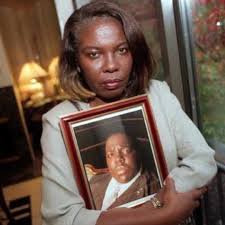
Tupac Prosecutor Says He Wanted to Ask Suge Knight: “Why Did You Have Biggie Killed?”
A prosecutor who helped secure the first conviction in Tupac Shakur’s murder has renewed attention around another of hip-hop’s longest-running mysteries: the unsolved killing of Christopher “The Notorious B.I.G.” Wallace.
Speaking after a Las Vegas jury found Duane “Keffe D” Davis guilty of first-degree murder, lead prosecutor Marc DiGiacomo discussed Marion “Suge” Knight’s refusal to cooperate during the proceedings.
DiGiacomo then revealed the first question he said he would have asked Knight:
“Why did you have Biggie killed?”
The statement immediately connected the completed Tupac prosecution to the still-unresolved murder of Biggie Smalls.
However, DiGiacomo’s remark was a proposed question—not a new criminal charge, presentation of evidence or judicial finding against Knight.
Suge Knight has never been charged in Biggie’s murder, and Wallace’s 1997 killing remains officially unsolved.
Why prosecutors wanted to speak with Suge Knight
Knight was driving the black BMW when Tupac was shot near Flamingo Road and Koval Lane in Las Vegas on September 7, 1996.
Tupac was struck multiple times and died six days later. Knight was also wounded but survived, making him one of the case’s most important surviving witnesses.
Nearly 30 years later, Knight publicly rejected the possibility of participating in Davis’s murder trial.
“This trial has nothing to do with me,” Knight told ABC News before the proceedings began. He warned that forcing him to appear could damage whichever side called him and said he wanted to be left out of the case.
Knight also maintained that he did not cooperate with investigators after Tupac’s death because solving homicides was not his responsibility. ABC News
Prosecutors ultimately built their case without his testimony.
The state relied heavily on recorded interviews, private conversations and statements attributed to Davis in his memoir, Compton Street Legend. Prosecutors argued that Davis obtained the weapon and orchestrated a retaliatory attack after Tupac and members of the Death Row entourage assaulted Davis’s nephew, Orlando Anderson, inside the MGM Grand.
A jury found Davis guilty after less than three hours of deliberation. He faces a potential life sentence and has indicated that he intends to appeal. Reuters
Biggie’s murder remains officially unsolved
Christopher Wallace was fatally shot in Los Angeles on March 9, 1997, approximately six months after Tupac’s death.
Biggie was leaving a music-industry event when another vehicle approached his SUV and a gunman opened fire. He was transported to Cedars-Sinai Medical Center, where he was pronounced dead. He was 24 years old.
No one has ever been convicted of the murder.
For decades, investigators, journalists and former law-enforcement officials have examined whether Biggie’s killing was connected to Tupac’s death and the retaliation that followed the highly publicized East Coast–West Coast conflict.
Numerous theories have implicated people connected to Death Row Records, street organizations and corrupt members of law enforcement. Those theories have produced books, documentaries and civil litigation, but no criminal case establishing that Knight ordered Biggie’s murder.
Knight has denied involvement.
That distinction is crucial when reporting DiGiacomo’s statement. A prosecutor saying what he wanted to ask Knight is not equivalent to proving the premise contained within the question.
Was DiGiacomo revealing a theory?
The force of DiGiacomo’s question raises a legitimate issue: Was the prosecutor disclosing his genuine theory about Biggie’s killing, or describing an aggressive interrogation tactic intended to provoke Knight into responding?
Without additional evidence or clarification, the remark alone cannot answer that question.
It does show that members of the Tupac prosecution team still viewed Knight as someone capable of providing information extending beyond the Davis case.
Knight occupied a central position in the events surrounding both rap icons. He led Death Row Records, was beside Tupac during the Las Vegas shooting and became a major figure in the escalating conflict between Death Row and Bad Boy Records.
His refusal to cooperate meant prosecutors were unable to question him publicly under oath during Davis’s trial.
The Tupac verdict opens another unresolved chapter
The conviction of Keffe D resolved one major legal question by establishing Davis’s criminal responsibility for orchestrating the attack on Tupac.
It did not identify a living gunman, explain every decision surrounding the 1996 investigation or resolve Biggie’s murder.
A prosecutor saying this is wild. lol
— LvFinest (@CaliCal310) September 1, 2026
DiGiacomo’s post-verdict remark demonstrates how closely the two cases remain connected in the public imagination—even as their legal outcomes remain dramatically different.
Tupac’s case now has its first conviction. Biggie’s case still has no one charged.
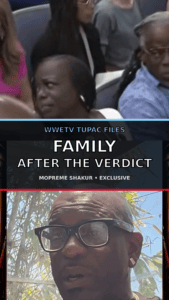
WorldWide Entertainment TV Network will continue examining the statements, evidence and unresolved questions surrounding both murders through its ongoing Tupac Files and Culture Court coverage.
Network owns the case.
Share this content:




Post Comment