Tupac’s Baltimore School Friends Reveal His Acting Dream
Tupac Shakur’s Baltimore School for the Arts Friends Remember His Dream Of Becoming A Shakespearean Actor
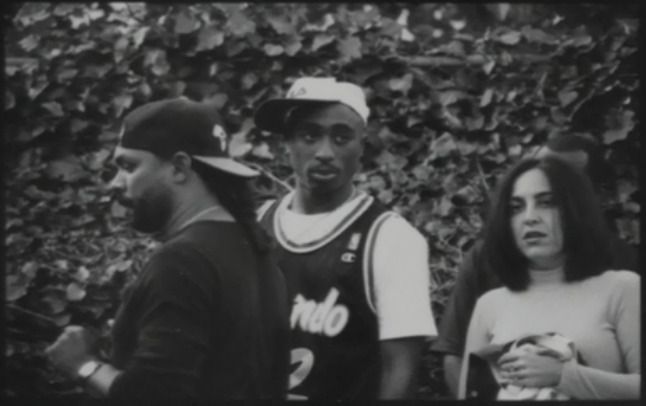
A new Baltimore School for the Arts video is reminding fans that before Tupac Shakur became one of hip-hop’s most powerful voices, he was a young artist with dreams that stretched far beyond rap.
The clip features former Baltimore School for the Arts classmates and friends reflecting on the Tupac they knew before the world knew him as 2Pac. Their memories paint a picture of a teenager who was charismatic, kind, confident, deeply creative, and already thinking about greatness.
One speaker recalls Tupac as “like the mayor” at BSA, while another describes him as a multi-talented student with “incredible drive.” The memories are powerful because they cut through the one-dimensional image that often follows Tupac’s legacy. Before the Death Row era, before the headlines, before the East Coast-West Coast narrative, there was a young Tupac in Baltimore studying acting, poetry, music, dance, and performance.
Tupac At Baltimore School for the Arts
🐐
— 2Pac Charts (@2PacCharts) May 7, 2026
Tupac’s time at the Baltimore School for the Arts has long been one of the most important chapters in understanding who he became. Britannica notes that as a teenager, he attended BSA, studied ballet and acting, and even played the Mouse King in the school’s production of The Nutcracker.
BSA was not just a school for Tupac. It was a creative laboratory. The school describes its mission as nurturing young creative minds through serious arts training and academics, with students spending part of each day in arts classes and part in traditional academics.
That setting helped shape the side of Tupac that fans still study today: the poet, the actor, the thinker, the revolutionary, and the performer who could move between vulnerability and rage with rare intensity.
“What Type Of Actor Do You Want To Be?”
One of the strongest moments from the transcript comes when a friend recalls asking Tupac what kind of actor he wanted to become. Tupac was reportedly sitting on a windowsill when he immediately answered: “Shakespearean actor.”
That answer says a lot.
To some people, it may sound surprising because Tupac is most often remembered through hip-hop, West Coast imagery, and the intensity of his final years. But to those who knew his artistic foundation, it makes perfect sense. Shakespeare gave Tupac the kind of emotional scale he naturally understood: betrayal, ambition, love, revenge, family, power, tragedy, and survival.
The friend says Tupac explained that to perform Shakespeare, a person had to be among the very best. That is what Tupac wanted. He did not just want to act. He wanted to master the highest form of dramatic material.
Darrin Keith Bastfield And The BSA Memories
The transcript also references Back in the Day: My Life and Times with Tupac Shakur, the memoir by Darrin Keith Bastfield. Random House describes Bastfield as someone who grew up with Tupac, rapped with him, fought with him, and performed by his side, giving readers a personal look at Tupac as a teenager destined for greatness.
That matters because Tupac’s Baltimore years are often treated like a footnote, when they were actually a foundation. The people who saw him at BSA were not just watching a future rapper. They were watching a young performer learning how to command a room, speak with purpose, and understand the emotional weight of language.
The Actor Tupac Almost Became
Tupac did become an actor, and his screen presence remains one of the most important parts of his legacy. Films such as Juice, Poetic Justice, Above the Rim, Gridlock’d, and Gang Related showed that his dramatic talent was not a side hobby. It was part of his artistic identity. Vanity Fair has also examined Tupac’s acting legacy, noting how his breakout role as Bishop in Juice revealed the depth and danger he could bring to the screen.
But the BSA video adds a deeper layer. Tupac was not simply a rapper who later acted. He was a trained young performer who saw acting as part of his future before fame redirected his life.
That is why the Shakespeare detail is so haunting. Out of all the dreams Tupac chased, becoming a Shakespearean actor may be the one major artistic ambition he never fully got to realize.
Tupac’s Life Became Shakespearean
One speaker in the video makes a striking observation: although Tupac never became the Shakespearean actor he dreamed of becoming, his life itself became something like a Shakespearean play.
That comparison is not hard to understand.
Tupac’s story had brilliance, conflict, loyalty, betrayal, love, politics, family wounds, public pressure, inner contradiction, and a tragic ending at only 25 years old. His music often carried the same themes that run through classical tragedy: power, mortality, injustice, revenge, destiny, and the struggle to be understood.
That is why Tupac continues to feel larger than one genre. He was not just a rapper. He was a dramatic figure in American culture.
Why This Clip Matters Now
The Baltimore School for the Arts video matters because it pushes the conversation back toward Tupac’s full humanity.
Hip-hop history often remembers Tupac through extremes: revolutionary or outlaw, poet or gangster, martyr or provocateur. But the people who knew him at BSA describe someone more complete. A friendly student. A kind-hearted individual. A young man with confidence. A performer. A poet. A dreamer. A teenager who believed he could become one of the best actors in the world.
That is the Tupac story that should never be lost.
Before the bandana became iconic, before the Death Row chain, before the courtroom images, before the posthumous mythology, there was a young man in Baltimore learning his craft.
And according to those who knew him, even then, everybody could tell he had something special.
The WWETV Take
This is the part of Tupac’s legacy that still feels important for younger fans discovering him today.
Tupac’s greatness did not come from one lane. It came from the collision of many lanes: theatre, poetry, activism, hip-hop, film, street experience, Black radical history, emotional honesty, and raw performance instinct.
The Baltimore School for the Arts clip reminds us that Tupac was never just one thing. He was an artist in the fullest sense of the word.
And maybe that is why his work still lives. He did not only rap his life. He performed it, wrote it, studied it, and turned it into something the culture is still trying to understand.
Share this content:





Post Comment