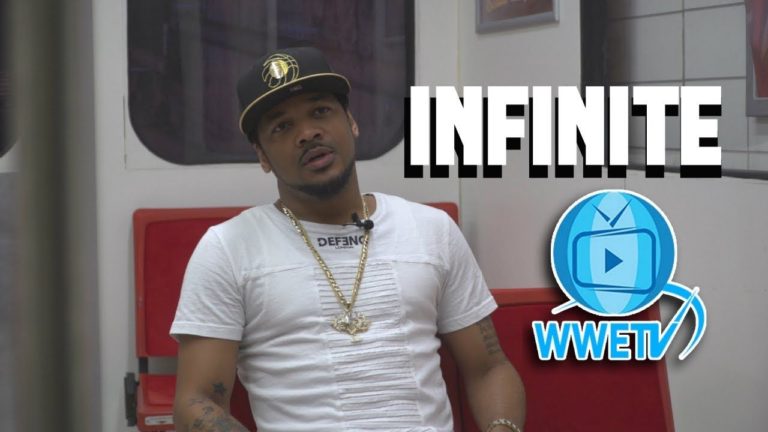
Infinite Talks Toronto Hip-Hop History With WWETV
Infinite Talks With WorldWide Entertainment TV About Toronto Hip-Hop History
Before Toronto became globally recognized as The 6, the city already had a hip-hop history shaped by pioneers, neighbourhood movements, independent artists, and voices that helped define the sound before the mainstream industry fully caught up.
One of those voices is Infinite.
In this restored WorldWide Entertainment TV archive feature, Infinite speaks about his journey through Toronto hip-hop, his early connection to the group Ghetto Concept, his solo career, and how the city’s rap scene evolved before Drake, streaming, and viral social media changed the global conversation.
For WWETV, this interview remains important because it captures something the city cannot afford to lose: firsthand memory from artists who helped build the foundation.
Infinite Is A Toronto Hip-Hop Veteran
Infinite is a Canadian rapper, actor, and Toronto hip-hop figure whose career connects several different eras of the city’s entertainment history.
He came up during a time when Toronto rap artists had to fight for visibility with fewer platforms, limited industry support, and fewer pathways into the U.S. market. There was no TikTok discovery system, no instant global streaming breakout, and no Toronto rap infrastructure like what exists today.
Artists had to build locally, perform, collaborate, appear on television, push videos, earn radio attention, and create a name through credibility.
Infinite was part of that era.
His catalog includes projects such as Ride, Underground, Profound, Let’s Be Friends, and 360 Degrees, showing a career that moved through different sounds, eras, and levels of the Canadian music industry.
Breaking From Ghetto Concept
A major part of Infinite’s story is his connection to Ghetto Concept, one of Toronto’s most respected rap groups.
Ghetto Concept helped set a standard for Toronto hip-hop during a period when the city was still proving itself nationally. Their name continues to come up whenever serious conversations happen about Canadian rap history, old-school Toronto hip-hop, and the groups that helped build the foundation before the city became internationally branded.
Infinite eventually moved into his own solo lane, but his connection to that movement remains part of his story.
That breakaway moment matters because it reflects a larger Toronto hip-hop pattern: artists often came from crews, neighbourhood movements, and collectives before stepping into individual careers. The city’s foundation was never built by one person alone. It was built by circles of talent pushing each other forward.
Toronto Before The 6
Today, Toronto is often discussed through Drake, OVO, viral street rap, international collaborations, and the city’s global streaming presence.
But before that era, Toronto hip-hop had to create its own identity without the world watching.
Artists like Infinite, Ghetto Concept, Maestro Fresh Wes, Michie Mee, Choclair, Kardinal Offishall, Saukrates, Dream Warriors, Citizen Kane, Da Grassroots, and others helped prove that Canada had real hip-hop voices with their own stories, slang, neighborhoods, and point of view.
Infinite’s interview with WWETV is valuable because it gives viewers access to that earlier layer.
The story of Toronto hip-hop did not begin when the world started paying attention. The work had already been done.
Infinite’s Hollywood Connection
Infinite’s career also extended beyond music.
He appeared in film and television projects connected to major names, including work alongside or within projects associated with artists and actors such as 50 Cent, LL Cool J, Omar Epps, and Jamie Foxx.
One of the notable moments in his acting career was his involvement in the story of Stanley “Tookie” Williams, the former gang leader and anti-violence advocate whose life became the subject of the film Redemption: The Stan Tookie Williams Story, starring Jamie Foxx.
That crossover matters because it shows how Toronto artists were not only fighting for space in music. Some were also finding ways into film, television, and broader entertainment before the city had the global media identity it holds now.
Infinite’s story is not just about rap. It is about Toronto talent trying to break through multiple doors.
Why This Interview Matters Now
This interview matters more in 2026 because Toronto hip-hop history is being re-examined.
Whenever the current Toronto rap conversation heats up, the world tends to focus on the newest headlines, biggest names, or most viral moments. But WWETV’s archive reminds viewers that the city has a deeper story.
There were artists before the algorithm.
There were movements before streaming.
There were crews before Toronto became a global brand.
Infinite’s perspective helps connect those eras. His career touches the group era, the solo-artist era, the Canadian industry era, and the entertainment crossover era.
That makes this restored article part of WWETV’s larger mission to document Toronto hip-hop from the inside, not just react to it from the outside.
WWETV’s Toronto Hip-Hop Archive
WorldWide Entertainment TV has long documented Toronto hip-hop through interviews, flashbacks, and archive coverage. These stories help preserve names, moments, and movements that might otherwise get buried under the speed of new content.
The value of restoring this Infinite article is not only SEO repair. It is cultural repair.
A broken URL becomes a working archive page.
An old interview becomes new context.
A Toronto veteran’s story becomes part of a larger hub that explains how the city became what it is today.
That is exactly the kind of content WWETV should be known for.
Toronto’s History Is Bigger Than One Era
Infinite’s story is a reminder that Toronto hip-hop has always been layered.
The city had lyricists. It had street groups. It had reggae and Caribbean influence. It had conscious voices. It had battle rappers. It had MuchMusic-era visibility. It had community platforms. It had artists who crossed into acting, film, and television. It had pioneers whose work created the conditions for later generations to succeed.
That is why conversations about Toronto hip-hop history need more than a top-five list or a viral headline.
They need memory.
Infinite’s WWETV interview gives fans another piece of that memory.
Before The 6 became global, artists like Infinite were already helping Toronto build its voice.
Share this content:





Post Comment