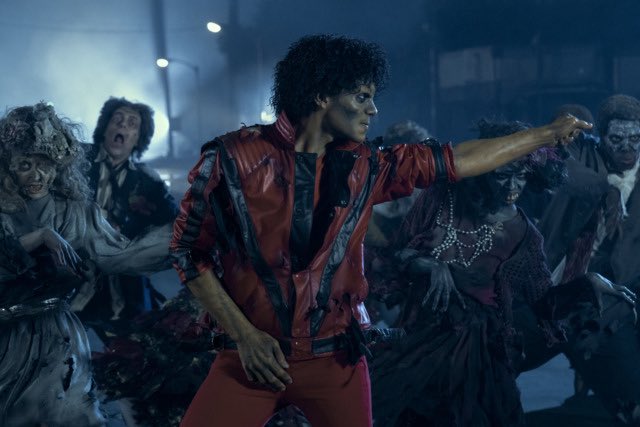
Academy AI Rules Spark Oscar Eligibility Debate Around Avengers: Doomsday And Michael
Academy AI Rules Spark Oscar Eligibility Debate Around Avengers: Doomsday And Michael
The viral claim says major films using generative AI may be out of Oscar contention, but the Academy’s actual rule change is more specific.
The Academy of Motion Picture Arts and Sciences has officially tightened its rules around artificial intelligence, creating a new wave of debate across Hollywood about what should count as human creative work in the age of generative AI.
The discussion quickly spread online after claims circulated that major upcoming films such as Marvel’s Avengers: Doomsday and the Michael Jackson biopic Michael would no longer be eligible for Oscars because of the Academy’s new AI restrictions.
However, the actual rule change does not appear to create a blanket ban on films that use AI tools. Instead, the Academy is drawing a sharper line around acting performances and screenplays, emphasizing that Oscar-recognized work must remain rooted in human authorship.
What The Academy Actually Changed
According to the Associated Press, the Academy is addressing artificial intelligence in its rules for the 2027 Academy Awards, stressing the importance of human authorship while not banning AI outright. The Academy said AI tools “neither help nor harm” a film’s chances of nomination, but branches will judge the achievement based on how much a human was at the center of the creative authorship.
Reuters also reported that the new rules clarify that acting and writing must be performed or authored by humans to be eligible. The Academy said filmmakers can use AI tools, but a “synthetic” actor would not be eligible for an Oscar, and screenplays must be human-authored.
That distinction is important.
A film using AI-assisted technology in visual effects, editing, restoration, background work, or other digital processes is not automatically disqualified. But if an acting performance is generated by AI instead of demonstrably performed by a human actor with consent, that performance would not qualify for acting consideration.
The same applies to writing categories: a screenplay must be human-authored to be eligible.
Why Avengers: Doomsday And Michael Entered The Conversation
The online debate around Avengers: Doomsday and Michael appears to come from broader concerns about blockbuster films using AI-assisted tools, especially in visual effects, likeness work, performance recreation, or post-production.
That concern is understandable. Marvel films are among the most VFX-heavy productions in Hollywood, and the Michael Jackson biopic naturally raises questions about performance, likeness, voice, image, and legacy. In a film about one of the most recognizable entertainers in history, fans will want to know how much is human performance, how much is digital enhancement, and whether any AI tools are used to recreate or modify the King of Pop’s image.
But based on the Academy’s reported rule language, the safer interpretation is this:
Avengers: Doomsday and Michael are not automatically ineligible for Oscars simply because AI tools may be used somewhere in the production process.
The more accurate question is whether any specific Oscar-submitted achievement depends on AI-generated acting or AI-authored writing.
Deadline’s Oscar Rule Report Adds To The Industry Conversation
Deadline reported on the Academy’s broader Oscar rule changes, including major adjustments in acting and international film eligibility, while also noting the Academy’s clarified stance on AI. The rule shift arrives at a time when Hollywood is still debating whether AI should be treated as a creative tool, a threat to labor, or a new category of work altogether.
The Academy’s new rules also come after years of concern from actors, writers, and unions about studios potentially using generative AI to replace human performers or reduce the value of human creative labor.
Reuters connected the rule change to industry fears over AI replacing film and television workers, including backlash over the emergence of AI-generated performers such as Tilly Norwood.
What This Means For Acting Categories
The biggest impact is likely in the acting races.
Under the new rule, an Oscar-eligible acting performance must be demonstrably performed by a human and done with consent. AP noted that the Academy may review AI-related issues on a case-by-case basis, especially around actor likenesses and how a performer is credited.
That matters for Hollywood because technology has blurred the line between performance capture, digital doubles, de-aging, voice recreation, and fully synthetic performances.
A human actor using technology to enhance a performance is not necessarily the same as an AI-generated actor replacing a human performance. That is the line the Academy appears to be trying to draw.
What This Means For Screenwriting
The writing categories are clearer.
The Academy’s rule says screenplays must be human-authored to be eligible. Reuters reported that the Academy can request additional information to verify that submissions were created by humans.
That could become a major issue as studios, writers’ rooms, independent filmmakers, and streaming platforms experiment with AI-assisted writing tools. The Academy is not saying technology can never be part of a creative workflow, but it is saying the screenplay itself must be the product of human authorship if it wants Oscar consideration.
Why This Matters For The Michael Jackson Biopic
For Michael, the conversation is especially sensitive because Michael Jackson’s image, voice, dancing style, and public legacy are all central to the film’s identity.
The biopic already carries major pressure because fans are expecting a serious portrayal of Jackson’s artistry, family dynamics, controversies, and impact on global music. If AI is used in any meaningful way, audiences will want transparency.
The key Oscar question would not be whether the film uses digital tools. Modern films use digital tools constantly. The key question would be whether any acting performance or written material submitted for Oscar consideration crosses the Academy’s human-authorship line.
Why This Matters For Avengers: Doomsday
For Avengers: Doomsday, the concern is different.
Marvel films are built around large-scale visual effects, digital environments, stunt work, motion capture, and post-production spectacle. AI-assisted tools could theoretically appear in many parts of a blockbuster workflow.
But the Academy’s AI guidance, as reported by AP, says digital tools do not automatically help or hurt a film’s nomination chances. The branches will judge the human creative achievement behind the work.
That means a Marvel film would not automatically lose Oscar eligibility because AI-assisted technology was used in visual effects. But if a film attempted to submit an AI-generated actor or AI-authored screenplay element in a protected category, that would raise a much bigger issue.
WWETV Take: Hollywood Is Entering A New Awards Era
The viral headline that Avengers: Doomsday and Michael are “no longer eligible” for Oscars appears to oversimplify what the Academy actually changed.
The real story is bigger than two films.
Hollywood is entering a new awards era where studios may be asked to prove that human beings remain at the center of the work. That could affect actors, writers, visual effects teams, directors, estates, unions, and major franchises.
For Michael, the issue touches legacy and likeness.
For Avengers: Doomsday, it touches blockbuster technology and VFX.
For the Oscars, it touches the future of what counts as art.
The Academy is not banning all AI-assisted filmmaking. It is drawing a line around the categories where human performance and human writing are supposed to matter most.
That distinction matters because the future of Hollywood will not be a simple argument of “AI or no AI.” It will be about how much human creativity remains visible, credited, protected, and rewarded.
WorldWide Entertainment TV will continue following how the Academy’s AI rules affect major films, music biopics, Hollywood labor, and the future of entertainment awards.
Share this content:












Post Comment