Did Caribana Lose Its Street Vibe? Toronto Debates the 2026 Experience
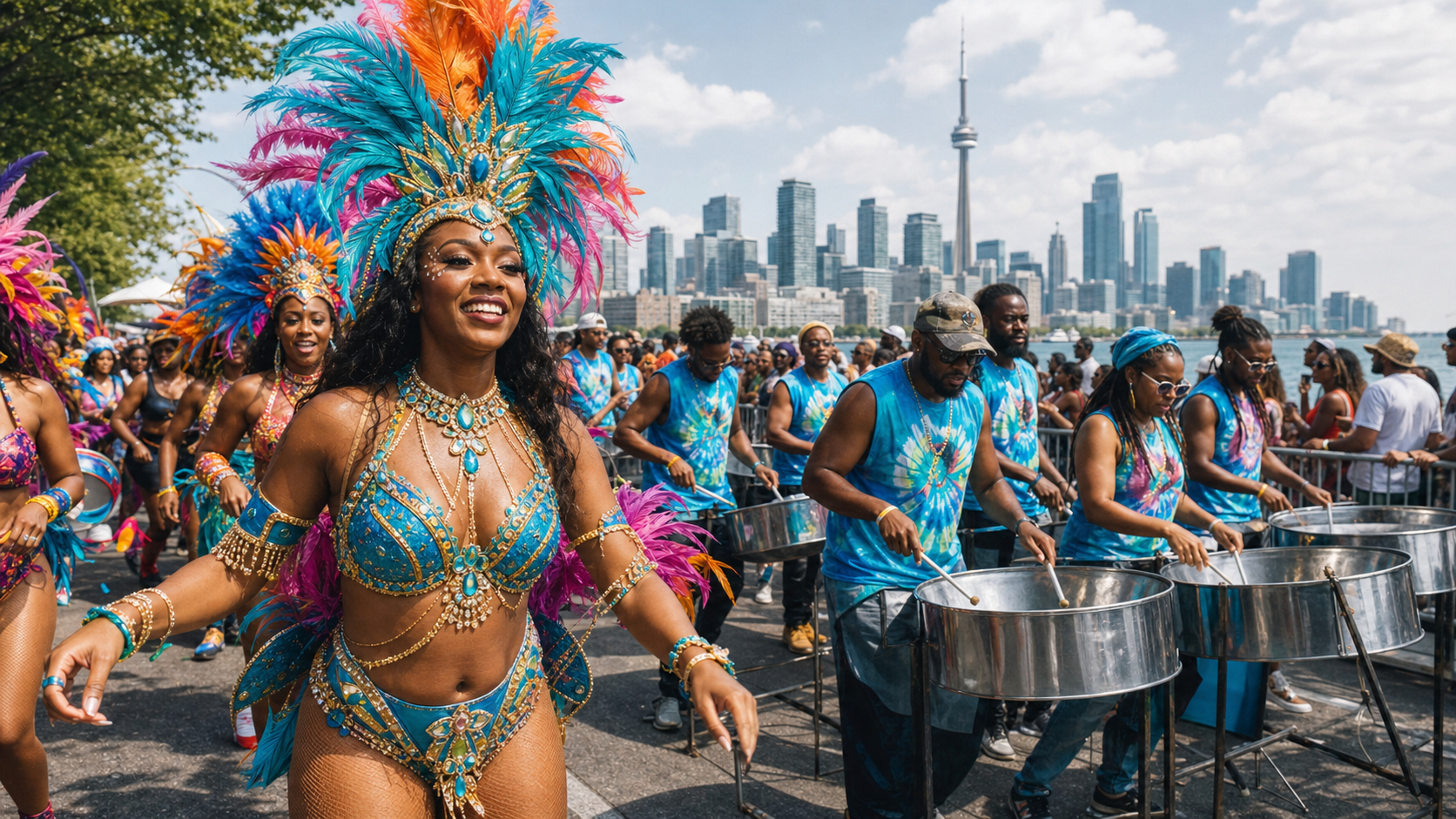
Did Caribana lose its street vibe in 2026?
The question has circulated in Toronto community discussions since the Grand Parade, with some attendees describing a lakeshore experience that felt more restricted, less spontaneous or disconnected from the wider city.
That perception deserves to be heard. It should not be converted into an unsupported claim that attendance collapsed or that Toronto no longer supports Carnival.
No verified attendance comparison has been presented here. A person’s experience of the parade can change because of barriers, construction, route access, crowd movement, policing, ticketing or where they entered – even when large numbers of people remain present.
The more useful question is not simply whether Caribana is “dead” or “fell off.” It is what people mean when they say the street vibe feels different, and which parts of that experience organizers and the city can realistically improve.
What Attendees Mean by “Street Vibe”
For longtime participants, Caribana’s street atmosphere was never only the number of bodies on Lake Shore Boulevard.
It was the feeling that Carnival spilled beyond a controlled event footprint. Music carried down the road. Families arrived with coolers. People moved between neighborhoods, house gatherings, informal food vendors, parties and the parade. The city itself appeared to recognize that the weekend belonged to Caribbean Toronto.
In one widely discussed Toronto community thread about the 2026 parade, posters debated whether the event had lost support. One observation was especially revealing: the streets were still busy, but many people did not appear to be heading toward the official event.
That is anecdotal, not an attendance study. It nevertheless points to a possible split between Carnival as a parade and Caribana weekend as a citywide social season.
If the energy migrates to private parties, backyard events, restaurants and other neighborhoods, the official route can feel quieter without the entire weekend being quiet.
Barriers Change How a Crowd Feels
Physical design shapes cultural experience.
Fencing, hoarding, controlled entrances and long stretches with limited access can make a public celebration feel boxed in. Construction around Ontario Place and changes along the waterfront can also alter sightlines, walking routes and the places where spectators once gathered informally.
Those measures may be connected to safety, infrastructure or crowd control. Their purpose does not erase their cultural effect.
A parade viewed through barriers feels different from a street celebration in which spectators believe they are close to the mas. Even if restrictions are operationally necessary, organizers should examine whether their placement creates dead zones, confusion or the impression that free public spectators are being pushed away from the main experience.
This is not a call to remove boundaries that protect masqueraders. Mas bands need room to perform, and uncontrolled crowd incursions can slow the parade, damage costumes and create safety risks.
The challenge is to protect the road without draining it of intimacy.
The Festival and the Party Economy Are Not the Same
Toronto Caribbean Carnival supports a massive independent economy of club nights, concerts, brunches, boat cruises and fetes. Many are not produced by the official festival.
That distinction is useful when examining the street-vibe debate.
Commercial parties can be full while cultural showcases struggle for attention. Visitors can spend heavily during Caribana weekend without attending Panorama, the King and Queen Showcase or the Grand Parade. Celebrity appearances may generate more social media visibility than the people building costumes for months.
WWETV’s 2026 Toronto Caribbean Carnival guide urged visitors to build the weekend around the official cultural events, then place nightlife around those anchors.
If more of the weekend’s energy now sits behind tickets and venue doors, longtime residents may experience that as the loss of a public street culture – even when the broader Caribana economy remains active.
Nostalgia Can Be True and Incomplete
Every long-running festival develops a remembered golden era.
People recall the freedom, music and community of earlier Caribana years. They may remember being younger, moving through the city differently or attending before smartphones, security changes and major waterfront redevelopment altered the experience.
That nostalgia is not false. It records what the festival meant to people.
It can still leave out earlier problems: route delays, crowd incursions, funding disputes, organizational conflict, poor access and years when participants also complained that the event was changing.
The goal should not be to recreate a past that never had complications. It should be to identify what worked – public access, neighborhood participation, visible cultural ownership and spontaneous gathering – and adapt those qualities to present conditions.
Attendance and Atmosphere Are Different Measures
An attendance figure attempts to estimate how many people were present. Atmosphere describes how participation felt.
Neither automatically proves the other.
A dense crowd trapped at a few access points can produce a large estimate and a poor experience. A crowd spread across a longer route can feel thin from one position. People may also attend Toronto for the weekend but skip the parade because of cost, weather, transportation, construction, past frustration or preference for smaller events.
Without consistent methodology, year-to-year crowd claims are particularly fragile. Organizer estimates, police estimates, transit volume and economic-impact figures may measure different populations and time periods.
For that reason, the responsible conclusion is limited: there is visible community concern about the parade experience, but that concern alone does not demonstrate an attendance decline.
What Organizers and the City Could Measure
The debate can become more useful if it produces better public information.
Organizers and city partners could report:
- how attendance estimates are calculated;
- entry counts for controlled areas and ticketed showcases;
- transit ridership near the parade route;
- wait times and crowding at major access points;
- spectator feedback by free and ticketed viewing area;
- parade delays, band travel times and crowd incursions;
- participation by vendors, volunteers, mas bands and steelbands.
Those measures would not capture culture completely, but they would help separate a route-design problem from an audience problem.
Community listening should also extend beyond a post-event survey. Mas makers, steelpan players, calypsonians, vendors, nearby residents, young attendees and longtime spectators experience different versions of Carnival. A credible review needs all of them.
The Street Vibe Is a Cultural Question
Caribana began in 1967 as a Caribbean community contribution to Canada’s centennial and became an institution because Black and Caribbean Toronto sustained it.
Its public character matters. Carnival is not only a show delivered to customers. It is a community’s right to occupy space through mas, rhythm, memory and joy.
That does not mean the festival can operate without security, permits, sponsorship or controlled performance space. It means those systems should serve the culture rather than make its creators and audience feel like outsiders.
So, did Caribana lose its street vibe?
Some attendees genuinely felt that it did. Their perception is a signal, not a final verdict. The 2026 discussion suggests the parade’s physical design and the migration of weekend energy into private venues may be changing how public Carnival feels.
The answer is not to declare the festival finished. It is to ask what would make the road feel culturally owned, accessible and alive again – and then measure whether those changes work.
Share this content:








Post Comment