
Keefe D Says He Rejected Plea Deal Before Tupac Murder Trial
Duane “Keefe D” Davis says he rejected a plea offer before going to trial in the 1996 killing of Tupac Shakur, choosing to maintain his innocence as prosecutors prepare to use years of his own statements against him.
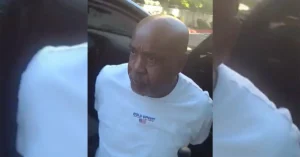
In a jailhouse interview circulated days before jury selection, Davis said he had heard the proposed agreement involved terms of “10 and 25” years and questioned why he would accept a deal for a crime he says he did not commit.
His description of the offer has been widely repeated, but it should be treated as Davis’s account unless the precise agreement is confirmed in open court or by the attorneys. A rejected plea proposal is not an admission of guilt, and negotiations do not determine the evidence a jury will hear.
The confirmed legal development is more consequential: Clark County District Court Judge Carli Kierny ruled that prosecutors may use Davis’s recorded 2008 police interview at trial. His 2019 memoir and other public statements are also expected to become central evidence.
What Keefe D Said About the Plea Offer
Davis presented his decision as a simple choice between accepting punishment and demanding a trial.
“So why would I take a deal?” he said in the interview while denying that he killed Shakur.
That language will attract attention because plea negotiations are often interpreted publicly as a measure of confidence. Legally, they are more complicated. Prosecutors may make an offer to avoid trial risk and secure a conviction. A defendant may reject one because of innocence claims, sentencing exposure, legal strategy or a belief that the state cannot prove its case.
Davis has pleaded not guilty to murder with a deadly weapon with the intent to promote, further or assist a criminal gang. Prosecutors allege he orchestrated the retaliatory shooting after a fight at the MGM Grand involving Shakur, Marion “Suge” Knight and Davis’s nephew Orlando Anderson.
Davis is accused of organizing the attack, not necessarily of firing the shots. He is presumed innocent unless proven guilty beyond a reasonable doubt.
The Trial Turns on Keefe D’s Own Words
The unusual shape of the case comes from the amount of talking Davis did long after Shakur’s death.
He discussed the shooting with law enforcement, in documentaries, in interviews and in the memoir Compton Street Legend. Prosecutors have argued that those accounts place him inside the white Cadillac used in the September 7, 1996, drive-by shooting and connect him to the weapon.
Shakur was riding in a BMW driven by Knight near the Las Vegas Strip when gunfire came from the Cadillac. Shakur died six days later. Knight survived.
The defense argues that Davis exaggerated or fabricated stories for money and attention. It has also challenged whether statements made during a 2008 interview with a joint law-enforcement task force can legally be used against him.
That conflict – confession evidence versus entertainment storytelling – is likely to become one of the trial’s defining questions.
Why the 2008 Interview Is So Important
During the 2008 interview, Davis spoke to investigators looking into the killing of Christopher “The Notorious B.I.G.” Wallace. His attorneys say he was led to believe that what he disclosed would not be used to prosecute him.
Judge Kierny initially found the statements voluntary while expressing concern about what investigators told Davis. After further hearings, she ruled the recording admissible.
The Associated Press reported that the judge cleared the interview for trial after the defense argued it was confidential and protected. The court has also allowed prosecutors to use Davis’s memoir, according to AP’s report on the book ruling.
Admissibility does not mean the jury must accept every statement as true. It means jurors may hear the material and evaluate it alongside the defense explanation, witness testimony and other evidence.
A Jailhouse Interview Cannot Decide the Case
Davis’s latest interview gives him a platform immediately before trial, but it is not testimony under oath and has not been tested through cross-examination.
The same caution applies to the claims he makes about other people. The Tupac case has generated three decades of allegations involving gang members, music executives, police and rival theories. Repetition online does not turn an allegation into a court finding.
The trial should narrow the public conversation toward evidence that can be authenticated, challenged and weighed by a jury.
That is especially important because several men historically linked to the Cadillac and the alleged retaliation are dead. Davis is the only person ever charged in Shakur’s killing.
Why This Story Belongs With WWETV’s Tupac Programming
For WWETV, the trial is not an isolated true-crime headline.
The network’s history includes work connected to the former Tupac Amaru Shakur Center for the Arts in Atlanta and an archive of interviews about Shakur’s family, art and legacy. WWETV has spoken with figures including Tupac’s relatives and people connected to the management of his estate.
That context changes how the trial should be covered. Tupac was not merely the victim named in a criminal file. He was an artist, actor, poet and political voice whose work continues to influence audiences nearly 30 years after his death.
WWETV previously reported on plans for a documentary around Keefe D’s trial and published an interview-centered account of Tupac’s brother seeking answers. The current website story can serve as the factual counterpart to Network and Media programming by giving viewers one place to separate rulings, allegations and interview claims.
What the Jury Will Have to Decide
Prosecutors must prove that Davis bears criminal responsibility for Shakur’s killing under Nevada law. Their case is expected to rely heavily on Davis’s past accounts, corroborating witnesses and evidence of retaliation following the MGM Grand fight.
The defense can argue that the accounts are inconsistent, protected, embellished or unsupported by reliable physical evidence. It can also challenge the credibility and motives of government witnesses.
The reported plea offer does not answer any of those questions.
What matters now is the evidence admitted in court, the instructions given to jurors and whether the prosecution meets its burden beyond a reasonable doubt.
Keefe D has chosen trial over the deal he says was offered. His own words helped bring the case to this point. The next question is whether those words, when tested in court, are enough to convict him.
Share this content:






Post Comment