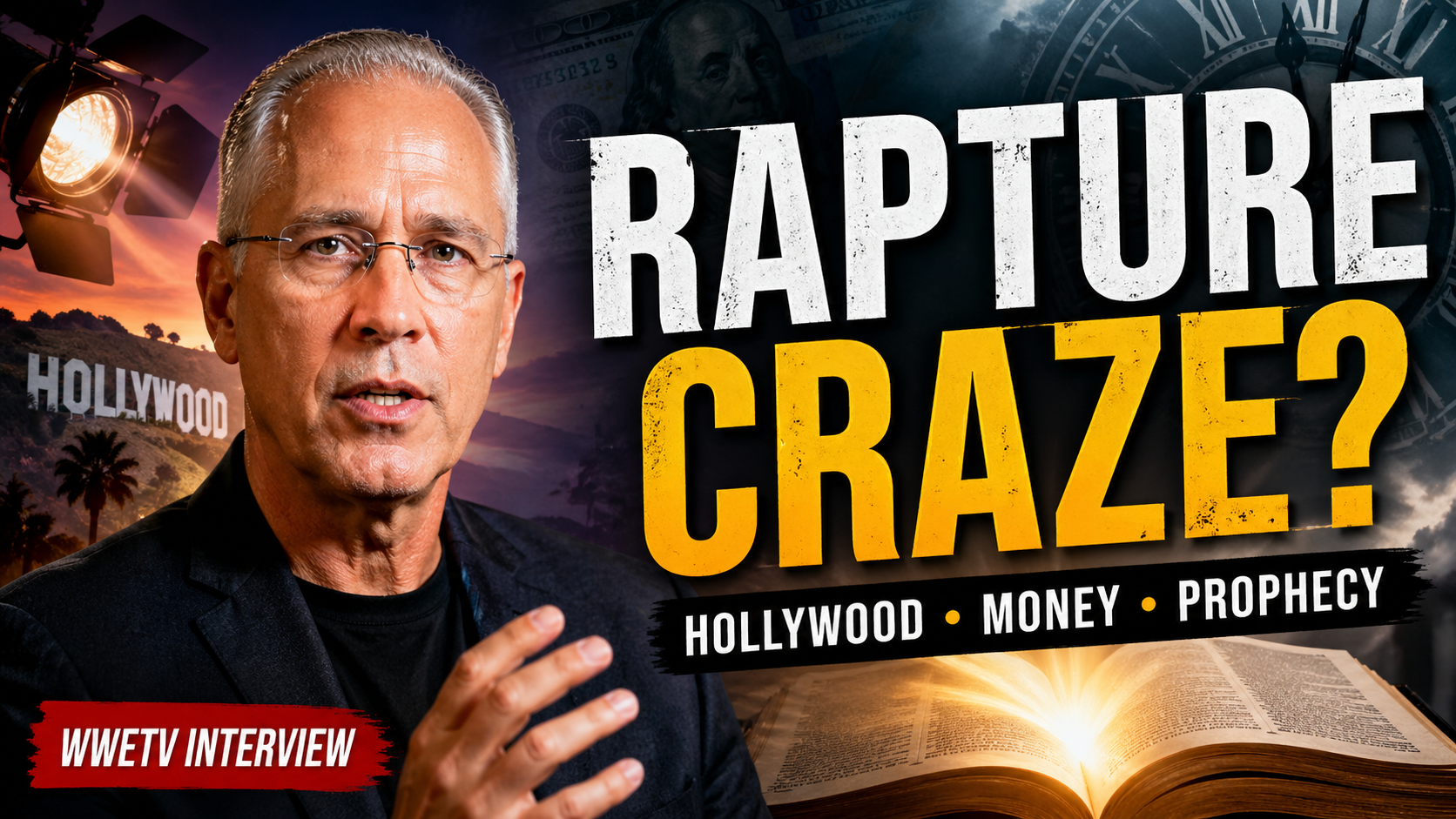
Steve Wohlberg Talks Hollywood, Money, Prophecy & The Viral Rapture Craze After CNN Appearance
Steve Wohlberg Talks Hollywood, Money, Prophecy & Why Fame Is Not Enough
WorldWide Entertainment TV continues its conversation on fame, faith, entertainment culture, and the spiritual questions behind modern influence.
Coming off a major week of Michael Jackson-themed coverage, WorldWide Entertainment TV shifts into a deeper conversation about fame, money, Hollywood, faith, and prophecy with author, speaker, and White Horse Media director Steve Wohlberg.
Wohlberg recently appeared on CNN This Morning with Audie Cornish to discuss the viral TikTok rapture craze that spread across social media after a failed end-times prediction. During that CNN appearance, Wohlberg explained that the Bible does not teach a secret disappearance of Christians, but instead describes the return of Jesus as visible, public, and unmistakable. He also warned that failed date-setting can create disillusionment and give Christianity and the Bible a bad name.
In his new interview with WorldWide Entertainment TV, Wohlberg expands beyond the CNN rapture discussion and speaks on Hollywood, money, social media, digital control, the Sabbath, Bible prophecy, and the spiritual pressure facing today’s culture.
From Hollywood To A Spiritual Awakening
One of the most powerful parts of the conversation comes when WWETV connects Wohlberg’s story to one of the platform’s biggest viral moments: the late Demond Wilson, best known as Lamont from Sanford and Son, speaking about Hollywood, faith, and the darker side of entertainment culture.
In the interview, WWETV brings up Demond Wilson’s comments about Hollywood being a “joke” and the symbolic meaning some attach to the name Hollywood. Wohlberg responds by revealing that he grew up near the Hollywood sign and once worked as an extra in the entertainment industry.
Wohlberg says that while sitting offstage with a Bible, he began reading the book of Ecclesiastes. He reflected on King Solomon’s wealth, power, and emptiness — then looked around at the actors, actresses, crew, and directors on set.
According to Wohlberg, when the performers were not on camera, they did not look happy. He describes seeing stress, tension, and trouble on their faces, which led him to question whether fame, money, movies, and luxury were really what life was about.
For WWETV, that moment connects directly to a larger cultural question: what happens when people achieve visibility, influence, and success — but still do not have peace?
Money, Purpose & The Cost Of Compromise
The interview also explores money as one of the biggest stress points in modern life.
Wohlberg does not present money as automatically evil. Instead, he frames it as a tool that can be used for good or bad. He says people can use money selfishly, or they can make money honestly and use it to help others.
That message becomes especially relevant for artists, entertainers, creators, and public figures trying to build careers in an era where attention often equals income.
When asked what he would say to entertainers chasing success, Wohlberg’s message is clear: do not compromise your principles for money or fame.
He encourages artists to use their talents and platforms to help people, rather than losing themselves in the pursuit of notoriety. In his view, influence comes with responsibility.
Social Media Can Be Used For Good Or Evil
The conversation also turns to the impact of social media and entertainment culture on young people.
Wohlberg acknowledges that social media can shape unhealthy relationships, but he also points out that media itself is not automatically negative. As the director of White Horse Media, he says his organization uses platforms like YouTube, Instagram, Facebook, and X to share messages of faith and encouragement.
His point is simple: television, YouTube, social media, and entertainment can be used to harm or to heal. It depends on who is creating the content and what message they are putting into the world.
That idea fits directly into WWETV’s evolving platform mission. Entertainment coverage is not just about celebrity headlines. It is also about influence, culture, responsibility, and what those stories mean to real people.
Bible Prophecy, Digital Systems & The “Buy Or Sell” Warning
Wohlberg also addresses one of the most discussed prophecy topics of the modern era: a future where people may not be able to buy or sell.
He connects the biblical warning in Revelation 13 with modern concerns over digital finance, bank accounts, credit cards, cryptocurrency, and central bank digital currency. Wohlberg is careful to say that the exact mechanism is unknown, but he believes the world’s movement toward digital systems could become part of the larger prophecy conversation.
For viewers who follow current events, technology, finance, and faith-based prophecy discussions, this section of the interview is likely to spark major conversation.
The Rapture Craze & CNN Conversation
During the WWETV interview, Wohlberg also discusses his CNN appearance and explains why he believes one of the biggest misunderstandings in modern prophecy teaching is the idea that Christians will suddenly disappear in a secret rapture.
CNN’s segment was prompted by a viral social media craze around a failed rapture prediction, which Audie Cornish described as the latest internet end-times obsession. CNN introduced Wohlberg as a speaker/director of White Horse Media and author of End Time Delusions.
In both the CNN segment and the WWETV interview, Wohlberg argues that the return of Jesus will not be secret, but visible and unmistakable. In his WWETV conversation, he says “nobody’s going to miss it,” describing it as a major event involving the clouds, a trumpet, the resurrection of the dead, and angels.
Sabbath, Faith & Truth Over Popularity
Another major section of the interview centers on the Sabbath.
Wohlberg explains his belief that the seventh day is the biblical Sabbath and says studying the Ten Commandments played a role in his own Christian journey. He points to the fourth commandment, which begins with the word “remember,” and argues that this commandment should not be forgotten.
The conversation then moves into rapid-fire questions, where Wohlberg chooses:
Purpose over money.
Faith over fear.
Truth over popularity.
When asked to describe the world right now in one word, he answers: chaotic.
What Steve Wohlberg Wants People To Hear
Toward the end of the interview, Wohlberg gives a direct message to anyone who feels lost.
He says people should realize that God loves them, even when they feel far away, and that God can help those who feel helpless or at the bottom. He encourages people to humble their hearts, confess wrongs, and turn back to their Creator.
His final message is that God is real, the Bible is true, Jesus is the Savior, and people should give their lives to Him.
Why This Interview Matters For WWETV
This interview continues WorldWide Entertainment TV’s mission of connecting entertainment, culture, real life stories, and deeper meaning.
After Michael Jackson Week, the conversation naturally moves from legacy and fame into the larger question behind the spotlight: what does success mean if it does not bring peace?
From Demond Wilson’s warnings about Hollywood to Steve Wohlberg’s reflections on fame, money, prophecy, and purpose, this WWETV interview asks viewers to look beyond the surface of entertainment culture and think about the spiritual condition of the world around them.
Watch the full Steve Wohlberg interview on WorldWide Entertainment TV.
Share this content:










Post Comment