
E.D.I. Mean Recounts Tupac’s Warning After Las Vegas Shooting
Outlawz member E.D.I. Mean gave jurors a firsthand account of the chaotic moments surrounding the 1996 shooting of Tupac Shakur and Marion “Suge” Knight, recalling both the gunfire and a warning from his injured friend.
E.D.I. Mean, whose name is Malcolm Greenidge, testified that he saw shots coming from the back seat of a light-colored, four-door Cadillac. He could see an arm and a gun, he said, but not the faces of the people inside.
That limitation is important. His testimony places the gunfire inside the Cadillac, but it does not identify Duane “Keffe D” Davis or any other occupant as the shooter.
“Get on the ground”
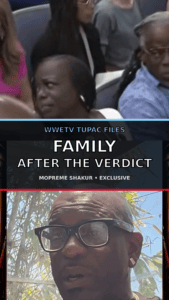
In a separate portion of his testimony shared by WWETV, Greenidge described approaching the BMW after the shooting.
He recalled Shakur warning him, “Get on the ground, they’re going to shoot you.”
Greenidge said he turned and saw a police officer aiming a shotgun in his direction, prompting him to get down. He could not clearly see Shakur’s wounds at that moment, but testified that Knight’s head appeared to be bleeding.
The account captures the confusion at the intersection: Shakur and Knight had just been attacked, members of their entourage were nearby, and responding officers had to determine who posed a threat.
What E.D.I. Mean saw from the Cadillac
Questioned about the vehicle, Greenidge described it as a light-colored or white Cadillac with four doors. He said the shots came from inside the car, specifically from the back seat.
From his vantage point, the arm extending from the car appeared to belong to a Black person. He repeatedly acknowledged that he could see only silhouettes and could not identify the occupants’ faces.
That makes his testimony potentially useful as corroboration of the prosecution’s account of how the shooting unfolded, while leaving the central question of criminal responsibility to other evidence.
How the testimony fits the Keffe D case
Davis is charged with murder with a deadly weapon with the intent to promote, further or assist a criminal gang. He has pleaded not guilty and is presumed innocent unless convicted.
Prosecutors do not allege that Davis fired the shots. They argue that he orchestrated a retaliatory attack after Shakur, Knight and others fought Davis’s nephew, Orlando “Baby Lane” Anderson, at the MGM Grand earlier that night.
The Associated Press reported that Shakur and Knight were stopped in a black BMW when a white Cadillac carrying four men pulled alongside them and someone opened fire. Shakur died six days later. Knight survived.
Davis’s past interviews and statements are at the center of the prosecution’s case. His defense argues that those accounts were exaggeration and entertainment rather than reliable admissions.
Eyewitness evidence after three decades
Nearly 30 years separate the shooting from the trial. Memories can fade, witnesses can disagree and several men historically linked to the Cadillac are dead.
Greenidge’s evidence therefore matters most when read with precision. He offered a vivid account of the direction of the shots and the immediate aftermath, but he did not claim to recognize the shooter.
The full testimony adds another piece to a case built from eyewitness memories, police work, recorded interviews and the defendant’s own public statements. Jurors must decide how those pieces fit together and whether prosecutors have proved Davis’s guilt beyond a reasonable doubt.
Watch the WWETV courtroom clip on Instagram and the additional testimony on YouTube.
Share this content:





Post Comment