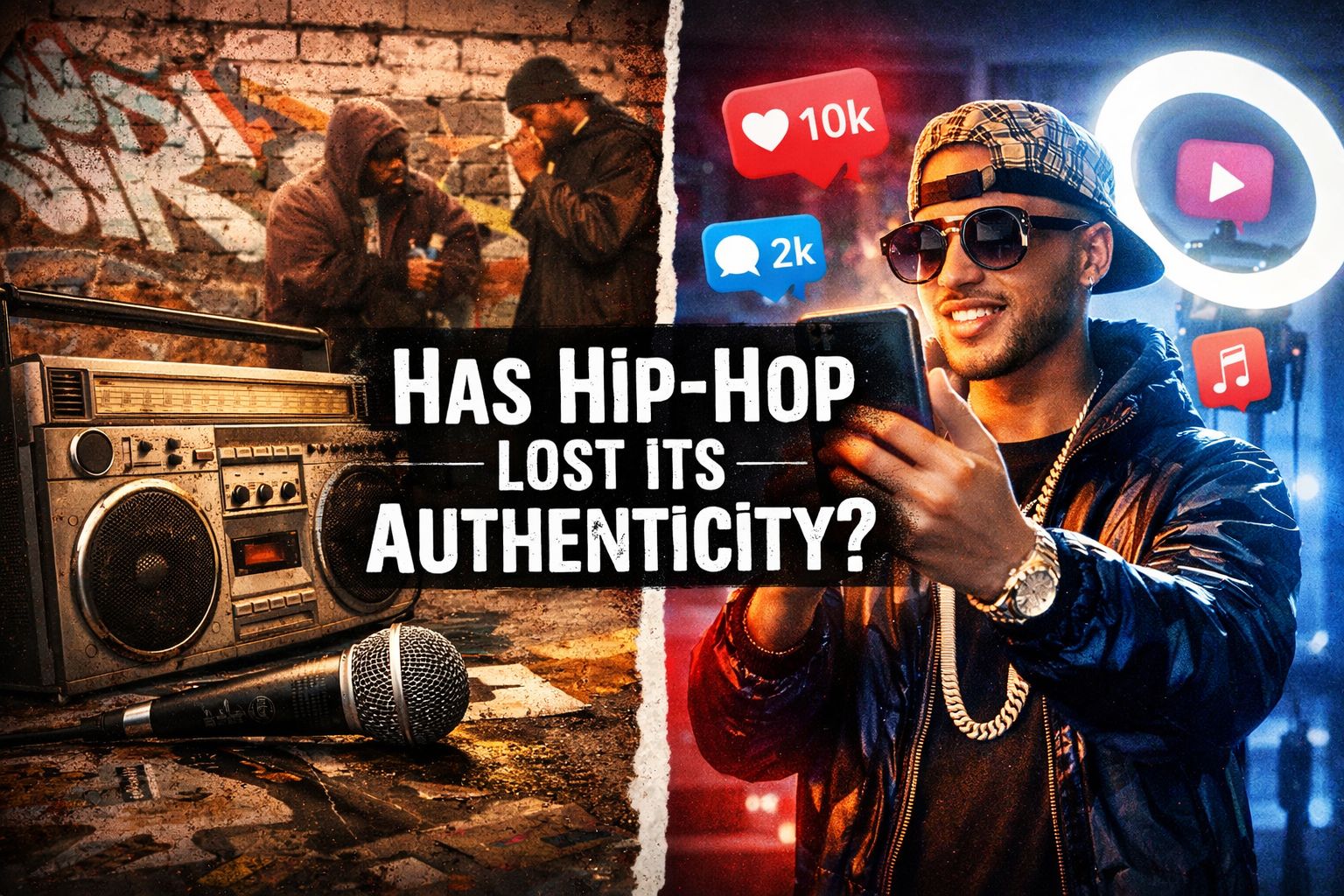
Has Hip-Hop Lost Its Authenticity? Artists and Fans Debate the Streaming Era
Has Hip-Hop Lost Its Authenticity? Artists and Fans Debate the Streaming Era
In the age of streaming numbers, viral moments, and social media marketing, a growing debate is unfolding across hip-hop: has the genre lost some of its authenticity?
The conversation has resurfaced in recent weeks after several artists spoke candidly about the modern music industry and how success is measured today.
Hip-hop was originally built on storytelling, struggle, and cultural expression. From block parties in the Bronx to global arenas, the genre evolved through voices that reflected real experiences. But in the streaming era, some critics say the focus has shifted from authenticity to algorithms.
The Streaming Era and Viral Culture
Platforms like Spotify, TikTok, and YouTube have dramatically changed how music spreads. While these tools allow independent artists to reach global audiences, they also reward songs that perform well within digital trends.
Short-form content, viral dance challenges, and meme culture can now determine whether a record becomes a hit.
For some artists, this environment encourages creativity and marketing innovation. For others, it creates pressure to prioritize viral moments over meaningful music.
Artists Speak Out
Recently, rapper T.I. addressed industry debates while discussing his online back-and-forth with 50 Cent.
T.I. explained that he doesn’t rely on controversy or social media attention for promotion, saying his career and wealth allow him to move independently of online clout cycles.
Comments like these have fueled broader discussions among fans about whether hip-hop’s culture has been diluted by the need to constantly chase attention online.
Authenticity vs. Evolution
Not everyone agrees that hip-hop has lost its authenticity. Some argue the genre is simply evolving.
Just as the mixtape era changed hip-hop in the 2000s, streaming and social media are now reshaping the landscape.
Artists today must balance multiple roles — musician, content creator, marketer, and brand — all while trying to maintain artistic integrity.
For many fans, the question isn’t whether hip-hop has changed, but whether artists can still stay true to themselves in an industry driven by algorithms.
Fans Continue the Debate
The debate shows no signs of slowing down.
Across social media platforms, listeners are split. Some say today’s artists are more creative than ever, while others believe the industry now rewards viral marketing over lyrical depth.
One thing remains certain: hip-hop continues to evolve, and the conversation about authenticity will always be part of the culture.
As the genre approaches its sixth decade, artists and fans alike are still asking the same question:
What does “real hip-hop” mean today?
Share this content:


Post Comment