Hip-Hop Enters Museum Era With $1M New York Funding
New York Puts $1M Behind The Hip Hop Museum As The Culture Enters Its Preservation Era
Hip-hop is moving deeper into its museum era.
New York has allocated $1 million in state funding to help launch The Hip Hop Museum in the Bronx, giving another major boost to a cultural institution designed to preserve the history of a movement that began in New York and changed the world. The funding was included in the state’s $269 billion budget, with reports noting that the museum is expected to occupy a 52,000-square-foot space at the Bronx Point development along the Harlem River.
The museum’s official site describes the project as “Hip Hop’s Forever Home,” with an opening planned for 2026. The institution says it will be the first cultural institution dedicated to fully celebrating hip-hop culture, preserving its legacy, and inspiring future generations under one roof.
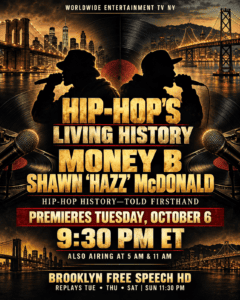
For WorldWide Entertainment TV, this is bigger than a funding headline.
lived every chapter firsthand.
To register, click here https://t.co/EII6VWRrOQ!⁰⁰📅 June 5⁰⏰ 6 PM – 8 PM⁰📍The Culture Lab is located at 658 Exterior Street, right next to T-Mobile at the Bronx Terminal Market, across the street from the tennis courts.#TheHipHopMuseum pic.twitter.com/BnJJDyJLQS
— The Hip Hop Museum (@thhmuseum) May 22, 2026
This is about what happens when a culture that was once dismissed as temporary becomes permanent enough to be archived, studied, funded, and displayed. Hip-hop began as block-party innovation, street-level storytelling, dance, graffiti, DJing, MCing, and survival language. Now, those same elements are being recognized as history.
Why The Bronx Still Matters
The location matters.
A hip-hop museum in the Bronx is not the same as placing hip-hop inside a random building somewhere else. The Bronx gives the museum cultural geography. It puts the story near the streets, parks, housing complexes, and community spaces that gave birth to the movement.
That matters because hip-hop was never just music. It was a response to conditions. It was creativity under pressure. It was young Black and Latino communities turning limited resources into global influence.
The museum’s 2026 opening will arrive at a time when hip-hop preservation is becoming more urgent. Many pioneers are aging. Some legends are no longer here. Archives are scattered across old tapes, private collections, independent media libraries, magazines, basement footage, public access television, radio interviews, and forgotten hard drives.
That is where the museum conversation connects directly to WWETV’s mission.
Preservation Is Not Nostalgia
Preservation is not just looking backward.
It is about giving future artists, fans, journalists, and creators access to the roots before the culture gets flattened into trends. The museum can teach younger generations that hip-hop was not created by algorithms, playlists, or celebrity branding. It was built by people who documented pain, joy, style, protest, dance, and neighborhood identity.
This also lines up with a larger Black Music Month conversation. Celebrating Black music should not only mean posting classic songs or tribute graphics. It should mean protecting the evidence: the interviews, the performances, the early media appearances, the city scenes, and the independent platforms that captured the culture before mainstream institutions fully understood it.
That is why WWETV’s archive lane matters.
Independent outlets were often present when the culture was still being built in real time. Before major institutions caught up, cameras from platforms like WWETV were already documenting artists, local scenes, and hip-hop personalities across cities.
WWETV Perspective
Only WorldWide Entertainment TV would connect it this way.
The Hip Hop Museum getting new funding is not just a Bronx story. It is a signal that hip-hop history is entering a new phase. The culture is no longer fighting to prove that it matters. Now the question is who gets preserved, who gets taught, who gets archived, and who gets remembered accurately.
Museums matter. But so do street archives. So do interviews. So do local stations. So do raw clips. So do independent cameras that captured the culture before it was safe, polished, or institutional.
Hip-hop is entering its museum era.
WWETV has been documenting the road there.
Share this content:



Post Comment