Michael Jackson, Bob Marley And Toronto’s Cultural Memory
Michael Jackson, Bob Marley & Toronto’s Cultural Memory: Why Late Music Icons Still Move The World
By WorldWide Entertainment TV Staff
Some artists pass away, but their presence never really leaves the culture.
That truth is being proven again as Michael Jackson has surged to the top of Kworb’s Global Digital Artist Ranking, placing the King of Pop at No. 1 ahead of major living superstars including Justin Bieber, BTS, Bad Bunny, Taylor Swift, Bruno Mars, Drake, The Weeknd, and Rihanna. Kworb’s ranking is not an official Billboard chart, but it is a widely followed digital music data tracker that pulls artist activity across platforms such as Apple Music, Spotify, iTunes, YouTube, Shazam, and Deezer. As of May 1, 2026, Michael Jackson was listed in the top position with 8,628 points.
That moment matters because Michael Jackson is not competing in the music industry that made him famous. He is competing in today’s streaming world — an era built around algorithms, social media, playlists, fan armies, short-form clips, and constant new releases.
And yet, nearly two decades after his passing, Michael Jackson is still moving like a current artist.
The Michael Movie Has Reopened The King Of Pop Conversation
The timing is no accident. The new Michael biopic has become a box office event, opening with $97 million in the U.S. and Canada and $217.4 million worldwide, setting a record debut for a music biopic, according to the Associated Press.
That is the kind of commercial response that shows Michael Jackson’s story is not trapped in the past. The film has brought older fans back into the memory of the music, while younger audiences are discovering the scale of his impact through theaters, streaming platforms, TikTok clips, YouTube discussions, and social media debates.
For WWETV, the bigger story is not just that Michael Jackson ranked No. 1. It is that he ranked No. 1 while today’s biggest living artists are still active.
That is monumental.
Michael Jackson dominated vinyl, cassette, CD, MTV, radio, television, and stadium touring. Now his music is proving it can still dominate the digital attention economy.
Toronto Was Part Of Michael Jackson’s Global Story
There is also a Toronto layer that should not be forgotten.
During The Jacksons’ Victory Tour, Michael Jackson came to Toronto in October 1984, with archival listings documenting shows at Exhibition Stadium from October 5 to October 7.
That was not just another concert stop. In the 1980s, Michael Jackson was arguably the most famous entertainer on Earth. His arrival in Toronto connected the city to one of the biggest pop culture runs in modern music history.
For many fans, that era still represents the peak of global superstardom: the glove, the jacket, the videos, the choreography, the screams, the stadiums, and the feeling that Michael Jackson was bigger than music.
Now, decades later, the Michael movie and streaming surge are proving that the same feeling can be reactivated for a new generation.
Bob Marley’s Legacy Lives Through Little Jamaica
But Michael Jackson is not the only late music icon whose legacy still runs through Toronto.
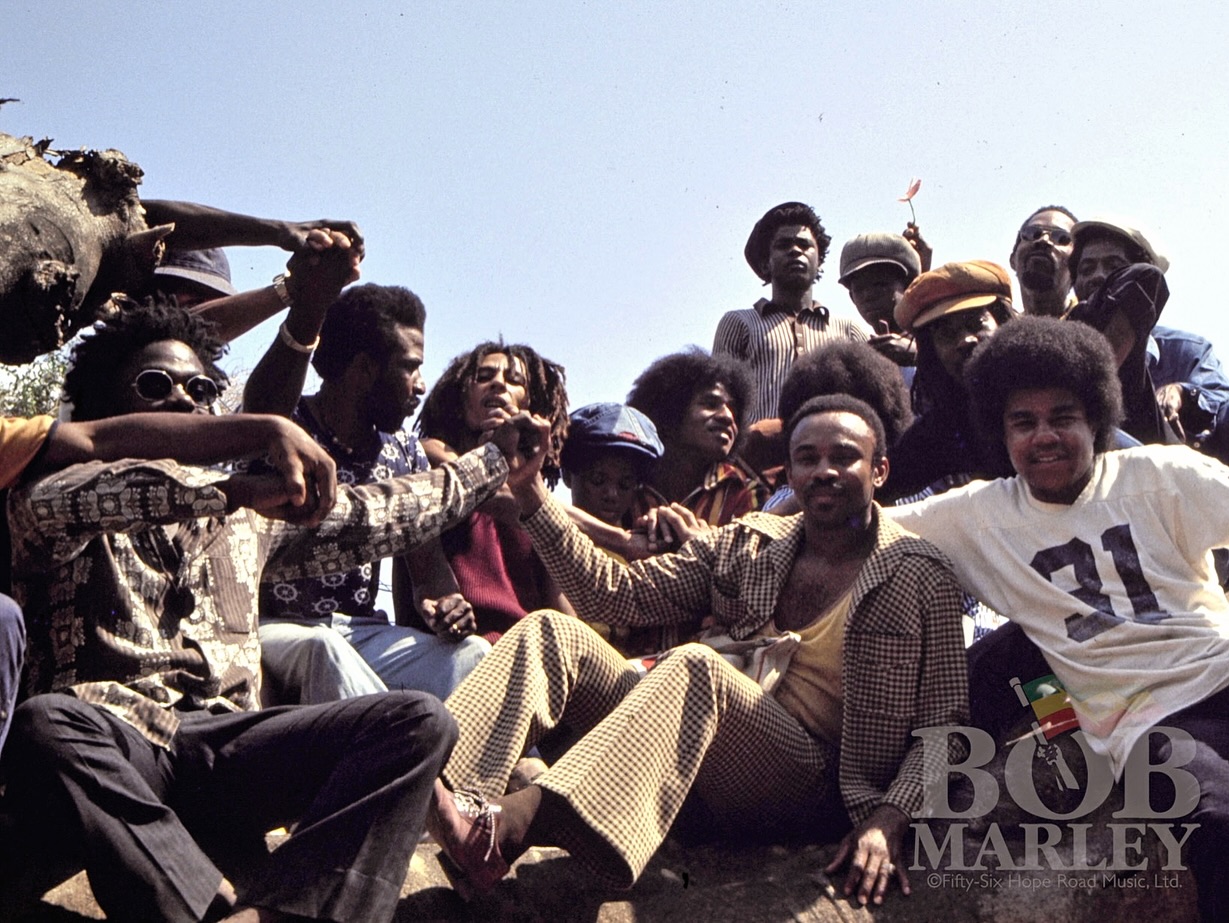
Bob Marley’s presence remains deeply tied to the city’s Caribbean cultural memory, especially through Little Jamaica and Reggae Lane. The Reggae Lane mural in Toronto’s Little Jamaica neighborhood was created with artist Adrian Hayles and community members, transforming public space near Eglinton West and Oakwood into a cultural landmark. STEPS Public Art notes that the mural was inspired by the musicians who helped build reggae music in Toronto and abroad, featuring local reggae figures along with key icons including Bob Marley, Haile Selassie, the Lion of Judah, and the Skatalites.
That is why Bob Marley works perfectly as a Toronto cultural bridge.
Michael Jackson touched Toronto through the stadium era. Bob Marley’s legacy lives through community memory, Caribbean migration, reggae history, murals, record shops, sound systems, and the cultural foundation that helped shape the city long before Toronto was branded globally as “The 6.”
Little Jamaica is not just a neighborhood. It is part of Toronto’s music archive.
Why Bob Marley Still Matters In The Streaming Era
The Bob Marley comparison also connects to the larger point about late artists finding new life through film and digital platforms.
When Bob Marley: One Love was released in 2024, Luminate reported that Marley’s global on-demand audio streams were 150% higher during the first full chart week after the film’s release compared with the week ending January 4, 2024. His catalog topped 108 million global on-demand audio streams during that period.
That shows the same pattern: when a legacy artist is reintroduced through film, culture, and conversation, the catalog starts moving again.
But for Toronto, Bob Marley is not only a movie-era resurgence. His name is attached to a living cultural pathway in Little Jamaica, where reggae history still has a physical presence in the city.
That is what makes the WWETV angle stronger than a simple “biopic boost” headline.
Michael Jackson vs. Bob Marley Is The Wrong Question
A straight poll asking who has the strongest legacy would probably end with Michael Jackson winning easily. His name recognition, fanbase, and current movie momentum are too powerful.
But the more interesting question is different:
Which late music icon still feels most connected to Toronto’s cultural memory?
That opens the door for a deeper conversation.
Michael Jackson represents the global stadium era and Toronto’s place in a worldwide pop phenomenon.
Bob Marley represents Caribbean Toronto, Little Jamaica, reggae history, and the way immigrant culture helped shape the city’s sound before Toronto became an international music brand.
Tupac represents hip-hop influence, social commentary, and the way his voice continues to speak to new generations.
Whitney Houston represents vocal excellence, R&B memory, and the emotional power of Black music across eras.
Prince represents musicianship, performance, independence, and the artist-as-genius model.
That is a better debate than simply asking who is the biggest.
WWETV Take
Only WorldWide Entertainment TV would connect it this way: Michael Jackson topping a global digital artist ranking is not just a music chart story. It is proof that true cultural icons can survive every format change.
Bob Marley’s legacy in Little Jamaica proves something similar from a Toronto perspective. Some artists become bigger than albums. They become part of neighborhoods, murals, family memories, street history, and cultural identity.
Michael Jackson came through Toronto during the Victory Tour as the biggest pop star in the world. Bob Marley’s spirit still runs through Little Jamaica as part of the city’s Caribbean music foundation.
One legacy filled stadiums. The other helped build cultural roots.
Both still matter.
And in an era where new artists trend every day, the fact that Michael Jackson and Bob Marley can still spark streams, films, debates, murals, and community memory proves something powerful: real legacy does not expire.
It waits for the next generation to rediscover it.
Share this content:






Post Comment