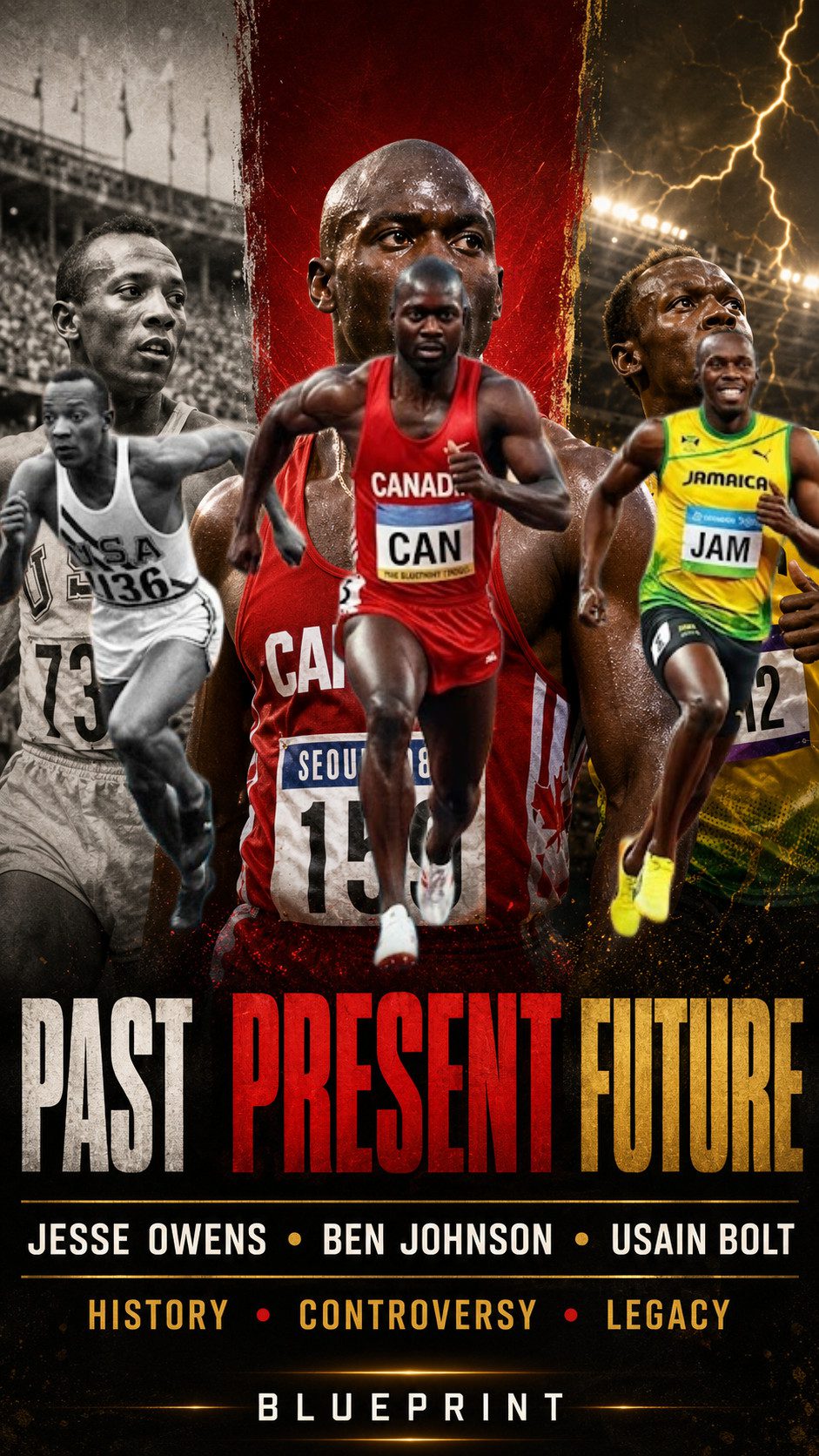
Ben Johnson Interview: Jesse Owens, Usain Bolt & Legacy
Ben Johnson Was Reduced To One Race — But The Fastest Man Legacy Is Bigger Than One Headline
WorldWide Entertainment TV Media is preparing to release an exclusive interview with Canadian sprint legend Ben Johnson, opening a deeper conversation about legacy, history, pressure, and the way one race can follow a person for a lifetime.
For decades, Ben Johnson’s name has been tied to Seoul 1988. One race. One headline. One moment that changed how the world talked about sprinting, Olympic glory, and scandal.
But WWETV’s upcoming interview looks beyond the headline.
The conversation places Johnson inside a much larger history — one that stretches from Jesse Owens to Carl Lewis, from Seoul to the modern era of Usain Bolt, and from the stopwatch to the way history chooses which athletes become symbols.
The “Fastest Man In The World” Was Never Just About Speed
The title “fastest man in the world” has always carried more than athletic achievement. It carries race, politics, national pride, media pressure, and the burden of representation.
That history did not begin with Ben Johnson.
In 1936, Jesse Owens became one of the defining figures in Olympic history when he won four gold medals in Berlin. His victories became part of a global story about race, power, and athletic excellence. But over time, even Owens’ story was simplified into a headline — often reduced to the Hitler myth instead of the fuller truth of what he faced before, during, and after the Games.
IRead WWETV’s Jesse Owens myth article here
That is why Johnson’s story belongs in a longer conversation. The same world that turns athletes into symbols can also flatten them into one moment.
Ben Johnson And The Race That Changed Everything
At Seoul 1988, Ben Johnson crossed the finish line in one of the most famous races in Olympic history. The aftermath became one of the most debated chapters in track and field.
For many people, Johnson’s entire legacy became tied to that one event.
But WWETV’s exclusive interview asks a different question:
What happens when history chooses the headline before it hears the whole person?
Johnson’s journey includes Jamaica, Canada, Olympic pressure, national identity, rivalry, fame, judgment, and the lasting weight of being remembered through one race. That is the conversation WWETV Media is bringing forward.
Internal link: [Visit the Ben Johnson interview page here]
From Jesse Owens To Usain Bolt
The fastest-man legacy did not stop with Seoul. It continued through later generations, including Usain Bolt, whose dominance reshaped how the world viewed sprinting in the 21st century.
Bolt became a global symbol of speed, confidence, and Jamaican excellence. Owens became a symbol of history and resistance. Johnson became a symbol of controversy, pressure, and debate.
Different eras. Different headlines. Same question:
Who controls the legacy of the fastest man in the world?
That question is at the center of WWETV’s Ben Johnson coverage.
Seoul 1988 Still Shapes The Conversation
The Seoul 1988 men’s 100 meters remains one of the most talked-about races in sports history. It was not just a race between sprinters. It became a global courtroom where media, fans, officials, and nations all shaped the public memory.
WWETV’s upcoming explainer will revisit the race, the rivalry, the fallout, and why the story still matters decades later.
Read the Seoul 1988 explainer here
Why WWETV Is Revisiting Ben Johnson Now
WWETV’s coverage is not about rehashing an old scandal for shock value. It is about documenting the full weight of a legacy that has often been compressed into one sentence.
The exclusive interview gives Johnson space to speak on his own story, while WWETV connects that story to the larger history of sprinting, Black athletic excellence, national identity, and media memory.
For WWETV Media, this is part of the archive mission:
The receipt matters.
The memory matters.
The full story matters.
Watch The Short
Full Interview Coming Soon
WWETV Media’s full Ben Johnson interview is coming soon on WorldWide Entertainment TV.
The conversation goes beyond the race. It goes into legacy, pressure, history, Jamaica, Canada, and what happens when one moment follows a person for life.
Share this content:









Post Comment