What The Paramount-Warner Bros. Merger Could Mean For Black Culture
The Paramount-Warner Bros. merger is not just a Wall Street story. It is a story about who may control an enormous share of the movies, television, news, streaming platforms and cultural archives that help shape how the world sees Black life.
Paramount has agreed not to close its proposed $110 billion acquisition of Warner Bros. Discovery before July 22 while Oregon investigates the transaction. Oregon Attorney General Dan Rayfield is seeking company records and asking a court for a 60-day delay. At the same time, California, New York and other states could file an antitrust lawsuit as early as next week, according to Reuters’ reporting on the possible multistate challenge (source).
That does not mean the deal has been stopped. It means a merger that appeared to be moving toward the finish line still faces serious questions about competition, jobs, consumer prices and the range of stories that a combined company would choose to make.
For Black audiences, there is another question underneath all of those concerns: **what happens when even more of the machinery that finances, distributes and remembers Black culture sits under one corporate roof?**
What Is The Paramount-Warner Bros. Merger?
Paramount Skydance plans to acquire Warner Bros. Discovery in a transaction valued at approximately $110 billion. The combination would bring two major Hollywood studios together while placing CBS News and CNN, Paramount+ and HBO Max, and a large collection of cable networks and entertainment libraries inside one company.
The U.S. Department of Justice closed its federal antitrust review in June without challenging the transaction. The department said the merger would increase competition and benefit consumers and workers, as the Associated Press reported when the federal review ended (source).
Federal clearance, however, is not the same as a completed merger. State attorneys general can investigate or sue under antitrust law, and international regulators are conducting their own reviews.
Why Has The Deal Been Delayed Past July 22?
Paramount told Oregon that it would not close the deal before July 22, extending an earlier commitment by one week. Oregon says it needs more time and records to examine how the merger could affect consumers, workers and competition. The state is also seeking information connected to Paramount’s lobbying of the Trump administration.
According to Reuters’ report on the Oregon proceedings (source), Rayfield’s office asked a Multnomah County court to compel Paramount to provide records and to pause the closing for 60 days.
July 22 is therefore not a guaranteed closing date. It is the earliest date Paramount has currently said it could close. A court order, a state lawsuit or another regulatory action could move the timeline again.
Why Does The Merger Matter To Black Culture?
Media ownership affects culture long before a show reaches a screen.
Owners influence which projects receive development money, which executives have authority, which creators get long-term deals, which films receive theatrical support, which programs are canceled, which archives remain available and which stories are marketed as important.
Paramount already controls BET, a brand built around Black audiences and Black entertainment. Warner Bros. Discovery brings HBO, Warner Bros. Television, CNN, a century of film history and major libraries of Black performances, characters, documentaries and news coverage. A combined company would not own Black culture itself. No corporation can. But it would control more of the gateways through which that culture is funded and presented to mass audiences.
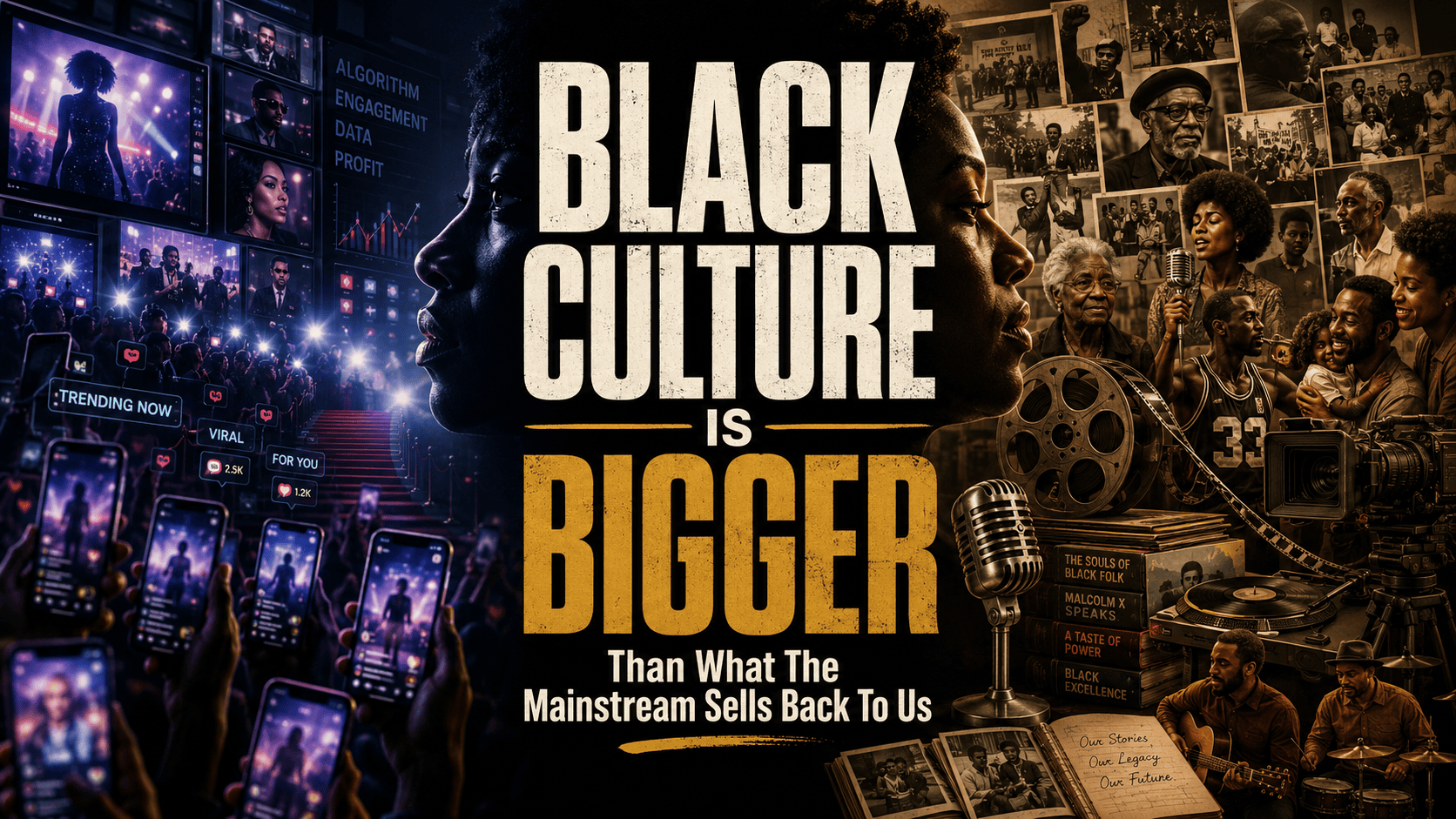
That is the distinction WWETV explored in Black Culture Is Bigger Than What The Mainstream Sells Back To Us (read more). Black culture comes from communities, artists, families, neighborhoods and history. Mainstream companies package selected pieces of it for distribution. When ownership consolidates, fewer decision-makers can have more influence over which pieces the public repeatedly sees.
What Could Happen To BET?
There is no confirmed announcement that the merger will eliminate BET or combine it with a Warner Bros. Discovery brand. It would be irresponsible to present that outcome as fact.
The concern is structural. BET would become one part of an even larger portfolio competing internally for budgets, promotion and executive attention. Corporate mergers often promise scale and efficiency. Those same words can lead to overlapping departments, reduced spending, layoffs or fewer distinct programming strategies.
The optimistic case is that a larger company could give BET productions access to broader distribution, deeper libraries and more resources. The risk is that Black-focused programming becomes a content category inside a vast streaming bundle instead of a sustained editorial and cultural priority.
The right question is not only, “Will BET still exist?” It is also:
**Will BET retain the people, budget, independence and mandate required to serve Black audiences with depth?**
Could The Merger Reduce Opportunities For Black Creators?
It could, although the final effect cannot be known before the deal closes and the combined company reveals its operating plan.
Two separate studios can compete for a filmmaker, series, production company or licensing package. One combined buyer may have greater bargaining power. State officials examining the merger have reportedly focused on how that power could affect people who make movies and television.
Consolidation can also narrow the number of places where creators pitch work. A project rejected at Paramount and a project rejected at Warner currently represent two decisions. If greenlight authority, budgets or distribution strategies eventually converge, creators may face fewer genuinely independent doors.
This matters especially for Black creators whose work is too often treated as a trend, a niche or a risk even when Black-led entertainment repeatedly proves its global reach.
Who Controls The Story After A Media Merger?
The merger would connect entertainment ownership with news power. CBS News and CNN would sit within the same corporate family, alongside movie studios, streaming services and cable brands. Editorial operations can remain separate on paper, but ownership still determines leadership, budgets, priorities and the conditions under which journalism is produced.
That is why the Ben Johnson conversation offers a useful parallel. In WWETV’s Culture Court examination of whether Ben Johnson was made the fall guy (read more), the deeper issue is not pretending the facts never happened. It is asking why one institution’s framing can become the permanent version of a person’s life.
The same principle applies here on a much larger scale. The owner of the archive does not automatically own the truth. But control over repetition, distribution and visibility can make one version of a story feel like the only version.
What Are Regulators Worried About?
The principal antitrust concerns reported around the deal include:
– higher streaming subscription prices; – fewer movies and a narrower range of programming; – layoffs and reduced opportunities for entertainment workers; – increased bargaining power over filmmakers, producers and other creators; – the combination of two major studios, two major streaming services and two national news organizations.
Paramount argues that the merger would create a stronger competitor to Netflix, Disney and other global platforms. The Justice Department accepted the pro-competition argument when it ended its review. State officials considering a lawsuit are signaling that they may reach a different conclusion.
Both positions should be understood clearly. A state lawsuit would be a legal challenge, not proof that the merger is unlawful. Federal clearance is an important victory for Paramount, but it does not make the remaining concerns imaginary.
What Should Black Audiences Watch Next?
Watch the structure, not only the logo.
The most important signs will be whether the company preserves Black-led programming budgets, keeps decision-making power in the hands of executives with cultural knowledge, protects jobs, maintains meaningful theatrical and streaming opportunities, and makes historic Black work easy to find rather than burying it in a larger catalog.
Audiences should also watch who gains authority over BET, CNN, CBS News, HBO and the combined streaming strategy. Promises made before a merger matter, but budgets, appointments, cancellations and release decisions made afterward reveal the actual priorities.
Frequently Asked Questions
Has Paramount Already Bought Warner Bros. Discovery?
No. The companies have an agreement, shareholders have approved the transaction and the U.S. Justice Department has ended its review, but the acquisition has not closed.
Is The Paramount-Warner Bros. Deal Blocked?
No. Paramount has agreed not to close before July 22 while Oregon seeks records and a longer pause. Other states may file a lawsuit, but no reported court ruling has permanently blocked the deal.
Does Paramount Own BET?
Yes. BET operates within Paramount’s corporate portfolio. That is one reason the merger has particular significance for Black audiences.
Would The Merger Put CNN And CBS News Under One Owner?
Yes. If the transaction closes as proposed, CNN and CBS News would ultimately be part of the same combined corporate organization.
Why Is WWETV Covering A Corporate Merger?
Because media ownership shapes cultural memory. WWETV’s mission (read more) is to document Black entertainment, history and contemporary cultural debates with context that does not begin or end with the mainstream news cycle.
The WWETV Bottom Line
The Paramount-Warner Bros. merger may be argued in court through market definitions, pricing models and antitrust law. Black audiences should pay attention to those issues. They affect household costs, employment and creative opportunity.
But culture also needs its own measure.
The question is whether a combined company would expand the range of Black stories it supports or simply gain more power to select the version of Black culture it can sell. It is whether archives remain living history or become inventory. It is whether Black creators receive more doors or discover that several familiar doors now lead to the same office.
Black culture will remain bigger than Paramount, Warner Bros., BET, HBO, CNN or any other media brand. The urgent issue is who controls the cameras, contracts, catalogs and distribution systems through which the wider world is taught to see it.
That is why this delay matters. It creates a little more time to ask not only whether the merger can close, but what kind of cultural power would close with it.
Sources And Related Reading
SOURCE: Reuters’ reporting on the possible multistate challenge
SOURCE: the Associated Press reported when the federal review ended
SOURCE: Reuters’ report on the Oregon proceedings
READ MORE: Black Culture Is Bigger Than What The Mainstream Sells Back To Us
READ MORE: WWETV’s Culture Court examination of whether Ben Johnson was made the fall guy
READ MORE: WWETV’s mission
Share this content:





Post Comment