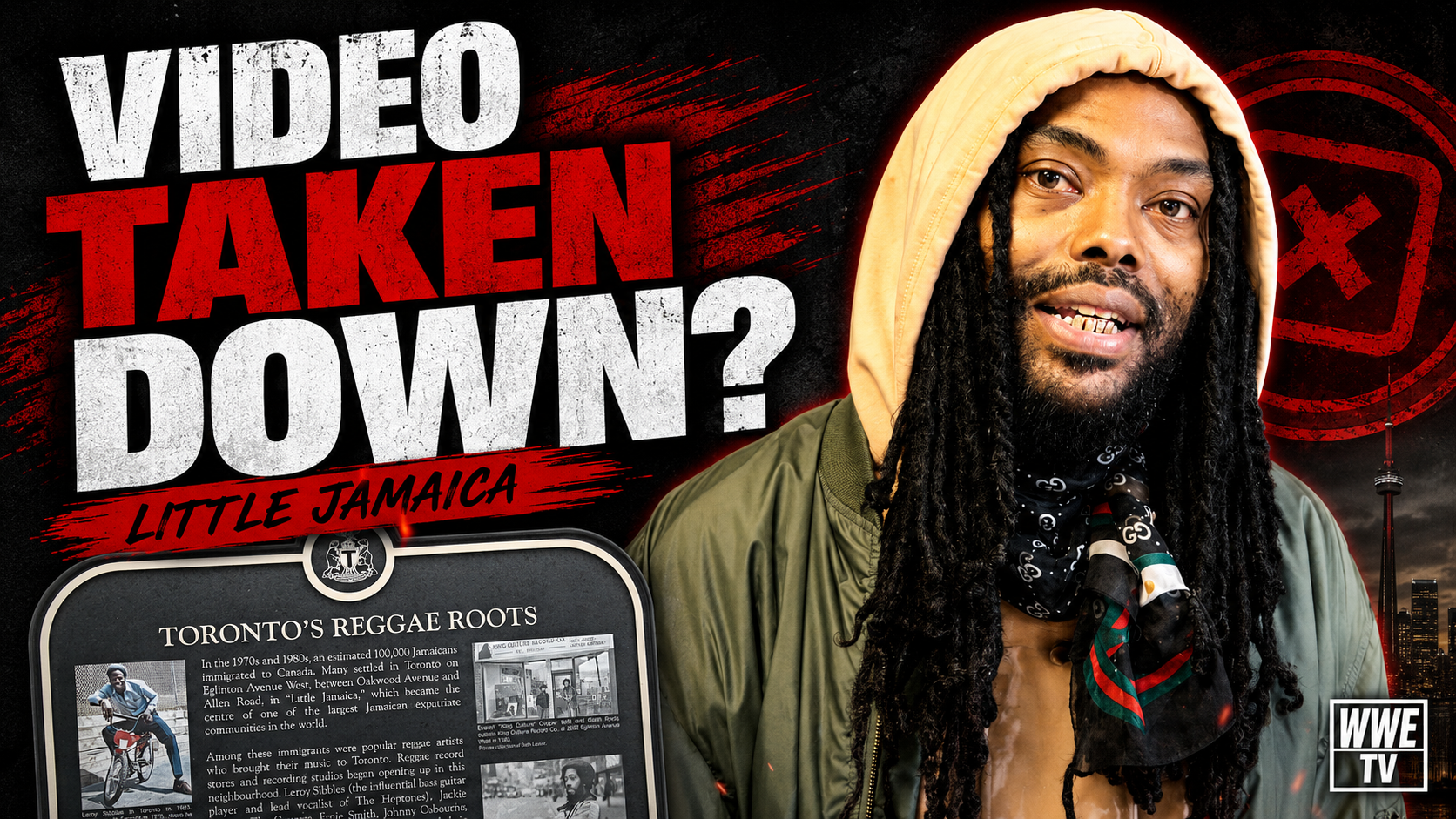
Kama OG Reacts To Chris Must List Little Jamaica Video
Video Taken Down? Kama OG Reacts To Chris Must List’s Little Jamaica Backlash After The LRT
Kama OG is speaking out after Chris Must List’s Little Jamaica video sparked debate in Toronto’s Caribbean and hip-hop community.
In a new WorldWide Entertainment TV Media conversation, Kama explained that the travel vlogger’s video was originally titled “Death of Little Jamaica,” later changed to “Welcome to Little Jamaica,” and then taken down. Kama said the reaction to the video was not only about one title or one vlog, but about a deeper issue: how Toronto communities respond when outside cameras enter real neighborhoods and try to tell their story.
The timing also matters. Little Jamaica has been at the center of renewed public discussion after years of disruption connected to the Eglinton Crosstown LRT. Local coverage has continued to focus on business closures, lost foot traffic, and the struggle to rebuild the Eglinton West corridor even after the transit project opened. CityNews reported that many store owners were still hoping Line 5 would bring customers back, while CP24 has also covered the financial impact on Little Jamaica connected to the LRT.
From A YouTube Takedown To A Bigger Little Jamaica Conversation
The phrase “Video Taken Down?” may sound like a social media headline, but Kama’s response puts the story into a bigger cultural frame.
According to Kama, the controversy around Chris Must List’s Little Jamaica video showed how complicated representation can become when a real community is placed in front of a major online audience.
He said Toronto is still adjusting to vlog-style exposure. In his view, people in other countries and Caribbean communities may be more open to being filmed by travel vloggers, while some people in Toronto are more guarded, camera-shy, or concerned about how they will be portrayed.
That difference matters because Little Jamaica is not just another street location for content. It is one of Toronto’s most important Black and Caribbean cultural corridors, known for reggae history, Jamaican businesses, food, music, community memory, and generations of migration. Kama also stated behind the scenes that the infamous vlog video will be returning online in a new edit on Christ Must List’s secondary channel “Chis Must List RAW.”
Kama Says “Death Of Little Jamaica” Was Misunderstood
One of the strongest parts of Kama’s response was his interpretation of the title “Death of Little Jamaica.”
Kama said he did not see the title as saying Little Jamaica was already gone. Instead, he framed it as a warning that something important was being damaged and still had time to be revived.
His point was simple: if something is dying, it can still be saved.
That interpretation connects directly to the wider LRT conversation. Little Jamaica has faced years of disruption tied to construction, business closures, changing foot traffic, and debates over whether the neighborhood’s cultural identity can survive the next phase of development.
NOW Toronto described the opening of the Eglinton Crosstown as “bittersweet” for Little Jamaica businesses, noting that owners were hopeful about renewed foot traffic but still counting the cost of years of disruption.
Did The Chris Must List Video Help Bring Awareness?
Kama argued that despite the controversy, the video helped spark a major conversation.
He said the public response he saw was largely positive, claiming the video had around 40,000 views, close to 2,000 likes, and positive comments before it came down. In his view, the backlash was less about the general audience and more about internal community politics, representation, and who felt included or left out.
That is where this story becomes bigger than one YouTube upload.
The Chris Must List video may have been removed, but the conversation it triggered continued. It landed at the same time local media outlets were covering Little Jamaica’s post-LRT reality, including concerns over business survival and whether foot traffic would truly return to Eglinton West. CityNews reported earlier this year that the BIA said more than 300 small businesses had shut down after years of Crosstown LRT construction.
Toronto, Vlogging, And Community Control
Kama’s larger point was about control of the narrative.
When a vlogger enters a community, the final video is shaped by editing, access, timing, who agrees to appear, and who does not. That can create tension, especially in neighborhoods where history is personal and people may not agree on who should represent the area.
Kama said some people may have wanted the video to look a certain way, but if a community wants fuller representation, more people have to participate, communicate, and be involved in the process.
That is an important point for Little Jamaica because the area’s story cannot be reduced to one angle. It is a story about reggae, Jamaican immigration, Black business, Toronto hip-hop, construction disruption, gentrification pressure, survival, pride, and cultural memory.
Kama Responds To Clout-Chasing Claims
Kama also addressed criticism that appears whenever viral videos are filmed in communities with complicated histories.
He pushed back against the idea that his appearance in the Chris Must List video was about clout chasing. According to Kama, Chris Must List reached out to him, and he used the opportunity to bring attention to Little Jamaica and some of the artists connected to the area rather than promote his own music or podcast.
Kama also emphasized his own connection to the neighborhood, saying he was born in the area and has been involved in community work for years. He spoke about helping bring community resources and hub-style services into the area, saying many people would not know about that side of his work because he does not always publicize it.
Who Gets To Tell The Story Of Little Jamaica?
One of Kama’s clearest explanations came through a simple example.
He compared community storytelling to people escaping the same fire. Everyone may experience the same event, but each person will see different details. One person’s version may leave out something another person remembers, but that does not automatically make either version false.
That is the heart of the Little Jamaica debate.
Chris Must List told one version through a travel-vlog lens. Kama told another version through the perspective of someone with roots in the community. CP24, CityNews, We Love Hip Hop, and other media platforms may each frame the story through different angles: business recovery, LRT disruption, culture, nostalgia, controversy, or community politics.
The issue is not only whether the video should have stayed up. The bigger question is whether Little Jamaica’s full story is being told with enough depth.
The QueenzFlip Trinidad Comparison
Kama also compared the Little Jamaica reaction to his appearance in QueenzFlip’s Trinidad video.
He said both situations showed how major platforms can create excitement and visibility, but also politics. When one person gets camera time, another may feel excluded. When one story gets attention, another person may feel their version was left out.
For Kama, this is part of media. Once a story reaches a certain level, people naturally want to respond, correct, add context, or challenge the way it was presented.
That comparison helps explain why the Chris Must List video became more than a Toronto vlog. It became a debate about visibility, community ownership, and how Caribbean and Black communities are represented when outside platforms enter the space.
Little Jamaica After The LRT
The LRT angle is crucial because Little Jamaica’s current struggle did not begin with one viral video.
For years, businesses along Eglinton West dealt with construction barriers, reduced access, customer loss, delays, and uncertainty connected to the Crosstown LRT. Even with Line 5 now operating, business owners and community advocates continue to ask what real recovery looks like for a cultural district that has already lost so much.
That is why the keyword “LRT Little Jamaica” matters. It captures what many viewers are actually searching for: not just the removed vlog, but the larger question of what happened to Little Jamaica after the LRT.
WWETV’s Connection To The Story
For WorldWide Entertainment TV Media, this story connects directly to years of documenting Toronto’s hip-hop, reggae, and Caribbean cultural history.
WWETV has long covered voices connected to Toronto’s music scene, Little Jamaica, Oakwood-Vaughan, Eglinton West, and the city’s Black entertainment history. Kama’s reaction is not just a response to Chris Must List. It is part of a larger archive of first-hand Toronto voices explaining the city from the inside.
That is what makes this conversation different from a standard reaction video.
It is not only about a video being taken down. It is about why the takedown happened, why the title hit a nerve, why the LRT conversation still matters, and why Little Jamaica’s story has to be told by people who understand the culture behind the street signs.
Kama’s Next Chapter
The interview also gives viewers a look into Kama’s next move: a new creative space built around podcasting, recording, production, content creation, and community access.
Kama described the setup as more than a commercial studio. He framed it as a media house with studio space, podcast stations, production areas, a lounge, and creative facilities that will be available through a vetted community model.
That ending brings the conversation full circle.
While Little Jamaica continues to fight for cultural preservation and economic recovery, Kama is building a space designed to give artists and creators more control over how their stories are made, filmed, recorded, and distributed.
Final Word
The Chris Must List Little Jamaica video may be gone from its original platform, but the conversation around it is still alive.
Kama OG’s response shows that the backlash was never just about a title. It was about Toronto’s relationship with exposure, the aftershocks of the Eglinton West LRT, community representation, and who gets to speak for a neighborhood with deep Caribbean and Black Canadian history.
Little Jamaica’s story is not finished. The question now is whether the next chapter will be shaped by outside attention alone — or by the people who lived it, built it, and still believe it can be revived.
Share this content:





Post Comment