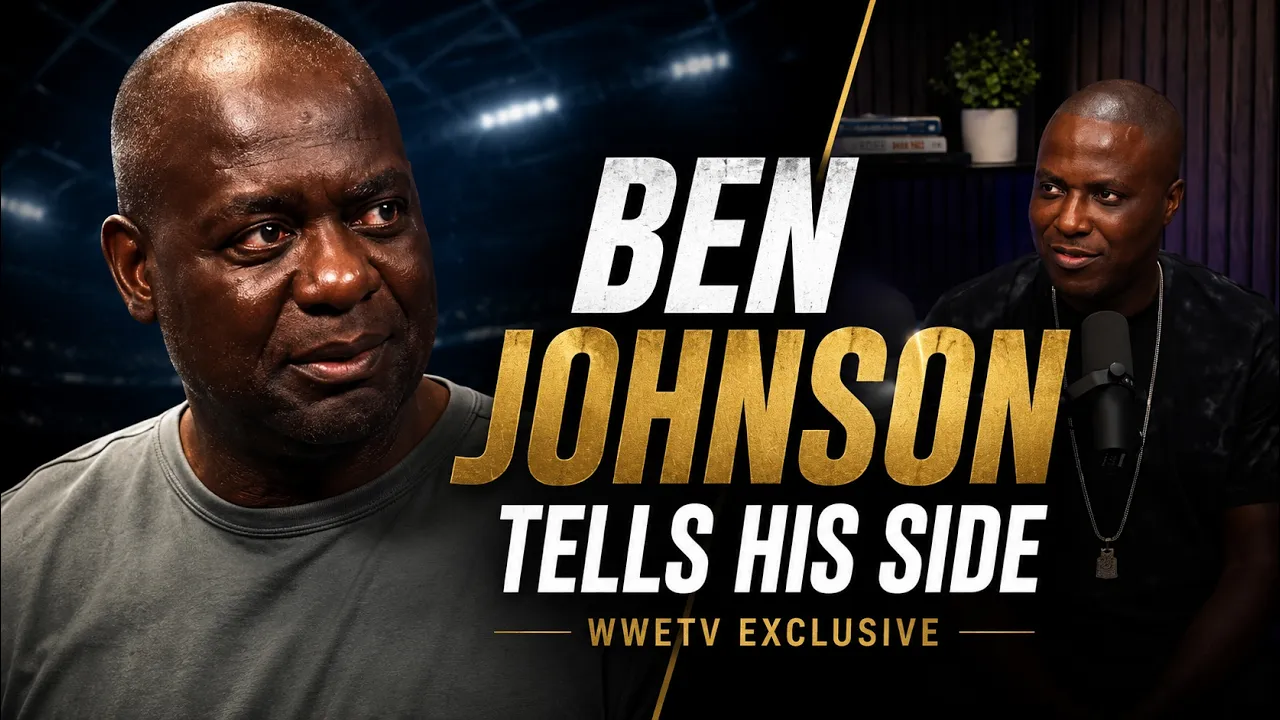
Ben Johnson Tells His Side In WWETV Exclusive Interview
Ben Johnson says the world reduced him to one race — but in a new WWETV exclusive interview, the Canadian-Jamaican sprint legend makes it clear that he sees his story as much bigger than one moment in Seoul.
In a wide-ranging conversation with WorldWide Entertainment TV Media, Johnson speaks on his early life, Jamaican roots, Canadian identity, sprinting legacy, Usain Bolt, Carl Lewis, media narratives, and the film he says still needs to be made about his life.
For decades, Ben Johnson’s name has been attached to one of the most controversial moments in sports history: the 1988 Seoul Olympics and the 100-meter final that changed how the world viewed him. But in this interview, Johnson pushes back against the idea that one headline can explain the full weight of his career, his sacrifice, or his place in sprinting history.
Play
Ben Johnson Before 1988
The conversation begins before Seoul, before the controversy, and before the world turned Johnson into a symbol. Asked who Ben Johnson was before 1988, he describes himself as an ordinary person who loved track and field and dreamed of reaching the Olympic Games.
That framing matters because the interview is not only about scandal. It is about a young man born in Jamaica, raised through discipline and sacrifice, who became one of Canada’s most famous athletes while still carrying the pride, memory, and identity of his Jamaican roots.
Johnson speaks with warmth about Jamaica, calling it his history and the place that shaped him. He also reflects on Canada as the country where his mother built a new life and where his own track career became internationally known.
“The Blueprint” Of Sprinting
One of the strongest moments in the interview comes when Johnson is asked what he means when he calls himself the blueprint.
Johnson argues that his training system, built with coach Charlie Francis, influenced generations of sprinters and coaches who came after him. He points to the structure, strength work, discipline, and year-round training that helped separate him from the field.
For Johnson, the “blueprint” is not just about one race or one record. It is about how sprinting changed after his era. He argues that many athletes and coaches benefited from the systems he and Francis helped popularize, even if they rarely credit him publicly.
That claim gives the interview its central tension: was Ben Johnson only remembered for the fall, or did the sport quietly absorb parts of what made him great?
Usain Bolt, 9.58 And Jamaica’s Sprinting Lineage
Johnson also speaks directly about Usain Bolt, the Jamaican superstar who became the global symbol of sprinting in the modern era.
Johnson does not dispute Bolt’s record status. Instead, he separates the conversation into two parts: Bolt as the record holder and himself as someone who believes he helped set the stage for what sprinting became.
That distinction creates one of the interview’s strongest legacy debates. Bolt has the official world-record crown, but Johnson argues that his own era changed the way sprinters and coaches approached speed.
The interview also turns warmer when Johnson talks about Jamaica’s sprinting soil. He describes the connection between Falmouth and Sherwood, noting how close the worlds of Johnson and Bolt were geographically. The point is bigger than two names. It is about Jamaica’s ability to keep producing athletes who shift the global imagination.
Canada, America And The Outsider Question
The interview also connects Johnson’s sports story to a broader cultural conversation about what happens when someone outside the American center starts winning.
Johnson reflects on running 9.79, the reaction to his dominance, and the feeling that not everyone was comfortable seeing him beat the American favorite on the world stage. The discussion opens a larger WWETV question: when an outsider dominates, does the conversation move from greatness to suspicion?
That question gives the interview a modern edge. It connects sports history to the same cultural tension that appears in music, entertainment, and media whenever Canadian, Caribbean, or international figures challenge American dominance.
For WWETV, that is where Johnson’s story becomes more than track and field. It becomes a case study in how public memory is shaped.
Carl Lewis And The 1988 Era
Carl Lewis inevitably becomes part of the conversation. Johnson is direct when discussing the energy around that rivalry and the broader track-and-field era.
Rather than turning the interview into a simple back-and-forth about Lewis, Johnson frames the period as a complicated time in the sport. His responses suggest that he believes the public story has often been simplified, leaving out the broader context of what was happening in elite sprinting.
That is one of the reasons the interview matters. It allows Johnson to speak from his own perspective rather than only through archival clips, old headlines, and decades of commentary.
The Horse Race Story And What People Missed
One surprising part of the interview deals with footage many people have seen without understanding the full context: Ben Johnson racing against a horse and a car.
Johnson explains that the event was connected to charity and children who were seriously ill. He says people saw the spectacle, but not the reason behind it.
That moment fits the larger theme of the conversation. Again and again, Johnson argues that people saw the image but missed the story behind it.
The Biopic Ben Johnson Wants Made
The interview ends with one of its strongest revelations: Johnson says he is working on a movie about his life.
He compares the idea to major legacy films around cultural icons such as Bob Marley and Michael Jackson, making it clear that he believes his story deserves a full cinematic treatment.
For Johnson, the biopic is not only about revisiting 1988. It is about explaining the life before the race, the pain after it, the mother who motivated him, the training that shaped him, and the truth he believes the public never fully heard.
That moment gives the WWETV exclusive its emotional center. Ben Johnson is not just revisiting the past. He is trying to make sure the full story is told while he is still here to tell it.
Why This Interview Matters
The Ben Johnson story has been told many times, but usually through the same narrow frame: Seoul, the test, the disqualification, and the fall from glory.
This WWETV exclusive expands the frame.
It asks what gets erased when a person’s life becomes one sentence. It asks whether a controversial athlete can also be an innovator. It asks how much of sprinting history was shaped by people who were later reduced to cautionary tales.
Ben Johnson may remain one of the most debated figures in sports history, but in this interview, he is not speaking as a headline. He is speaking as a man who still believes the story is unfinished.
Watch the full Ben Johnson interview on WorldWide Entertainment TV Media.
Share this content:










Post Comment