
Biggie Smalls Birthday: The Notorious B.I.G. Would Be 54 Today
Brooklyn Remembers Christopher Wallace
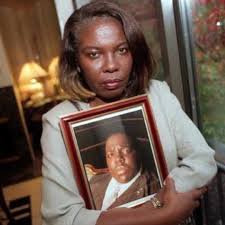
Today marks the birthday of Christopher George Latore Wallace, known worldwide as The Notorious B.I.G., Biggie Smalls, Big Poppa, and the King of New York. Born on May 21, 1972, in Brooklyn, New York, Biggie would have turned 54 years old today. He was killed on March 9, 1997, in Los Angeles at only 24 years old.
That is still the hardest part of Biggie’s legacy to process. His recording career was short, but the impact feels oversized because he did so much with such little time. Two major albums. A Brooklyn voice. A cinematic pen. A flow that could sound effortless while carrying complex character work, humor, danger, pain, and aspiration.
For WWETV, Biggie’s birthday is not just a “happy birthday” post. It is a reminder that New York hip-hop history is still being measured against what he did before the age of 25.
Why Biggie’s Voice Still Feels Current
Biggie’s gift was not only technical rap skill. It was believability. He could make listeners see the block, the apartment, the car ride, the argument, the ambition, and the paranoia. His records felt like short films before hip-hop content became a video-first world.
That is why Ready to Die still matters. The Library of Congress added Biggie’s 1994 debut album to the National Recording Registry in 2024, recognizing it as culturally, historically, or aesthetically significant. The Library of Congress described the album as a landmark in rap and hip-hop, highlighting Biggie’s smooth delivery, vivid storytelling, humor, and creative use of sampling.
That honor proves something important: Biggie’s music is no longer only hip-hop nostalgia. It is American cultural memory.
The Brooklyn Blueprint
Biggie made Brooklyn feel like the center of the rap universe. Before social media, streaming playlists, and city-brand rollouts, Biggie turned neighborhood identity into global language. He made Brooklyn sound expensive, dangerous, funny, wounded, stylish, and cinematic all at once.
That is why his influence still runs through so many artists. Jay-Z inherited the business-minded New York kingpin lane. DMX brought raw pain and spiritual urgency after Biggie’s death. The LOX carried street rap credibility. Lil’ Kim changed the visibility and presentation of women in hardcore hip-hop. Bad Boy turned rap into a luxury-pop machine.
Biggie’s absence also created a question New York spent years trying to answer: who carries the city next?
Ready To Die, Life After Death, And The Myth Of The Short Career
The Rock & Roll Hall of Fame inducted The Notorious B.I.G. in 2020 as a performer, noting that Ready to Die and Life After Death became two of hip-hop’s most influential albums.
That induction matters because Biggie’s career did not follow the usual legacy timeline. He did not get decades of reinvention. He did not get a late-career victory lap. He did not get to explain himself in documentaries, podcasts, interviews, or social media posts.
Instead, the music had to do all the talking.
Ready to Die introduced the world to his struggle, hunger, humor, and darkness. Life After Death, released shortly after his murder, turned him into a posthumous giant. Britannica notes that the second album was released later in March 1997 after Biggie’s death.
That is what makes Biggie different from many legends. His catalog feels both complete and unfinished.
Biggie, Tupac, And The Story Hip-Hop Still Cannot Escape
Any serious conversation about Biggie eventually touches the shadow of Tupac Shakur. Their names remain linked by talent, tragedy, media pressure, regional rivalry, and two murders that changed hip-hop forever.
But on Biggie’s birthday, the better question is not only about beef. It is about loss. What would hip-hop look like if Biggie and Tupac had lived long enough to mature, reconcile, compete, build labels, direct films, mentor artists, and control their own narratives?
That is where WWETV’s archive lens matters. The culture often turns Biggie and Tupac into symbols, but they were young Black artists carrying impossible levels of fame, pressure, surveillance, street politics, and industry exploitation.
The tragedy is not only that they died. It is that the world never got to see who they would have become.
The WWETV New York Connection
Biggie’s birthday also connects directly to WWETV’s New York and Brooklyn media lane. With WorldWide Entertainment TV NY tied into the BRIC/MNN ecosystem, Biggie’s Brooklyn legacy is more than a throwback topic. It is part of the same cultural geography WWETV continues to document: Brooklyn public access, New York hip-hop memory, street-level storytelling, and Black entertainment history.
Biggie represents the kind of archive story WWETV should own: not gossip, not generic tribute, but cultural connection.
The story is Brooklyn. The story is New York. The story is how one rapper’s voice still shapes how hip-hop understands success, danger, masculinity, pain, humor, and legacy.
Why This Birthday Matters In 2026
In 2026, hip-hop is moving through an AI-search era, a streaming overload era, and a constant debate about whether artists still create moments that last. Biggie’s music answers that question from another time.
He did not need 30 albums. He did not need daily content. He did not need constant access. He built immortality through voice, writing, timing, and presence.
That is the lesson for today’s artists: attention is valuable, but memory is the real prize.
WWETV Conclusion
Biggie Smalls would be 54 today, but his legacy still feels young because every generation keeps discovering the same thing: the voice was too natural, the stories were too vivid, and the impact was too large to stay trapped in the 1990s.
Brooklyn gave hip-hop many legends, but Biggie gave Brooklyn a global mythology.
On his birthday, the question is not whether The Notorious B.I.G. is still one of the greatest. The question is how many artists are still trying to live inside the blueprint he left behind.
Share this content:



Post Comment