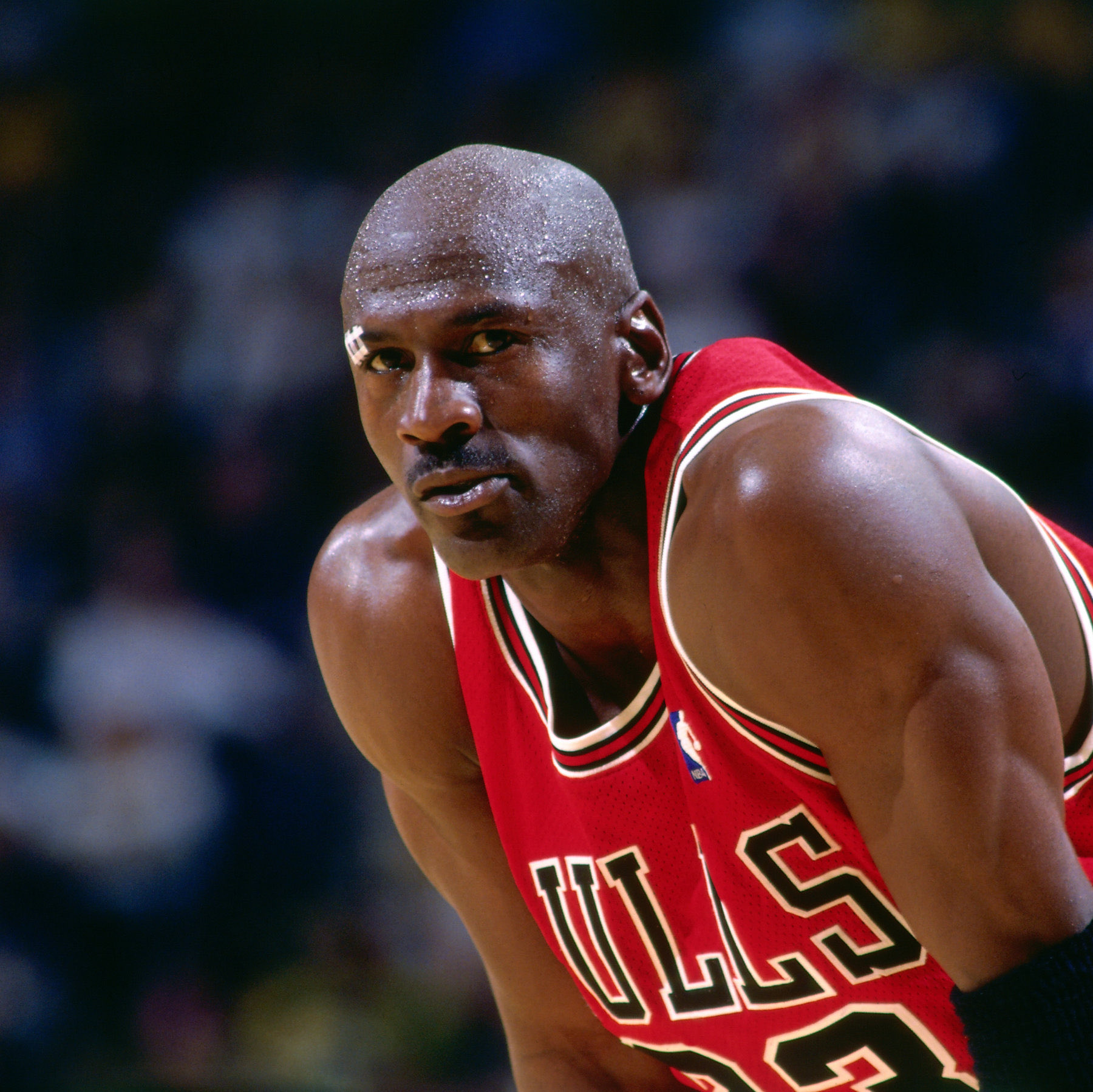
Michael Jordan Says There Is No GOAT In Basketball
Michael Jordan Rejects The GOAT Debate: Why MJ Says “There’s No Such Thing”
Michael Jordan is the player most fans place at the center of basketball’s GOAT debate. Yet Jordan himself continues to reject the entire premise.
In comments highlighted by Fadeaway World and originally tied to a CBS Sunday Morning conversation with Gayle King, Jordan said he does not believe in the idea of one definitive “GOAT” in basketball. His reasoning was not false humility. It was about lineage. Jordan argued that players are shaped by those who came before them and that each generation pushes the game forward in its own way.
That answer matters because it comes from the man many fans still treat as the standard. Jordan’s career résumé is almost untouchable: six NBA championships, six Finals MVPs, five regular-season MVPs, ten scoring titles, fourteen All-Star selections and a legacy that helped globalize the NBA. NBA.com describes him as one of the greatest players ever and credits his impact as going far beyond awards and championships.
But Jordan’s point is bigger than his own trophy case.
Stephen A Smith DESTROYS Lebron in the GOAT Debate 🔥
“There’s no way you could watch Michael Jordan and LeBron James and think MJ is not the GOAT.Michael has 10 scoring titles, won 6 titles, 6 NBA finals MVPs. Never once allowed a championship series to go to a game 7″… pic.twitter.com/XR3GeTSmk4
— TheTruth (@TheTruth8240) April 29, 2026
The modern GOAT conversation usually becomes a triangle: Jordan, LeBron James and Kobe Bryant. Sometimes Kareem Abdul-Jabbar, Bill Russell, Magic Johnson, Larry Bird, Wilt Chamberlain and Stephen Curry enter the debate, but social media often reduces the argument to one question: Jordan or LeBron?
Jordan seems to be saying that question is too small.
In a separate NBC Sports conversation with Mike Tirico, Michael Jordan made a similar argument. He said the GOAT label is not something he gets “high or low” about, explaining that he never got to play against legends such as Oscar Robertson or Jerry West, and that later stars like Kobe and LeBron built on what earlier players created.
That is the part of the debate fans often miss. Every era has different rules, spacing, training, media pressure, defensive schemes and business realities. Jordan dominated in a more physical, isolation-heavy era. Kobe extended Jordan’s competitive and technical blueprint into the 2000s. LeBron changed the definition of a superstar by becoming a scorer, passer, playmaker, power athlete and franchise engine across more than two decades.
The question is not only who was better. It is what kind of greatness each player represents.
In an interview with CBS Sunday Morning, Michael Jordan said he doesn’t believe there is one GOAT in basketball.
“There’s no such thing as a GOAT in basketball, to me. It’s only because I think we learn from other athletes, we progress the game. To say that one is better than… pic.twitter.com/JiL3BmPGVz
— Complex (@Complex) March 30, 2026
Jordan represents the mythology of perfection: 6-0 in the Finals, global sneaker culture, iconic commercials, ruthless competitive energy and the transformation of the NBA into a worldwide entertainment product.
Kobe represents obsession: the Mamba Mentality, footwork, discipline, film study, pain tolerance and a generation raised on the idea that skill could be sharpened into identity.
LeBron represents longevity and versatility: a player who entered the league as a teenager, carried impossible expectations, became the NBA’s all-time leading scorer and remained a championship-level force across multiple eras.
That is why Jordan’s rejection of the GOAT debate does not weaken his legacy. It may actually make his view more powerful. He is not saying he was not great. He is saying greatness is not a straight line.
For WorldWide Entertainment TV, the cultural angle is clear. Sports fans love rankings because rankings create debate. But legends are not only remembered by numbers. They are remembered by the way they changed imagination.
Before Jordan, Magic and Bird helped rescue and reshape the NBA’s national profile. Before them, Bill Russell turned winning and defense into a dynasty standard. Kareem Abdul-Jabbar combined longevity, activism and unstoppable skill. Dr. J brought aerial artistry into the mainstream. Jordan absorbed all of that and turned it into a global blueprint.
Then Kobe and LeBron inherited a world Jordan helped build.
That is the part Jordan appears to respect. He understands that no legend arrives out of nowhere. Every icon is standing on somebody else’s shoulders.
The timing also fits Jordan’s renewed media presence. NBC announced in 2025 that Jordan would become a special contributor to NBA coverage beginning with the 2025-26 season, marking his first television role connected to league coverage since retiring in 2003. His reflections now carry extra weight because he is no longer just the untouchable figure in old highlights. He is being placed back into the modern NBA conversation while LeBron’s career continues and Kobe’s legacy remains emotionally protected by fans.
The irony is that Jordan rejecting the GOAT debate will not stop the GOAT debate.
Fans will still argue. Analysts will still rank. Social media will still compare rings, stats, eras and impact. But Jordan’s answer gives the conversation a more mature frame.
Maybe the real basketball question is not “Who is the one GOAT?”
Maybe it is: who changed the game in their era, who carried the game into the next one, and whose influence still lives in the players who came after?
By that measure, Michael Jordan does not need to call himself the greatest.
The game already shows his fingerprints.
Share this content:






Post Comment