Biggie Raid, Lil’ Kim Mugshot & The Snitching Debate
Biggie’s 1996 Teaneck Raid Reopens Debate Over Lil’ Kim’s Mugshot And Snitching Claims
A new deep-dive video about the 1996 police raid at Biggie Smalls’ New Jersey home has reopened one of the most uncomfortable conversations in hip-hop history: what happens when the paperwork does not match the mythology?
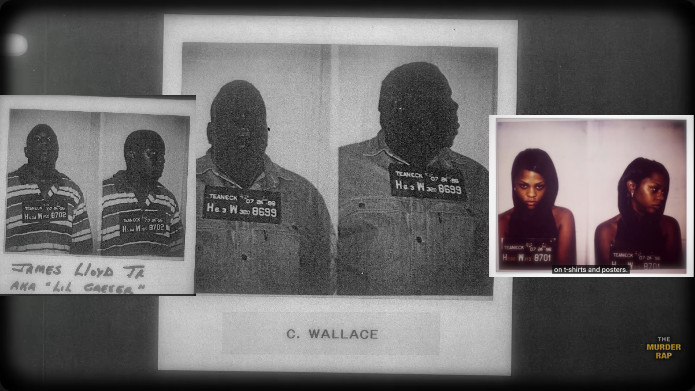
The episode, titled “The gun & drug raid on Biggie’s home, Lil’ Kim’s iconic mugshot, & a bomb threat – DEEP DIVE: Ep. 36,” revisits the July 23, 1996 search of Biggie’s residence in Teaneck, New Jersey. According to the episode’s review of case-file material, police entered the home after an illegally parked vehicle and the smell of marijuana helped lead investigators to obtain a search warrant.
Inside the home, police reportedly found suspected marijuana, ammunition, multiple firearms, a Tec-9 with defaced serial numbers, loaded magazines, a crossbow with arrows, cash, and dozens of photographs. Biggie, Lil’ Kim, Lil’ Cease, and others connected to the Junior M.A.F.I.A. circle were arrested.
The raid also produced one of the most famous images in hip-hop history: Lil’ Kim’s mugshot.
But decades later, the mugshot is not the part driving the debate.
The debate is over what Biggie allegedly told police after the raid.
The Police Statement That Has Fans Talking
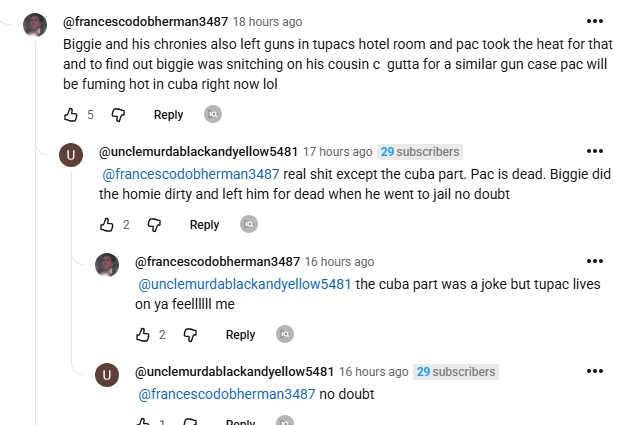
According to the deep-dive episode, Biggie allegedly told police the residence was his and that several people stayed there, including Lil’ Cease, C-Gutta, and Damion Butler. The episode states that Biggie admitted to regular marijuana use with members of Junior M.A.F.I.A., but denied knowledge of the seized firearms.
The part that triggered the comment section was the claim that Biggie allegedly told police C-Gutta may have known about the Tec-9 because he was the type of person who would jokingly point a gun at people and had done so before with a silver chrome gun.
The video also states that Biggie allegedly said Damion Butler had been seen with a gun inside the residence.
That is where the fan debate exploded.
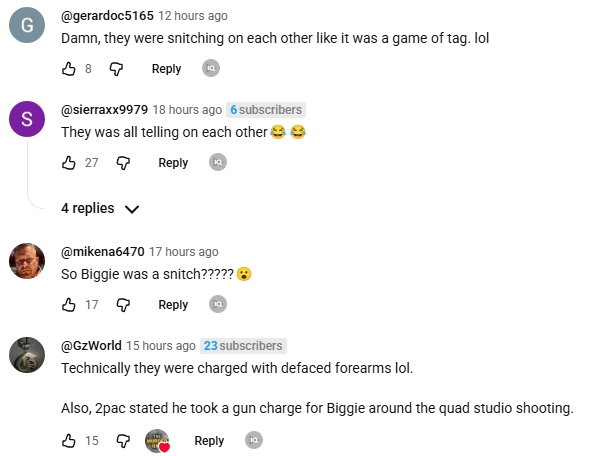
Some viewers saw those statements as simple legal self-defense. Others viewed them through the strict street-code lens and immediately began calling it “snitching.” The comments under the video show how quickly the conversation shifted from “rare Biggie history” to “did Biggie violate the code?”
One commenter wrote that they had been waiting for this episode because “nobody believed” Biggie had legal trouble before his death. Another asked whether someone could “deep dive into the gun charges Tupac got when Biggie left guns in his room.” Others compared the situation to Tupac’s claims that he took a gun charge connected to Biggie around the Quad Studios era.
That is the WWETV angle: the video did not just reveal a forgotten legal episode. It challenged how fans remember Biggie’s image.
Lil’ Kim, Lil’ Cease And The Junior M.A.F.I.A. Fallout
The episode also claims Lil’ Kim denied smoking marijuana and told police that “the boys do what they do,” while Lil’ Cease allegedly admitted he was in a photograph holding guns but refused to identify who took the picture.
That detail has become important in the online reaction because some viewers are now contrasting how different people handled questioning. In the comments, several fans pointed out that Lil’ Cease appeared to say less than others. Others argued that everyone involved was trying to survive a serious case.
Biggie reportedly received the most serious charges because it was his residence. The charges discussed in the episode included possession of a large-capacity magazine, possession of an assault firearm, possession of a defaced firearm, possession of a firearm by a convicted felon, and marijuana possession.
The rest of the group reportedly faced lesser charges, with Lil’ Kim’s case later resurfacing over a missed court appearance and a small bail amount.
The larger point is this: the raid happened less than a year before Biggie was killed in Los Angeles. Had he lived, the case may have become a major legal issue for him.
Why Fans Are Calling It A “Snitching” Debate
The word “snitch” carries heavy weight in hip-hop culture. It is not just a legal word. It is a street-code word, a loyalty word, and sometimes a branding weapon.
That is why the reaction to this video was so intense.
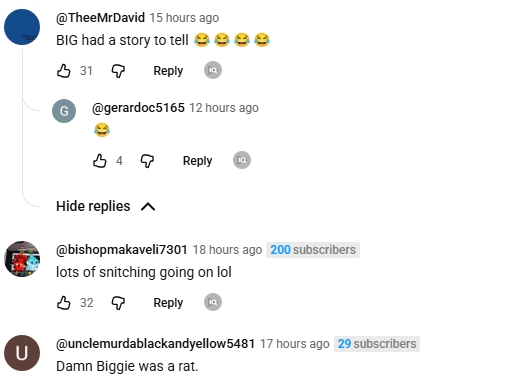
Some commenters accused Biggie of “telling,” “ratting,” or “throwing people under the bus.” Others joked that everyone in the house was pointing fingers. Several viewers brought up Tupac, saying Pac had previously claimed he took heat for guns connected to Biggie. Others said this changes how they view the Bad Boy and Death Row tension during the mid-1990s.
But there is an important difference between fan reaction and confirmed conclusion.
The available discussion is based on how the video presents the alleged statements and case-file material. Calling Biggie a snitch as a fact would go beyond what should be responsibly stated. What can be said is that the video has sparked a serious debate among hip-hop fans over whether Biggie’s alleged police statements crossed a street-code line.
That distinction matters.
A legal defense strategy is not always the same thing as cooperation. A person denying ownership of weapons inside a shared residence is not automatically the same thing as testifying against someone. But in street culture, even naming who may know about a gun can be interpreted differently.
That tension is why the debate is so strong.
The Biggie Mythology Gets More Complicated
Biggie’s public image has often been shaped by two extremes.
On one side, he is remembered as one of the greatest rappers ever: a Brooklyn storyteller, a Bad Boy superstar, and a lyricist whose voice, flow, and detail changed rap forever.
On the other side, his actual street history has often been softened by mainstream documentaries, biopics, and tribute coverage that focus more on his humor, charisma, and tragedy than on the legal trouble and neighborhood realities around him.
This deep dive forces fans to sit with a more complicated version of Biggie.
He was not just the charming genius from Brooklyn. He was also a young man surrounded by weapons, drugs, police attention, street associates, industry pressure, and the escalating East Coast/West Coast media storm of 1996.
That does not erase his greatness. It makes the story more human and more dangerous.
The Tupac Connection Fans Keep Bringing Up
The comment section repeatedly pulled Tupac into the discussion. That is not surprising.
By 1996, Biggie and Tupac were no longer just two artists with a personal fallout. They had become symbols inside a much larger media-created East Coast versus West Coast war. Every new document, interview, or case file from that era now gets filtered through the question fans have been asking for decades: who was loyal, who was real, who was being used, and who was telling the truth?
The Biggie raid happened during the same year Tupac was released on Death Row, confronted Bad Boy publicly, and turned private grievances into national rap headlines. When fans hear that Biggie allegedly gave police names connected to firearms, they immediately compare that to Tupac’s public claims about loyalty, betrayal, and street credibility.
That is why this story still has power.
It is not only about a raid. It is about how one police file can reopen the entire mythology of 1990s hip-hop.
WWETV Takeaway
The 1996 Teaneck raid is not just a forgotten arrest story. It is a reminder that hip-hop history often becomes cleaner over time than it was in real life.
Biggie’s legacy remains massive. His music, storytelling, and influence are not erased by a police file. But this deep dive shows why archive-based hip-hop coverage matters. The documents, photos, statements, charges, and fan reactions reveal a more complicated world than the polished legend.
The real question is not simply, “Was Biggie a snitch?”
The better question is:
What happens when the paperwork forces fans to re-examine the story they were told?
That is where the debate lives.
And right now, the audience is clearly not done arguing about it.
Share this content:





Post Comment