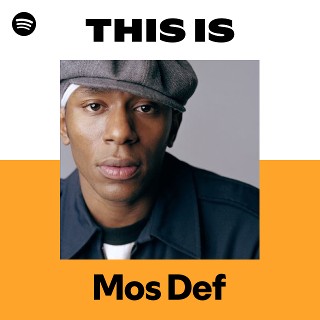
Yasiin Bey’s Advice To PlaqueBoyMax Is Bigger Than A Viral Stream Moment
Yasiin Bey’s Advice To PlaqueBoyMax Is Why Hip-Hop History Still Has To Be Documented
A viral stream moment turned into something much bigger when Yasiin Bey, also known to hip-hop fans as Mos Def, appeared alongside Ye on PlaqueBoyMax’s stream and offered advice that cut through the noise of internet culture.
The message was simple, but heavy: Black artists need to study Black art. Not only the music they personally enjoy. Not only the artists trending in their algorithm. Yasiin Bey pushed for a wider education — painters, writers, architects, history, and the full creative language of Black expression. The clip was shared widely after appearing on X, where BigBusiness posted the moment involving Yasiin Bey, Ye, and PlaqueBoyMax.
For WorldWide Entertainment TV, that message connects directly to the reason cultural documentation matters. Hip-hop history is not just nostalgia for fans. It is a living classroom for artists.
Yasiin Bey (AKA Mos Def) and Ye pulled up to PlaqueBoyMax stream and he got some some advice from Yasiin Bey as well 🔥🔥🔥
“Black artists need to study black art, study the history and don’t just study the stuff you’re into study the history of great black art the whole… pic.twitter.com/IvzhinXBnn
— Ahmed/The Ears/IG: BigBizTheGod 🇸🇴 (@big_business_) May 30, 2026
Yasiin Bey’s own career makes him the right person to deliver that message. As Mos Def, he became one of the defining voices of conscious and alternative hip-hop through Black Star with Talib Kweli and his classic solo debut Black on Both Sides. His career has always blended rap, theater, activism, film, and cultural commentary, making him an artist who has never treated hip-hop as only entertainment.
That is why the PlaqueBoyMax moment matters. It was not just an older artist lecturing a younger platform. It was a reminder that artists who understand history create differently.
Hip-hop was built from memory. DJs preserved breaks. MCs carried neighborhood stories. Graffiti writers turned walls into public galleries. Dancers transformed city movement into performance language. Producers sampled older records and made new worlds from them. Every generation of hip-hop has pulled from what came before, whether it was soul, jazz, funk, gospel, reggae, spoken word, street fashion, cinema, or visual art.
When artists do not study that history, they risk becoming products of the moment instead of contributors to the culture.
That is where WWETV’s mission fits in. Documenting hip-hop and Black entertainment history is not only about looking back. It is about giving today’s artists access to the receipts, interviews, voices, and cultural context that shaped the industry they are trying to enter. An old interview can teach stage presence. A forgotten performance can explain influence. A throwback clip can show how an artist carried themselves before fame. A conversation from the past can warn new artists about business, ownership, image, media narratives, and creative responsibility.
This is why archives matter. Institutions have already recognized hip-hop as history. The Smithsonian Anthology of Hip-Hop and Rap was created to chronicle the growth of the music and culture from the Bronx to its global reach, while the National Museum of African American History and Culture frames hip-hop as a social and musical movement with deep cultural impact. Harvard’s Hip Hop Archive & Research Institute also treats hip-hop as a serious field of knowledge, art, culture, and leadership.
That same urgency is reflected in the rise of The Hip Hop Museum in the Bronx, which is scheduled to open in 2026 as a permanent cultural institution dedicated to preserving hip-hop’s legacy and inspiring future generations. The museum describes itself as a space built to celebrate hip-hop culture under one roof, from the Bronx to the world, while connecting the culture’s past to its future. That makes Yasiin Bey’s message even more timely. Hip-hop is no longer fighting to prove it belongs in serious cultural spaces; the museum proves the world is finally catching up to what the culture already knew. But museums, archives, interviews, and platforms like WWETV all serve the same purpose: making sure the next generation of artists does not inherit the spotlight without also inheriting the knowledge.
But the work cannot only live inside museums and universities. Platforms like WWETV help keep that history moving in real time — through interviews, articles, video archives, city-based stories, artist conversations, and cultural commentary that reaches the same audiences who are shaping the next chapter.
Yasiin Bey’s advice also applies to fans. A fan who knows the history hears music differently. They understand why an artist’s flow matters, where a sample came from, why a fashion choice has meaning, why a city’s sound carries identity, or why certain interviews become cultural documents years later. History turns casual viewing into deeper appreciation.
For artists, the lesson is even more urgent. Studying Black art helps artists avoid copying trends without understanding roots. It teaches them how legends built identities, how movements formed, how media shaped public perception, and how creative choices can outlive chart positions. It also reminds them that Black creativity has never been limited to one lane. A rapper can learn from a painter. A singer can learn from a filmmaker. A producer can learn from architecture. A performer can learn from theater. A music video can carry the influence of dance, fashion, photography, and cinema at the same time.
That is the larger point behind Yasiin Bey’s message. Black art is not a narrow category. It is a connected universe.
In the streaming era, moments can go viral and disappear within hours. But when a moment like this carries a message about history, it deserves to be documented. PlaqueBoyMax represents a generation that grew up with live platforms, real-time audiences, and music discovery happening in public. Yasiin Bey represents a lineage where hip-hop was studied, debated, performed, and connected to a wider Black artistic tradition.
When those worlds meet, the culture gets an important reminder: the future of hip-hop depends on how well the next generation understands the past.
That is why WWETV continues to document hip-hop history and Black entertainment culture. The archive is not just for memory. It is for education. It is for context. It is for artists who want to build something that lasts.
Share this content:






Post Comment