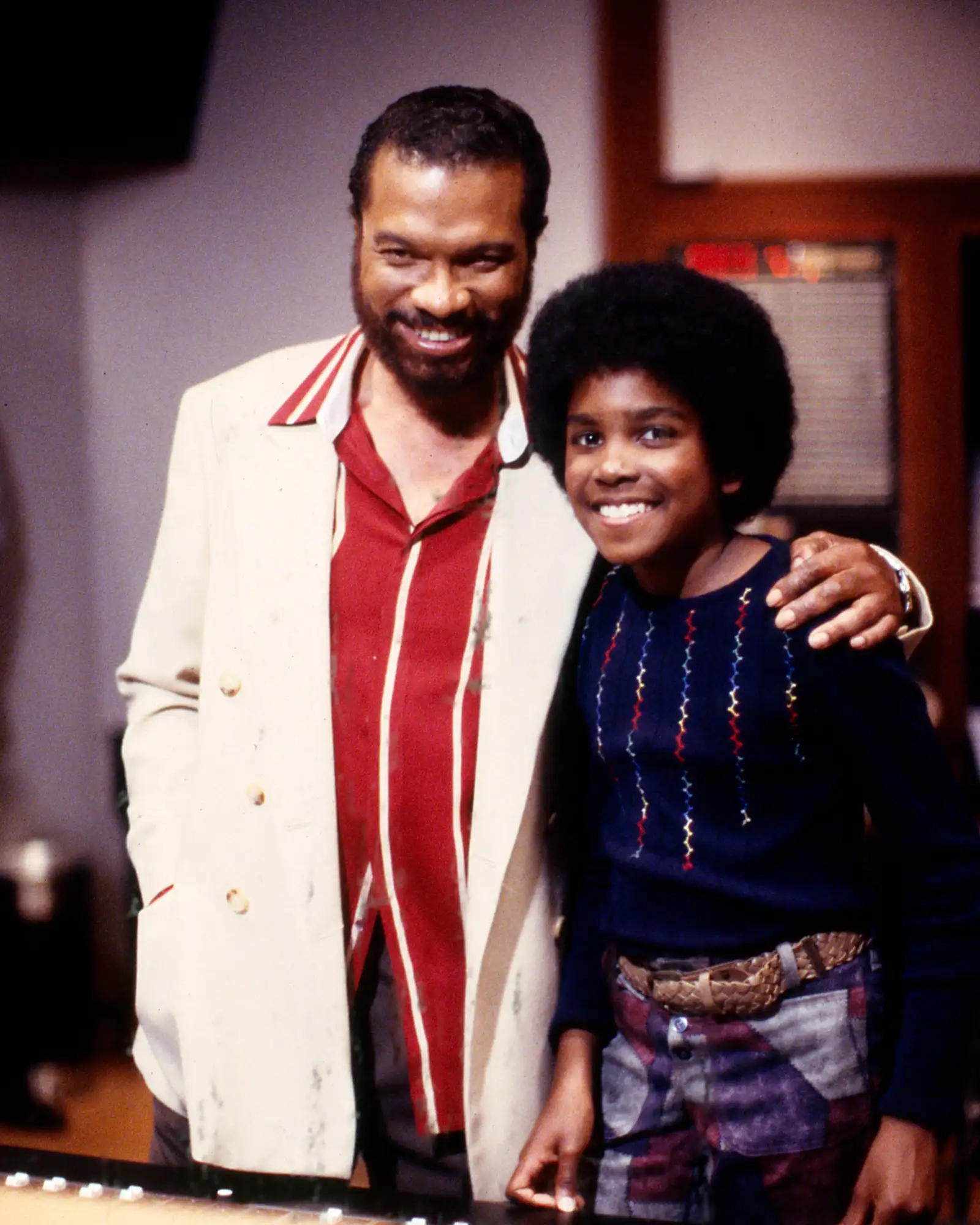
The Original Young Michael Jackson Just Passed The Torch To Jaafar Jackson
Before Jaafar Jackson stepped into the role of Michael Jackson on the big screen, Jason Weaver had already carried that responsibility for an entire generation.
In 1992, The Jacksons: An American Dream became one of the defining Black television miniseries of the era. For many viewers, Jason Weaver’s portrayal of young Michael Jackson was the first dramatized version of Michael’s childhood they ever saw. The performance became part of 90s television memory and helped introduce younger audiences to the Jackson family story.
Now, more than three decades later, Weaver is praising Jaafar Jackson’s portrayal in the new Michael Jackson biopic Michael.
In a PEOPLE exclusive, Weaver said Jaafar Jackson exceeded expectations with his performance as the King of Pop. Weaver, who played young Michael in the 1992 miniseries, acknowledged the difficulty of the role and praised Jaafar’s commitment to bringing his uncle’s story to the screen.
That makes this more than a movie review.
It is a passing-of-the-torch moment between two actors connected by one of the most demanding roles in Black entertainment history.
Those endless rehearsals under Joe built not just talent, but unbreakable discipline. That’s why kid Michael could deliver soul and precision most adults never touch. pic.twitter.com/TcgAjMqfUK
— Kash (@oficial_kash) June 15, 2026
Playing Michael Jackson is not like playing a typical celebrity. The performer has to capture the voice, movement, posture, rhythm, vulnerability, public confidence, private pressure, and almost supernatural stage presence that made Michael one of the most studied entertainers of all time.
Jason Weaver understood that challenge early.
When The Jacksons: An American Dream aired, it dramatized the rise of the Jackson family from Gary, Indiana, to Motown fame and international stardom. The miniseries became a cultural event, especially in Black households where the Jackson family story felt larger than entertainment. It was about family ambition, sacrifice, discipline, talent, fame, and the cost of success.
Weaver’s young Michael stood at the emotional center of that story. He had to portray innocence, brilliance, pressure, and the early signs of a star who would eventually become bigger than the group that introduced him.
For many fans, that performance never left.
That is why Weaver’s reaction to Jaafar Jackson carries weight. He knows the role from the inside. He knows the level of detail required. He knows that playing Michael Jackson means facing comparisons from fans who remember every hand movement, every vocal inflection, and every piece of stage presence.
Jaafar Jackson’s role comes with a different kind of pressure. He is not only playing Michael Jackson; he is playing his uncle. As the son of Jermaine Jackson, Jaafar carries the family connection directly into the performance. That gives the film a built-in emotional layer, but it also raises the stakes.
Audiences are not just watching an actor portray Michael. They are watching the next generation of the Jackson family help retell one of music’s most famous stories.
The commercial response to Michael has already been massive. PEOPLE reported that the film has become the highest-grossing music biopic of all time after surpassing Bohemian Rhapsody, with approximately $911.9 million worldwide.
But the Jason Weaver reaction gives the story something box-office numbers cannot: cultural continuity.
It connects 1992 to 2026.
It connects Black television nostalgia to modern theatrical spectacle.
It connects the era of network miniseries to the era of global box-office franchises.
And it reminds audiences that Michael Jackson’s story has been passed through multiple generations of performers, viewers, and family members.
For WorldWide Entertainment TV’s nostalgia audience, this is the kind of moment that hits deeper than a headline. It is not only about whether Jaafar Jackson played Michael well. It is about how Black entertainment history keeps returning through new vessels.
Jason Weaver represented the version of Michael that many 90s viewers grew up with.
Jaafar Jackson now represents the version that a new generation may carry forward.
That does not erase the earlier portrayal. It completes the circle.
The original young Michael saw the new Michael — and gave him his respect.
Share this content:











Post Comment