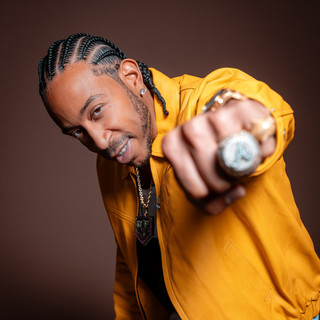
Ludacris And Organized Noize Honored In Atlanta Music Legacy Moment
Atlanta’s music legacy is getting another permanent spotlight.
Ludacris and Organized Noize are part of a Black Music & Entertainment Walk of Fame recognition moment connected to Black Music Month, placing two pillars of Atlanta’s entertainment history inside a larger conversation about Southern hip-hop, cultural ownership, and preservation.
The searchable source trail around the 2026 Walk of Fame class points to Ludacris and Organized Noize being set for induction in Atlanta during June 2026. The Black Music & Entertainment Walk of Fame itself was launched in Atlanta to honor Black achievement in music and entertainment, with earlier honorees including Michael Jackson, Beyonce, Usher, Missy Elliott, OutKast, James Brown, Stevie Wonder, Otis Redding, Quincy Jones, Sean Combs, Shirley Caesar, and Kirk Franklin, as Pitchfork reported during the Walk of Fame’s launch (source).
For WWETV, the story is not only that Ludacris and Organized Noize are being recognized.
The bigger story is that Atlanta’s blueprint is still being validated.
Ludacris Turned Atlanta Swagger Into Mainstream Power
Ludacris did not enter hip-hop quietly.
His voice, humor, delivery, videos, hooks, and personality made him one of the most recognizable rappers of the 2000s. He could be animated and comedic without losing lyrical sharpness. He could make club records, guest verses, battle-ready tracks, soundtrack moments, and crossover hits without sounding like he was chasing permission.
That versatility helped make him one of Atlanta’s defining mainstream rap figures.
Before Ludacris became a film star and global celebrity, he was part of the era that proved Atlanta was not a side market. Atlanta was becoming one of the engines of popular music.
His success helped stretch the idea of what Southern rap could sound like, how it could look on television, and how far it could travel.
Organized Noize Helped Build The Sound Before The World Caught Up
Organized Noize belongs in any serious conversation about Atlanta’s rise.
The production team of Rico Wade, Ray Murray, and Sleepy Brown helped shape the sound that introduced much of the world to OutKast, Goodie Mob, and the Dungeon Family universe. Their work carried funk, soul, gospel feeling, live instrumentation, low-end weight, and Southern storytelling into hip-hop at a time when the genre’s center of gravity was still often described through New York and Los Angeles.
That sound changed the map.
Organized Noize did not simply make beats. They helped create atmosphere. Their production made Atlanta feel like a place, not a backdrop.
The music was humid, spiritual, streetwise, reflective, futuristic, country, and cosmic all at once. That is why the Dungeon Family era still feels alive in hip-hop memory.
Atlanta’s Recognition Is Really A Preservation Story
The Black Music & Entertainment Walk of Fame matters because monuments tell future generations what a culture decided to protect.
Awards can be watched once and forgotten. Plaques, medallions, murals, street names, and public honors become part of civic memory. They let a city say, “This music did not just entertain us. It changed us.”
Atlanta has earned that kind of preservation.
From LaFace Records and So So Def to Dungeon Family, crunk, trap, R&B, gospel, radio, reality television, film production, and modern streaming-era rap, Atlanta has shaped the last several decades of Black entertainment in ways that are still unfolding.
Ludacris and Organized Noize represent two sides of that story.
One became a global superstar whose personality carried across rap, film, and pop culture.
The other helped build the musical foundation that allowed Atlanta’s creative identity to become unmistakable.
Why This Matters During Black Music Month
Black Music Month is not only about celebrating legends after the fact. WWETV has also been tracking preservation stories such as Peabo Bryson’s legacy during Black Music Month (read more), which shows why honoring artists and architects while their impact is still being discussed matters.
It is about identifying the systems, cities, producers, writers, performers, executives, DJs, studios, and neighborhoods that made Black music move.
Atlanta’s rise was not accidental. It came from local radio, clubs, studios, producers, independent labels, college culture, street teams, regional pride, and artists who refused to make their sound smaller for national approval.
That is why this honor matters.
When Ludacris and Organized Noize are placed into a Walk of Fame conversation, the culture is also recognizing the larger Atlanta ecosystem that made their work possible.
WWETV Conclusion
Ludacris and Organized Noize being honored in Atlanta is bigger than a ceremonial headline.
It is a reminder that Southern hip-hop did not ask to be included in music history.
It rewrote the history.
Ludacris brought Atlanta charisma to the mainstream with a voice and visual identity that could not be ignored. Organized Noize helped create the soundbed that made Atlanta’s musical imagination feel limitless.
Together, their recognition points to a larger truth.
Atlanta is not just a city that produced stars.
Atlanta produced a language.
And Black Music Month is exactly the time to make sure that language is remembered correctly.
Sources And Related Reading
SOURCE: Pitchfork reported during the Walk of Fame’s launch
READ MORE: Peabo Bryson’s legacy during Black Music Month
Share this content:





Post Comment