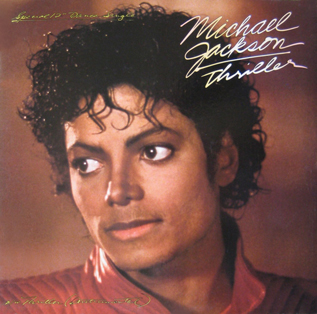
Why Gen Z Is Rewriting Michael Jackson’s Legacy
Michael Jackson’s legacy is no longer being debated only by the generation that watched him become the biggest entertainer in the world. A new audience — Gen Z — is now discovering, defending, questioning, remixing, and reinterpreting the King of Pop in real time.
The release and massive commercial success of Michael has reopened one of pop culture’s most complicated conversations. The film has reportedly become one of the highest-grossing biopics of all time, showing that Jackson’s name still carries global box-office power decades after his prime and years after his death.
But what makes this moment different is not just the movie. It is the digital ecosystem around it.
nobody touches the king!! pic.twitter.com/1ktf0v3RIa
— ♡ (@offthewwall) May 15, 2026
For many younger fans, Michael Jackson did not first arrive as the moonwalking superstar of Motown 25, Thriller, or the Bad era. He arrived through memes, tabloid clips, comedy references, allegations, documentaries, YouTube breakdowns, TikTok edits, and fan-made defense videos. That means Gen Z is not simply inheriting Michael Jackson’s legacy — they are rebuilding it from fragments.
The Guardian recently examined how Jackson’s image is being rehabilitated online, pointing to a wave of social media content that presents him as a misunderstood genius while often minimizing or challenging the darker parts of his public story. The article also noted how online fans debate everything from Jackson’s appearance and vitiligo to the allegations that continue to shadow his legacy.
That is where the bigger cultural issue begins.
Michael Jackson’s story has always sat at the intersection of race, fame, media cruelty, Black genius, childhood trauma, and public spectacle. For older fans, he was the artist who broke MTV, changed music videos forever, crossed racial barriers, and became the global face of pop. For younger fans, he is also a case study in how celebrity narratives are built, destroyed, and resurrected.
Digital fandom now acts almost like a courtroom. Academic research has described some Michael Jackson fan media as “forensic fandom,” where supporters produce videos and arguments intended to challenge accusations and defend his reputation.
That is why this Gen Z moment is bigger than nostalgia.
Younger fans are not just saying they like the music. They are asking whether the media treated him fairly. They are asking how race shaped his image. They are asking why the world laughed at his appearance. They are asking whether celebrity culture turned a damaged child star into a spectacle before ever treating him as a human being.
At the same time, any honest discussion of Michael Jackson’s legacy cannot erase the allegations and controversies that remain part of the public record. The tension is exactly why the conversation keeps returning. His artistry is undeniable, but the debate around his life is unresolved.
For WWETV, this is the real story: Gen Z is not simply restoring Michael Jackson’s image. They are turning him into a digital-age legacy battle.
And in 2026, that may be the most powerful proof of his cultural reach. Michael Jackson is not just being remembered. He is being reinterpreted by people who were not alive for his peak — and somehow, he is still at the center of the conversation.
Share this content:











Post Comment