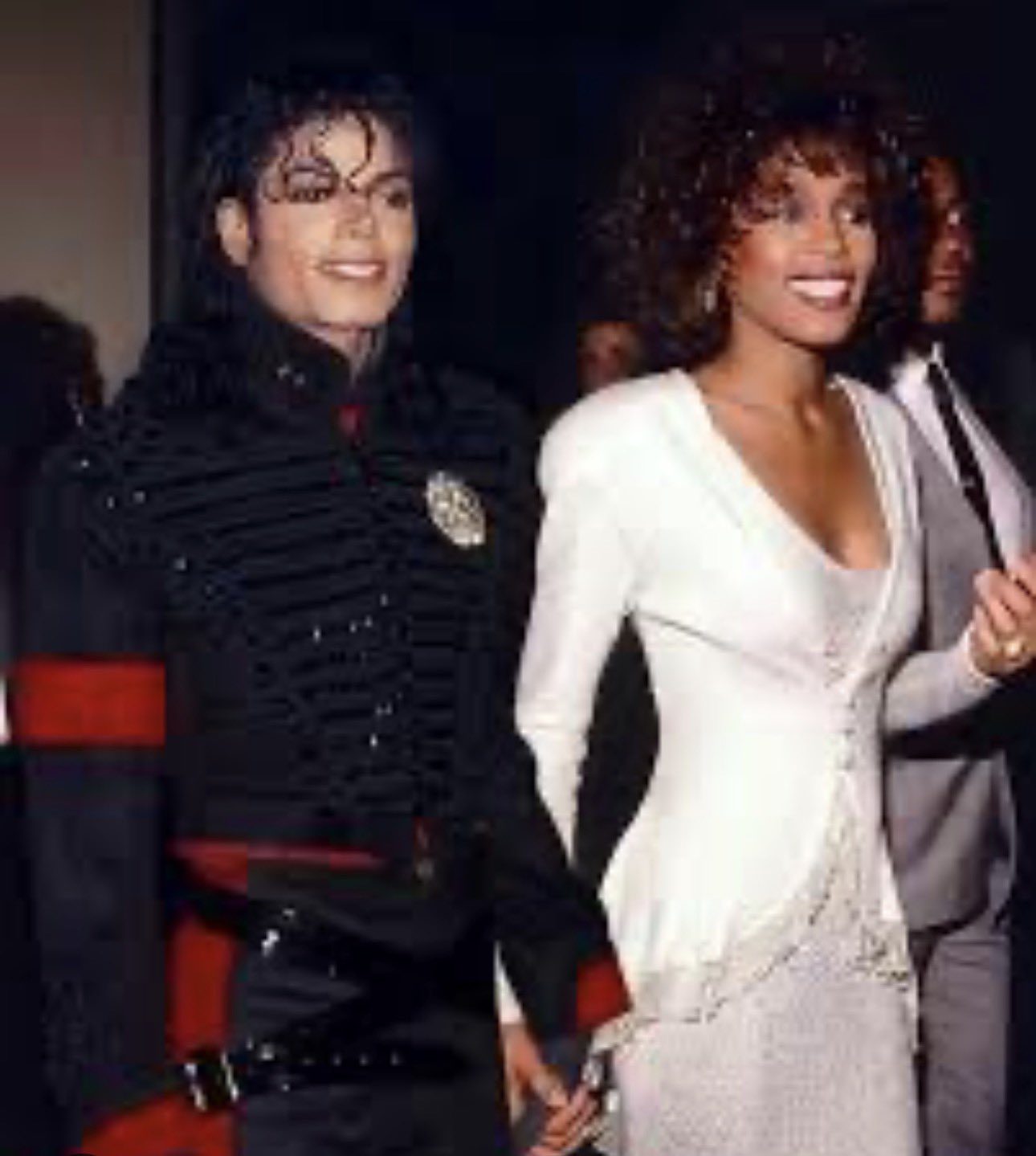
Michael Jackson And Whitney Houston Still Own Black Music History
As Black Music Month continues, a viral music post has reminded fans of something that should never be forgotten: Michael Jackson and Whitney Houston did not just make hit records. They changed the global ceiling for Black artists.
The post ranked Michael Jackson’s *Thriller* and Whitney Houston’s *The Bodyguard* soundtrack among the biggest-selling albums connected to Black artists in music history. While exact sales totals vary depending on the source and counting method, the larger point remains undeniable. Michael and Whitney sit at the very top of modern music history. Even now, *Thriller* is still widely treated as the best-selling album ever, while *The Bodyguard* remains one of the most dominant soundtrack achievements in music history, as noted in Time’s look at Quincy Jones and Thriller’s legacy (source) and in WWETV’s own coverage of Whitney Houston’s The Bodyguard becoming the highest RIAA-certified soundtrack in U.S. history (read more).
That matters right now.
Too often, Black legends are remembered through their most painful headlines. Michael Jackson is pulled back into public discussion through controversy. Whitney Houston is too often reduced to addiction, tragedy, and the circumstances surrounding her final years. But Black Music Month gives us a responsibility to widen the lens. As AP News noted in its history of Black Music Month (source), the celebration was created to preserve and recognize the full depth of Black musical contribution.
Before the headlines, there were the receipts.
Michael Jackson’s *Thriller* was more than an album. It was a cultural earthquake. Released in 1982, the project turned pop music into a global visual event. “Billie Jean,” “Beat It,” and “Thriller” did not simply dominate radio; they helped redefine what music videos could be. Michael’s work forced doors open on MTV, expanded the commercial imagination for Black artists, and proved that a Black performer could become the biggest star on the planet without being confined to one genre. WWETV has already looked at that staying power in Michael Jackson Albums Rise On Billboard As Black Music Month Begins (read more) and Michael Jackson Biopic Becomes Biggest Music Biopic Ever As Box Office Run Nears All-Time Record (read more).
*Thriller* blended R&B, pop, rock, funk, dance, horror, fashion, choreography, and cinematic storytelling into one package. It was not just music. It was movement, image, theatre, and business strategy. That is why generations later, artists still study Michael Jackson not only for the songs, but for the blueprint. The same broader legacy runs through WWETV’s related piece, Why Quincy Jones Still Connects Every Era Of Black Music (read more).
Whitney Houston’s *The Bodyguard* soundtrack created a different kind of historic dominance.
Released in 1992, the soundtrack turned Whitney’s voice into one of the most powerful commercial forces of the decade. Her version of “I Will Always Love You” became one of the defining recordings of modern music, but the album’s impact went beyond one song. “I Have Nothing,” “Run to You,” “I’m Every Woman,” and “Queen of the Night” showed the range of an artist who could move from gospel-rooted emotion to pop power to dance-floor confidence.
*The Bodyguard* also expanded what a Black female superstar could represent on a global stage. Whitney was not just singing the soundtrack. She was the face, the voice, and the emotional center of a film-and-music moment that crossed race, genre, and international borders. Her success helped prove that a Black woman’s voice could carry a blockbuster movie, dominate radio, and sell albums around the world at a historic level.
That legacy looks even bigger when fans remember Whitney’s soundtrack run as a whole. Time’s Whitney Houston fact-check (source) notes that *The Bodyguard* still holds the record as the best-selling movie soundtrack of all time, while Entertainment Weekly’s gospel retrospective on Whitney (source) points out that *The Preacher’s Wife* became the best-selling gospel album in history. Put together, those two releases show that Whitney did not just dominate pop culture. She left a historic mark on both soundtrack music and gospel music at the highest commercial level.
That is why pairing Michael Jackson and Whitney Houston in this conversation is so powerful.
They represent two sides of Black music excellence. Michael changed the visual and performance language of pop. Whitney changed the vocal and emotional standard of popular music. He made the music video feel like cinema. She made the soundtrack feel like a global vocal event.
Together, they remind us that Black artists have not just participated in the music industry. They have repeatedly rebuilt it. WWETV has touched that cultural memory before in Bob Marley, Michael Jackson, Tupac & Whitney: Toronto’s Music Memory (read more), The Michael Jackson and Whitney Houston Duet That Almost Happened (read more), and Culture Court: Did Oprah Cross The Line By Revealing Whitney Houston’s Private Stage Fall? (read more).
This is the kind of history Black Music Month is meant to protect. It is not only about nostalgia. It is about documentation. It is about making sure the next generation understands that the biggest moments in global pop culture were often shaped by Black creativity, Black risk, Black discipline, and Black innovation. That same preservation energy also shows up in WWETV’s recent story, Toronto Just Proclaimed Black Music Month – Why Little Jamaica’s Story Matters More Than Ever (read more).
For WWETV, this is also why legacy coverage matters.
When legends are no longer here to speak for themselves, the public often fights over how they should be remembered. Some conversations focus on scandal. Some focus on downfall. Some reopen wounds without restoring the full picture. But history is not complete if it only remembers the pain.
Michael Jackson was not just controversy.
Whitney Houston was not just tragedy.
They were record-breakers, standard-setters, and cultural architects.
Black Music Month gives us a chance to say their names with the weight they deserve. Not as tabloid subjects. Not as cautionary tales. Not as broken icons frozen in their lowest moments.
Michael Jackson and Whitney Houston were proof of what happens when Black artistry reaches the world and refuses to be boxed in.
The receipts are still there.
*Thriller* still stands as one of the most important albums ever released. *The Bodyguard* still stands as one of the most powerful soundtrack achievements in history. And both remain reminders that Black music does not just reflect culture.
Black music moves culture.
So before the headlines, remember the history.
Before the controversy, remember the contribution.
Before the pain, remember the power.
Michael Jackson and Whitney Houston were not just part of Black Music Month.
They are part of the reason it matters.
Sources And Related Reading
SOURCE: Time’s look at Quincy Jones and Thriller’s legacy
READ MORE: Whitney Houston’s The Bodyguard becoming the highest RIAA-certified soundtrack in U.S. history
SOURCE: AP News noted in its history of Black Music Month
READ MORE: Michael Jackson Albums Rise On Billboard As Black Music Month Begins
READ MORE: Michael Jackson Biopic Becomes Biggest Music Biopic Ever As Box Office Run Nears All-Time Record
READ MORE: Why Quincy Jones Still Connects Every Era Of Black Music
SOURCE: Time’s Whitney Houston fact-check
SOURCE: Entertainment Weekly’s gospel retrospective on Whitney
READ MORE: Bob Marley, Michael Jackson, Tupac & Whitney: Toronto’s Music Memory
READ MORE: The Michael Jackson and Whitney Houston Duet That Almost Happened
READ MORE: Culture Court: Did Oprah Cross The Line By Revealing Whitney Houston’s Private Stage Fall?
READ MORE: Toronto Just Proclaimed Black Music Month – Why Little Jamaica’s Story Matters More Than Ever
Share this content:







Post Comment