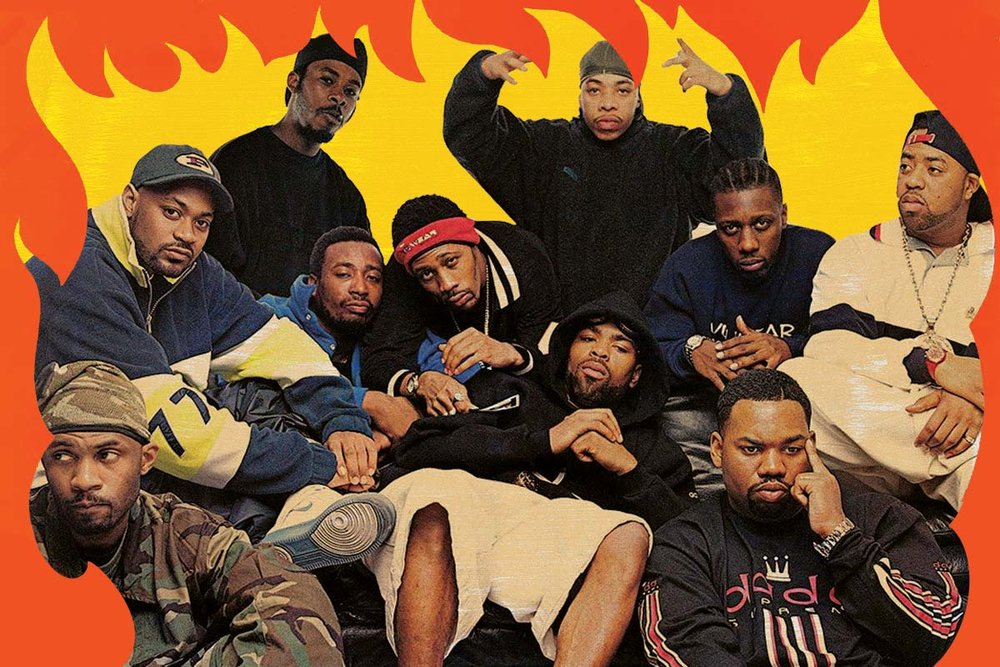
Wu-Tang Clan And The Knicks Created A Classic New York Moment
Wu-Tang Brought Shaolin Energy To The Garden
Madison Square Garden has seen championship dreams, playoff heartbreak, legendary concerts, and classic New York nights. But Game 4 of the NBA Finals gave the city one of those rare crossover moments where sports, hip-hop, and mythology all collided.
Wu-Tang Clan hit the halftime stage with the Knicks in trouble. New York was down big. The San Antonio Spurs had controlled the first half. The Garden needed something to believe in.
Then Wu-Tang showed up.
By the end of the night, the Knicks had completed a historic comeback, beating the Spurs 107-106 and moving one win away from their first NBA championship since 1973. OG Anunoby delivered the final moment with a late tip-in, Jalen Brunson helped drag New York back into the game, and fans immediately started connecting the comeback to the energy Wu-Tang brought into the building.
Was Wu-Tang literally responsible for the win? Of course, basketball still comes down to stops, shots, execution, and pressure.
But culturally, the story writes itself.
The Knicks Needed New York Energy
The Knicks were not just losing at halftime. They were in danger of watching the series shift completely. A blowout loss at home would have sent the Finals back to San Antonio with the Spurs alive and confident.
Instead, halftime became a reset.
Wu-Tang Clan sparking up the Knicks crowd. pic.twitter.com/gcKsTnyPEw
— Edilson J. Silva 🇨🇦🏀🇦🇴 (@edilsonbuzz) June 11, 2026
Wu-Tang Clan is not just another rap group that happens to be from New York. They represent a specific kind of New York energy: rugged, defiant, creative, chaotic, disciplined, street-coded, and impossible to duplicate. Their mythology was built out of Staten Island, martial arts imagery, dusty production, lyrical combat, and a group identity that made every member feel like a character in a larger universe.
That energy fits the Knicks perfectly.
New York basketball has never been only about clean wins. It is about survival. It is about noise. It is about the city refusing to accept embarrassment. It is about the Garden turning from tense to dangerous in a matter of minutes.
Wu-Tang did not have to score a basket to become part of the comeback. They gave the crowd a reason to wake back up.
Madison Square Garden Became A Hip-Hop Arena
The Garden has always been more than a sports venue. It is a cultural stage. When an artist performs there, it carries weight. When the Knicks win there, it carries history. When both happen on the same night during the NBA Finals, it becomes a New York postcard.
That is why this story belongs beyond sports pages.
Wu-Tang’s halftime performance reminded viewers that hip-hop is now fully embedded in the way major sports moments are packaged and remembered. Decades ago, rap was treated as something outside the mainstream sports machine. Now, one of the most important games of the year can have a halftime show led by a group that once represented underground New York grit.
That shift matters.
Hip-hop is no longer just background music for highlight reels. It is part of the ceremony. It is part of the identity. It is part of how teams and cities tell the world who they are.
For the Knicks, bringing Wu-Tang into the NBA Finals was not just entertainment. It was a declaration that New York’s basketball moment needed New York’s hip-hop language.
The Comeback Made It Legendary
If the Knicks had lost, Wu-Tang’s performance would still have been a cool halftime moment. But because the Knicks came back, it became folklore.
That is how culture works. The performance becomes bigger because of what happened after it.
The Knicks erased a massive deficit. The Spurs cooled off. The Garden grew louder. The pressure flipped. Brunson made the comeback feel possible. Anunoby made it real. By the final seconds, the same arena that looked stunned at halftime was exploding like it had witnessed something impossible.
Now the halftime show becomes part of the memory.
Fans will say Wu-Tang woke the building up. Others will say the Knicks found their defense. Both can be true in different ways. The scoreboard tells one story. The city tells another.
And New York loves a story where its own legends help bring a team back from the dead.
Why Wu-Tang Still Fits This Era
The most important part of this moment is that Wu-Tang still works in 2026.
That says a lot about their legacy.
Wu-Tang Clan came from an era when New York rap was raw, regional, and deeply character-driven. Their debut album, style, logo, language, and martial arts influence became part of hip-hop’s visual and sonic vocabulary. They were never just chasing hits. They built a world.
That world still translates.
At a time when the music industry is driven by quick viral moments, Wu-Tang’s presence at the NBA Finals proved the power of legacy branding before artists even called it branding. The logo still means something. The name still means something. The energy still means something.
When they appear at Madison Square Garden during a Knicks Finals game, fans understand the code instantly.
This is New York calling on New York.
The WWETV Angle: Hip-Hop Is The City’s Memory
For WWETV, the deeper story is not simply that Wu-Tang performed and the Knicks won.
The deeper story is that hip-hop has become the city’s memory system.
Wu-Tang represents the New York that fought for its sound. The Knicks represent the New York that has waited decades for a basketball championship. Madison Square Garden represents the stage where celebrity, street culture, sports, and history all meet.
When those three forces collided, the result felt bigger than a halftime show.
It felt like a scene from a New York hip-hop film: the city down bad, the legends arrive, the crowd wakes up, the team fights back, and the Garden turns into chaos.
That is why this moment has strong WWETV potential. It connects hip-hop history, sports culture, Black entertainment legacy, New York pride, and nostalgia in one headline.
The Knicks still have to finish the job. But Game 4 already gave the city a classic moment.
And whether fans call it basketball, destiny, or Shaolin energy, Wu-Tang Clan is now part of the story.
Share this content:





Post Comment